
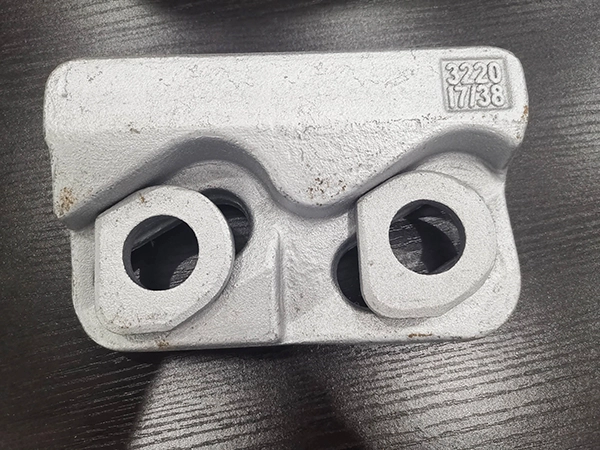
Introduction
Rail clip(also called rail fixing clip) may be small in size, but they play a critical role in securing rails and ensuring the stable operation of rail systems and industrial equipment—a perfect example of “small part, big impact.”
Originally designed for railway tracks, rail clips have evolved over time and are now widely used in various industrial applications. In the early days, bolted rail clips were the preferred choice due to their easy installation. However, with advancements in engineering, welded rail clips emerged to meet the growing demand for greater strength and long-term stability.
This article compares bolted and welded rail clips, explores their pros and cons, and helps you determine which type is best suited for your project.
Bolted type rail clips
Bolted types are connected by bolts to the base to fix the rail position.It needs to be installed with pre-drilled bolt holes in the steel plate or beam. This design makes it easy to install and easy to adjust, especially for scenarios that require flexibility and quick changeover.
Applicable scenarios are for example: construction sites for engineering and building or temporary rail. The size and type of bolts depends on the actual situation on the construction site (thickness of the steel beams or plates).
Limitations: Bolted rail clip is not as strong as welded rail clip connection, it is easy to loosen in long term use and requires regular maintenance, frequent dismantling and replacement may also cause construction delays.
Welded type rail clips
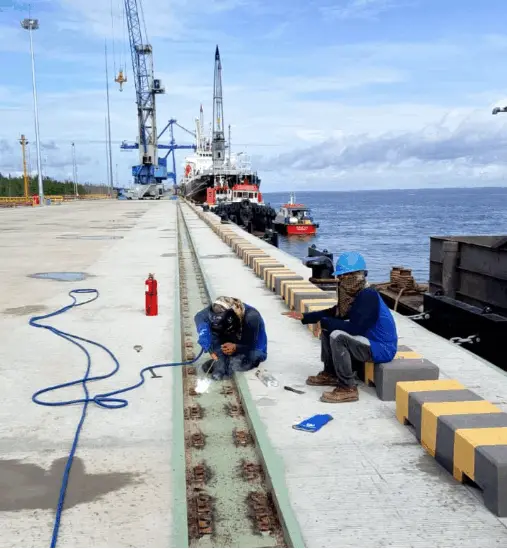
Welded rail fastening clips is usually directly welded to the base on the steel plate or steel beam, and then with the use of the top cover to clip the rail to achieve the effect of fixation, compared with the bolted types does not need to drill additional holes in the steel plate or beam. Its stability is obviously higher than that of bolted rail clip. In addition, welded rail clip require almost no maintenance, once the failure is more difficult to repair, the process is complex and costs are relatively high. In the occasion of high stability requirements, the welded rail clip shows its advantages.
Applicable scenarios are for example: heavy industry, ports and long-term fixed places.
Limitations: Welded rail clip are relatively complex to install and require welding equipment and material. In case of failure, the cost of repair and replacement is high.
How to choose the suitable rail clips
When choosing the rail clip, factors such as project requirements, application environment, cost maintenance, and installation complexity should be considered comprehensively.
Project Requirements
For long-term projects, such as ports, heavy-duty railways, fixed workshops and factories, welded rail clips are more suitable.
For temporary projects, such as construction rails or short-term logistics rails, bolted rail clips are a more suitable choice.
Application Environment
High vibration and high load environment: welded rail clips have higher reliability and stability.
Normal operating conditions: bolted rail clips are fully sufficient to meet the needs.
Cost and Maintenance
Cost: Under limited budget, bolted rail clips have more cost advantages.
Maintenance: Welded rail clips require almost no maintenance after installation, and have lower long-term operating costs. More suitable for environments that require long-term stable operation and have high maintenance cost budgets.
Installation Complexity
If the project has strict requirements on the construction period or construction conditions, it is more appropriate to choose bolted rail clips that are simple and quick to install.
The above are general suggestions for selecting between welded and bolted rail clips.The specific choice of model should be determined comprehensively based on the actual rail model and specifications in use. In situations where the operating space is limited, the bolted rail clips allow for easy rail height adjustments by replacing washers, while the welded rail clip requires precise measurement during the initial installation, and later adjustment is more difficult.
In the construction environment, the laying method of the rails also needs to be considered: straight-laid rails are more suitable for the use of welded rail clips, because their stability can ensure that the rails are more stable when running in a straight line. For curved rails, different types of rail clips may need to be used to withstand different pressures.
Welded vs. Bolted Comparison Table
| Bolted | Welded | |
| Installation difficulty | Low, can be installed quickly | High, requires professional equipment |
| Maintenance requirements | Requires regular inspection and tightening | Basically no maintenance |
| Connection strength | Low, suitable for standard applications | High, suitable for high-load scenes |
| Application Scope | Light railway, temporary rail | High-speed railway, heavy industrial equipment |
| Replacement cost | Easy to replace, low cost | Complicated and costly. |
| Long-term cost | Lower | Higher |
Conclusion
Both welded and bolted rail fixing clips have their own advantages and are suitable for different application scenarios. For long-term projects that require high strength and stability, welded rail clips are the best choice. For small and medium-sized projects or temporary projects that focus on flexibility and economy, bolted rail clips are a more cost-effective solution.
When choosing rail clips, it is recommended to consider the installation difficulty, environmental conditions, budget and maintenance costs according to the specific needs of the project. If you still have questions, you can contact GloryTrack for professional advice and provide the most suitable solution for your project.