
UIC 60 Rails (60E1)
UIC 60 rails, also known as 60E1 rails. Manufactured to EN 13674-1, they are designed to support extreme axle loads and high-speed operations, and are widely adopted in national railway systems, metro networks, and heavy-duty freight corridors. With a weight of 60.21 kg/m and a height of 172 mm, UIC 60 rails deliver superior stability, wear resistance, and track alignment—reducing long-term maintenance costs and ensuring consistent performance over decades of service.
- EN 13674-1 Compliant
- Heavy-Duty & High-Speed
- Mill Test Certificate Available
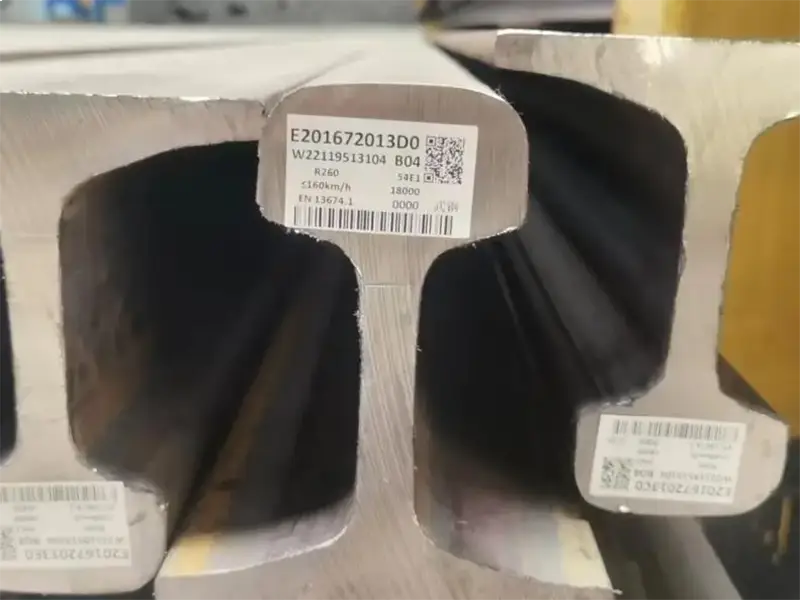
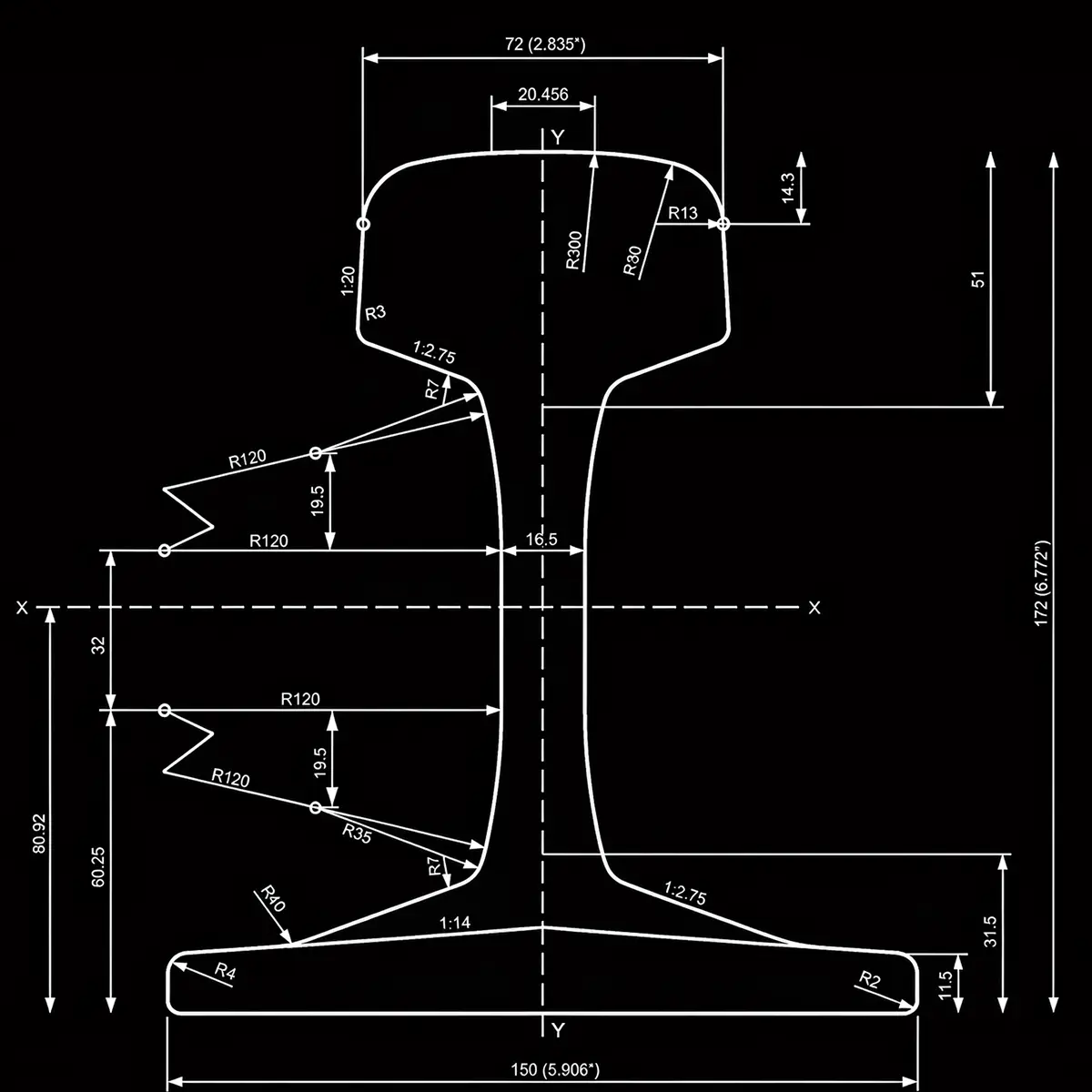
UIC60 Rail Dimensions & Specifications
| Height: 172 mm | Base Width: 150 mm |
| Head Width: 72 mm | Web Thickness: 16.5 mm |
| Length: 12m-25m(customization) | Material: 900A/1100 |
| Weight: 60.21kg/m | Standard: EN13674-1 |
If you have special requirements for length or higher strength materials, please contact us for special custom production.
UIC60 Rail Steel Grade
R260 is a common choice for 60E1 rails in conventional passenger and freight service, while heat-treated R350HT is often selected for heavy-haul routes and tight curves where wear is more demanding. R200 may be considered for lower-traffic applications with limited wear demands. R260Mn provides a higher-manganese alternative within the same specified hardness range as R260. The table below compares their mechanical properties and chemical composition.
| Grade | Mechanical Property | Chemical Composition | ||||||||
|---|---|---|---|---|---|---|---|---|---|---|
| Tensile Strength | Elongation | Hardness | C | Si | Mn | S | P | H (ppm) | O (ppm) | |
| MPa | min | HB | ≤ | ≤ | ≤ | ≤ | ||||
| R200 | ≥680 | 14% | 200-240 | 0.40-0.60 | 0.15-0.58 | 0.70-1.20 | 0.025 | 0.035 | 3.00 | 20.0 |
| R260 | ≥880 | 10% | 260-300 | 0.62-0.80 | 0.15-0.58 | 0.70-1.20 | 0.025 | 0.025 | 2.50 | 20.0 |
| R260Mn | ≥880 | 10% | 260-300 | 0.55-0.75 | 0.15-0.60 | 1.30-1.70 | 0.025 | 0.025 | 2.50 | 20.0 |
| R350HT | ≥1175 | 9% | 350-390 | 0.72-0.80 | 0.15-0.58 | 0.70-1.20 | 0.025 | 0.020 | 2.50 | 20.0 |
UIC60 Rail Processing Options
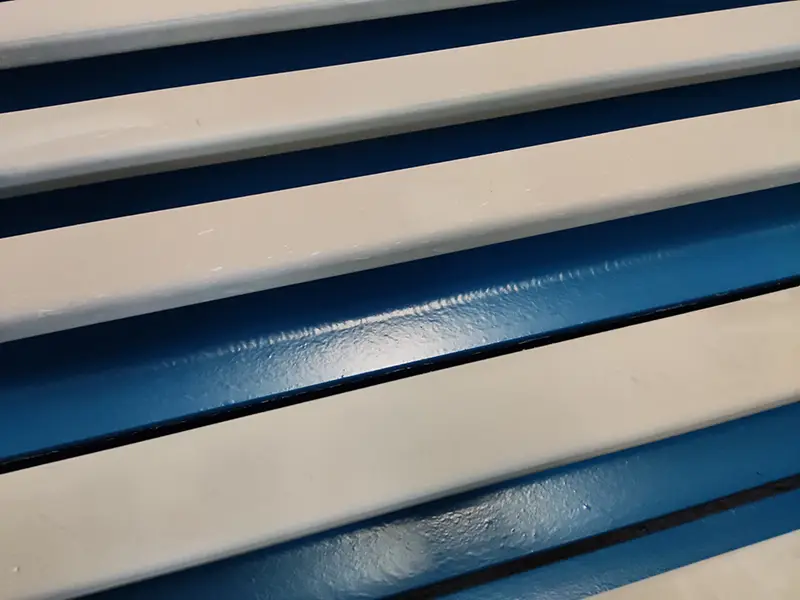
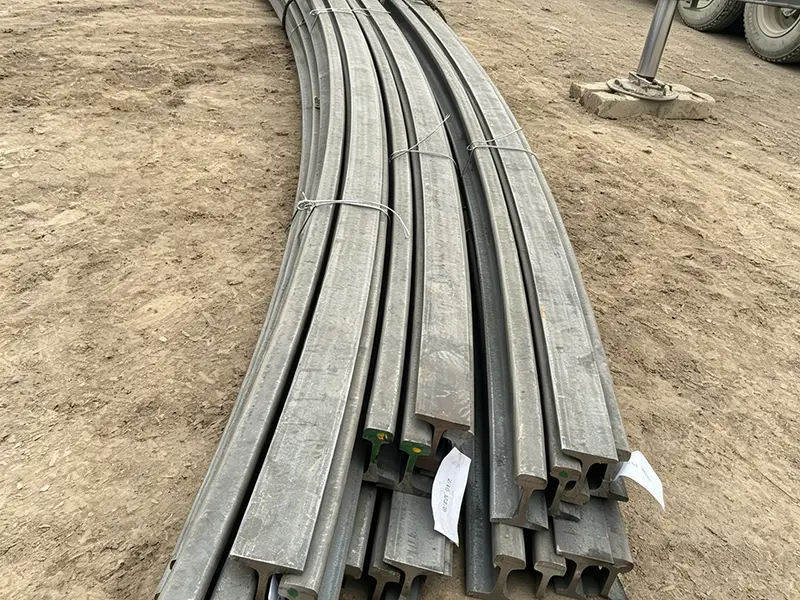
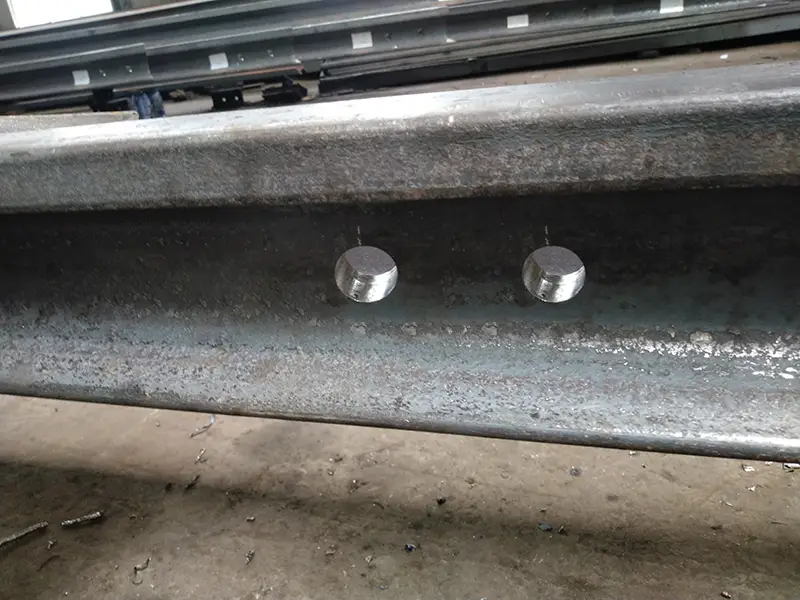
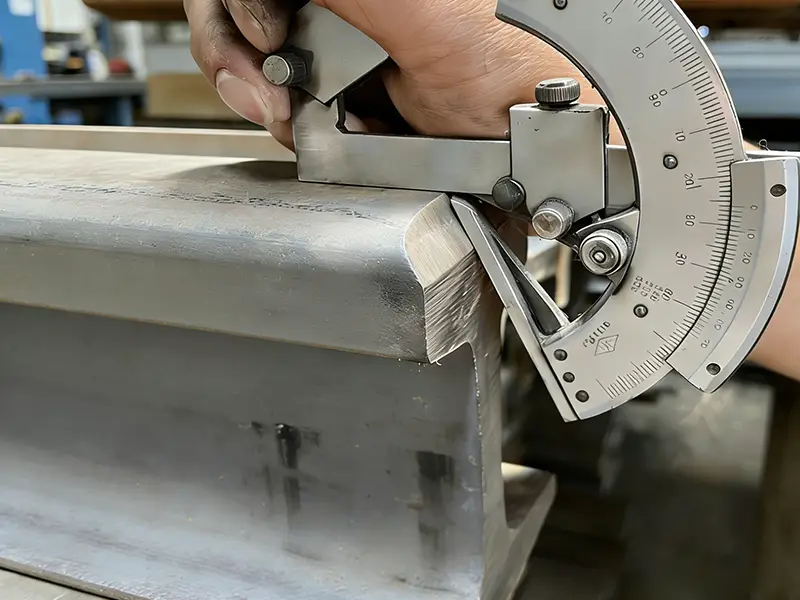
Processing requirements for UIC60 rails can include cutting to length, joint-hole drilling and end preparation. For curved sections or other non-standard work, a drawing helps define the required geometry and assess processing feasibility.
Our Services Include:
- Cutting to Length: UIC60 rails can be cut to project-specific lengths, with finished dimensions and tolerances agreed before processing.
- Joint-Hole Drilling: Rail-end holes are drilled to approved joint-bar layouts, with controlled hole diameters, spacing and end distances.
- End Preparation: Rail ends are machined to the specified geometry and finish for the intended jointing method.
- Rail Bending: Curved sections can be formed to approved drawings, subject to the required radius and a processing feasibility review.
- Other Machining: Additional machining is available to approved drawings, subject to technical review and confirmed processing capabilities.
Need UIC60 Rails Processed for Your Project?
Discuss your cutting, drilling or bending requirements and request a quotation based on your project specifications.
Rail Components You May Need
Looking for a complete rail solution? We also supply compatible components and systems

Rail Fasteners & Clips
Ensure rail stability and secure installation with durable spikes, bolts, and clips.

Fish Plates
Connect rail sections firmly to maintain track alignment and structural integrity.

Steel soleplates
Distribute loads evenly and protect the base structure while enhancing insulation.

Rubber Pads
Absorb vibration and noise to protect the track and extend its service life.
UIC60 Rail Applications
Mainline & High-Speed Railways
Used in passenger routes and mixed-traffic mainlines, including high-speed railway projects where the 60E1 profile is specified in the track design.
Heavy-Haul Freight Lines
Applied in freight corridors carrying bulk commodities such as coal, ore and other heavy cargo, with the rail grade selected to suit axle loads, traffic tonnage and wear conditions.
Metro & Urban Rail Networks
Used in metro and suburban railway projects where a flat-bottom 60E1 rail is specified, with fastening and track-support arrangements matched to the system design.
Industrial & Port Railways
Suitable for specified railway tracks connecting industrial facilities, freight terminals and port yards, including access lines and internal cargo-transfer routes.
UIC60 Rail Packing & Container Loading
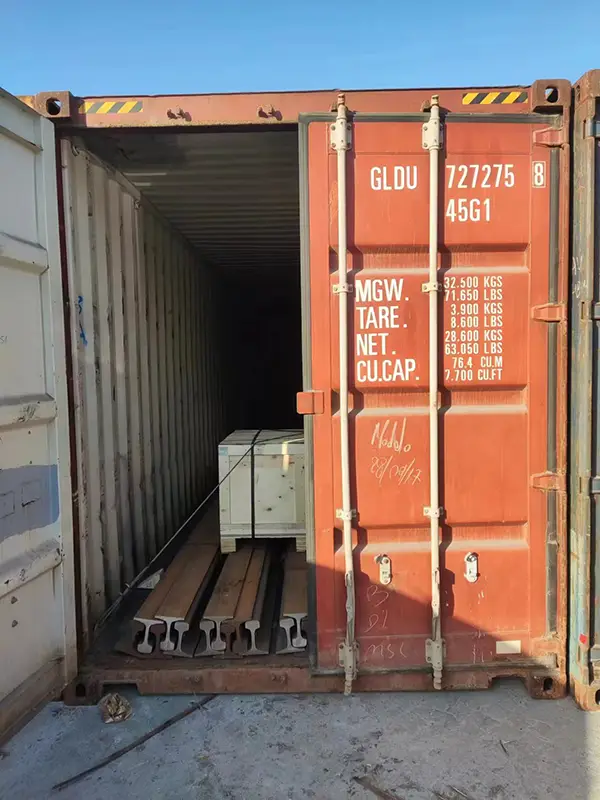
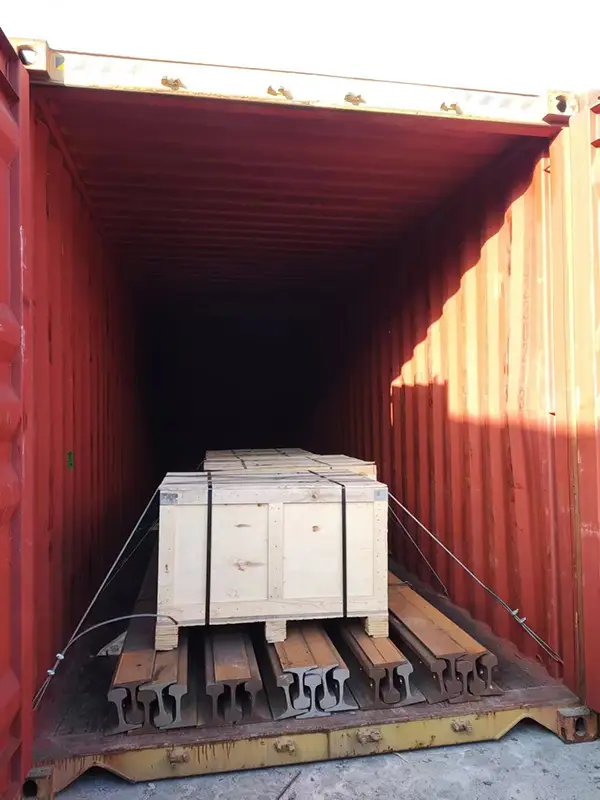
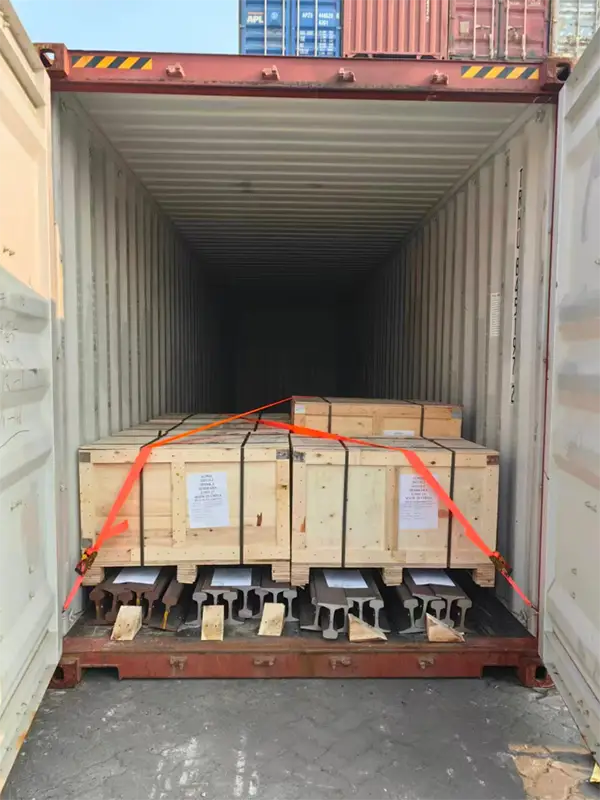
Before loading, UIC60 rails are checked against the packing list for rail length, quantity and identification marks. Bundles are arranged for lifting and counting, with drilled or machined ends checked for any additional protection requirements.
Inside the container, supports separate the rails from the floor and provide clearance for handling. Blocking and restraints help limit longitudinal and lateral movement, while the loading layout takes account of cargo weight distribution and unloading access.
Rail length and total shipment weight are reviewed before selecting the container and loading method. Where the specified lengths cannot be accommodated in a standard container, alternative shipping arrangements are assessed.
UIC 60 Rail Project Case Study
 PHILIPPINES · SHIPYARD
Shipyard Rail Supply Project for the Philippines
The original specification called for 60E2 rail. Following technical evaluation, 60E1 was approved as an alternative. The supply package also included four-hole fishplates and 3120 rail clips.
FAQ—Customer Concerns for UIC60 Rails
Can R260 and R350HT rails use the same welding procedure?
A welding procedure approved for R260 should not automatically be applied to R350HT. The procedure must cover the rail grade, profile and welding equipment involved. Heat-treated rails may require different welding parameters and post-weld cooling controls to achieve the required properties around the joint.
Do rail ends need beveling before flash-butt welding?
A beveled end should not be assumed to be necessary. For flash-butt welding, rail ends are generally prepared by sawing or disc cutting, with end squareness and alignment controlled by the approved procedure. Any bevel shown on a processing drawing should therefore be checked against the intended jointing method rather than treated as a standard requirement.
What should be checked when ordering pre-drilled rail ends?
The drilling drawing should identify the hole diameter, centre-to-centre spacing and distance from the rail end to the first hole. These dimensions must match the specified fishplates and joint assembly. For replacement work, use the approved joint drawing rather than assuming an existing drilling pattern is suitable for every rail of the same nominal size.
Discuss Your UIC60 Rail Requirements
Send your rail specification, quantity and delivery destination for a project quotation. Drawings can be included for machining or joint-matching review.