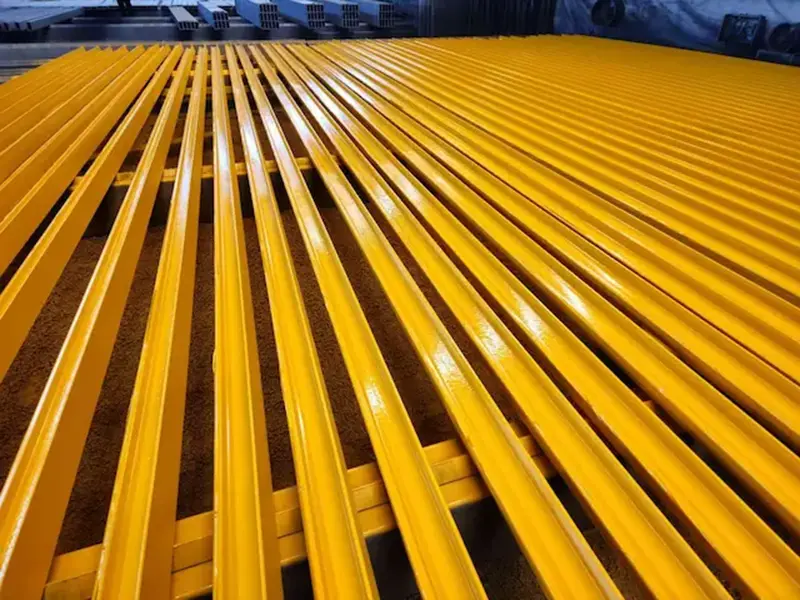
From Sa 2.5 near-white surface preparation to multi-layer heavy-duty coating systems, GloryTrack designs and applies rail anti-corrosion systems built to ISO 12944, proven on export projects for mining, port and coastal rail.
Rails in service face constant attack from moisture, salt, process chemicals and abrasion. Left unprotected, corrosion advances quickly and the cost is paid in structural strength, safety and unplanned maintenance.
Rail sandblasting & coating application process | Sa 2.5 preparation
A properly designed coating system is an engineering decision, not a product choice.
⚙ Surface Corrosion & Pitting Oxidation breaks down the steel substrate, creating pitting that concentrates stress and accelerates section loss.
🏗 Structural Weakening Progressive section loss reduces load capacity and rail integrity, directly impacting operational safety.
$ Runaway Maintenance Cost Unprotected assets need frequent rework, downtime and replacement, far more expensive than a correct first coating.
⧗ Shortened Service Life Corrosion cuts asset life by years. A properly engineered system restores and protects that full design life.
Applications
Where Rail Anti-Corrosion Coating Earns Its Value
The right system depends on the environment. We match every specification to the real corrosivity category the asset will live in.
Mining & Mineral Processing
C5-I Haulage rails in iron ore, coal and copper mines operate in high humidity, abrasive dust and aggressive chemistry. Heavy-duty multi-layer systems are the standard here, including export rail for large iron ore mine construction.
Ports & Marine Terminals
C5-M / Im
Coastal salt spray, splash and immersion zones demand C5-M and Im-grade systems with fluorocarbon or epoxy topcoats.
Steel Mills & Heavy Industry
C5-I High humidity and aggressive industrial atmospheres push these assets into the highest corrosivity band.
Coastal & Near-Shore Rail
C5-M Salt-laden air drives rapid corrosion. UV-stable, chloride-resistant topcoats are essential.
Chemical & Industrial Plants
C4 SO2 and process chemicals require chemical-resistant epoxy systems with verified adhesion.
Mining & Mineral Processing
C3 Urban and transit rail in moderate atmospheres. Balanced protection for long-term value.
ISO 12944
Corrosion Categories - The Starting Point of Every System
ISO 12944 grades the corrosivity of the atmosphere. We design every system from the real exposure level up, from C2 to full immersion.
Design durability depends on coating system thickness and environmental exposure.Our engineering team matches coating specification with the exact corrosivity category to maximise life-cycle value.
Surface Preparation
Surface Preparation for Rail Anti-Corrosion Coating
Sa 1 – Light Cleaning
Removes loose rust and contaminants for temporary protection.
Sa 2 – Industrial Cleaning
Removes most visible rust and scale for general applications.
Sa 2.5 – Near White Metal
✔ Required for high-performance rail anti-corrosion coating systems (C4–C5) ✔ Optimal adhesion & durability
Sa 3 – White Metal Finish
Full cleaning for extreme corrosion environments and advanced coating systems.
Sa 2.5 is the minimum requirement for ISO 12944 C4–C5 environments
Real Project Documentation
The Full Coating Process - Australia 115RE Mine Rail
This is the complete, in-sequence process from our export project for a large Australian iron ore mine. Every step is documented on the production floor, from preparation through surface treatment, coating, testing and export packaging.
Project Case
Australia 115RE Mine Rail - Export Coating
Anti-corrosion processing for heavy haulage rail destined for a large iron ore mine construction site.
115RE Section
Sa 2.5 Prep
Zinc-Rich Primer
DFT Verified
①
The Full Coating Process - Australia 115RE Mine Rail
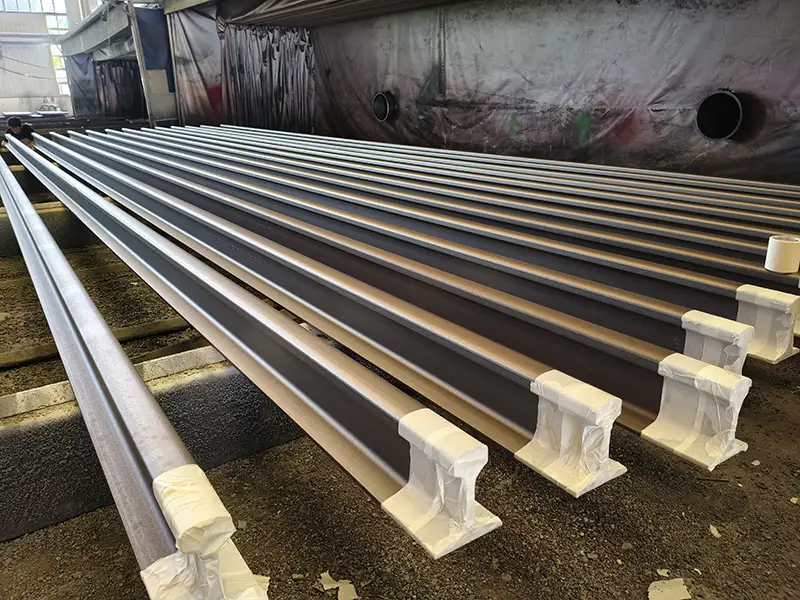
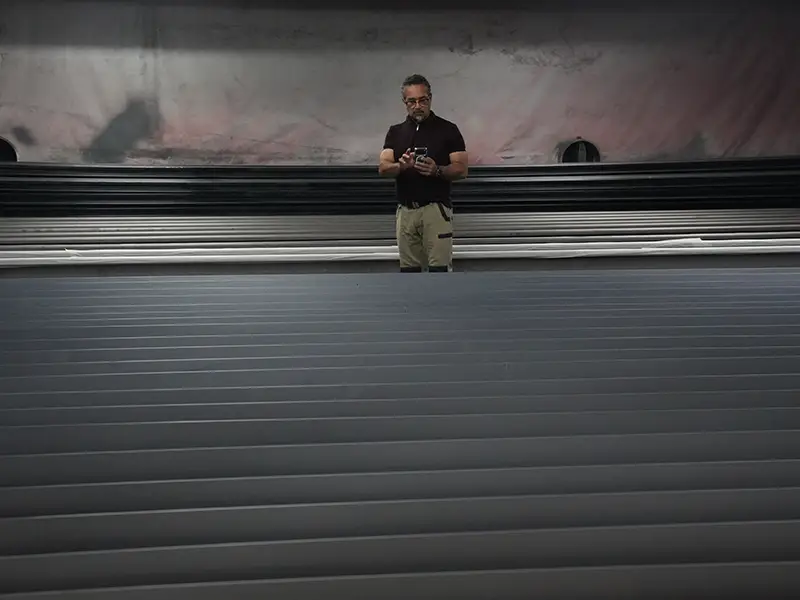
Pre-Sandblasting Preparation
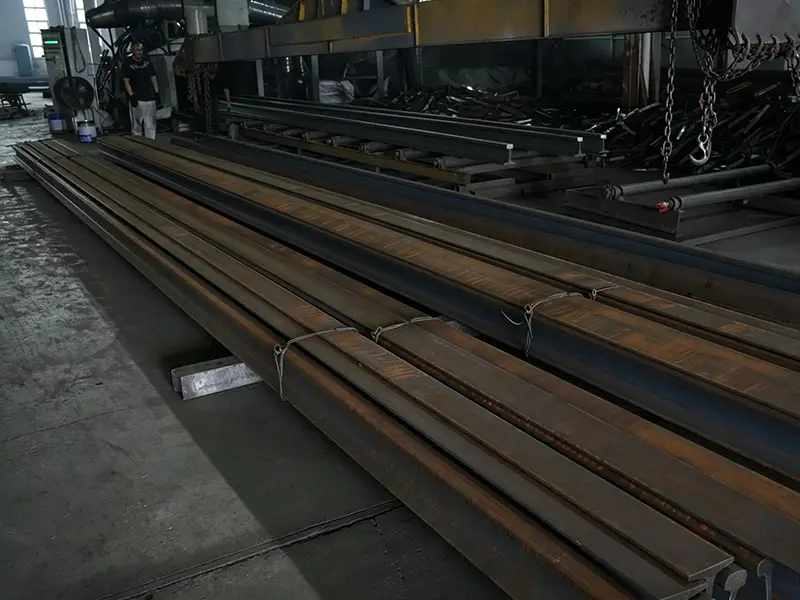
Rails staged, inspected and positioned. Equipment set up and environmental controls verified before surface treatment begins.
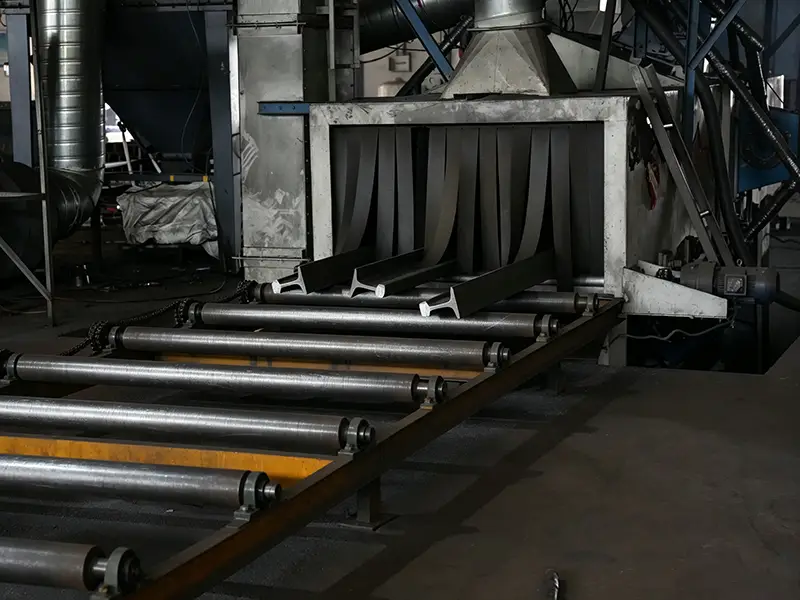
Shot Blasting in Progress
Automated shot-blasting removes mill scale and surface oxides, opening the steel substrate for coating adhesion.
Sandblasting Processing Details
Detailed view of rail surface treatment during abrasive blasting, showing the cleaning process before coating application.
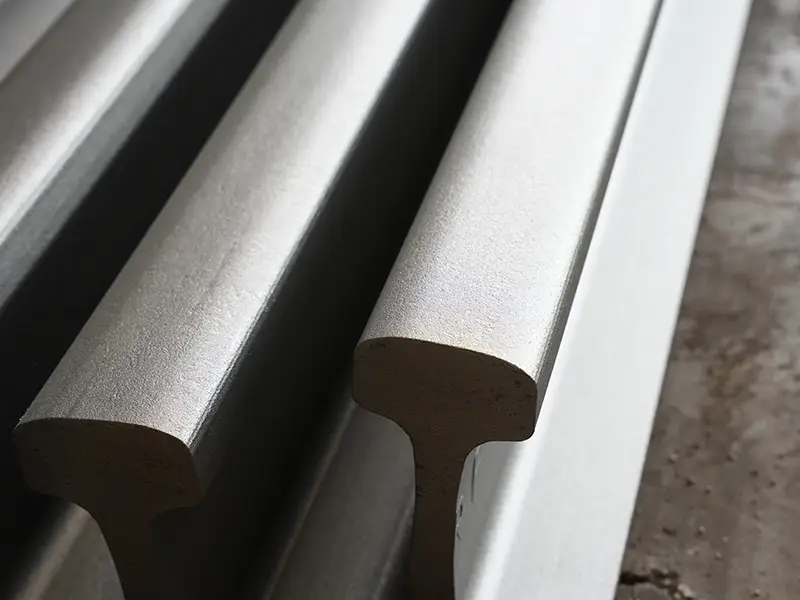
Surface After Sandblasting
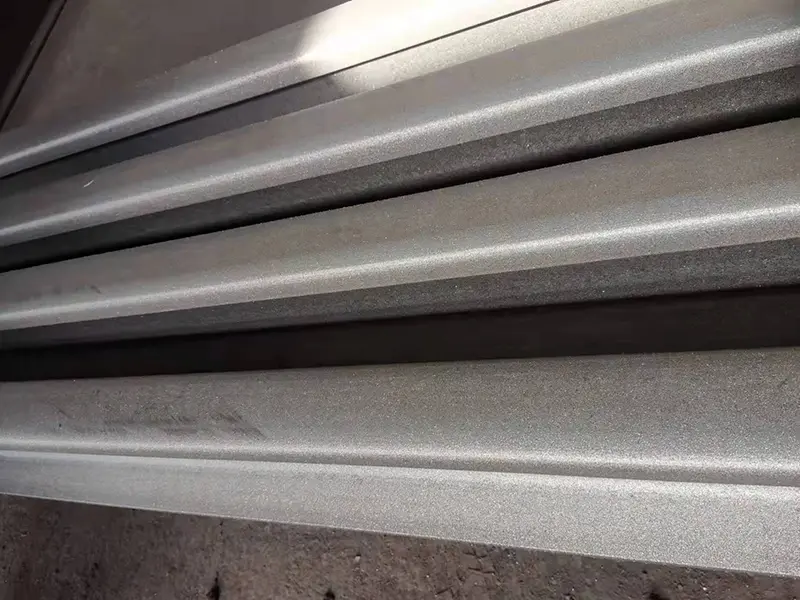
Cleaned steel revealing a uniform metallic appearance, the visual benchmark for a Sa 2.5 near-white finish.
Digital readout confirming Ra/Rz values within specified tolerance for optimal mechanical bonding.
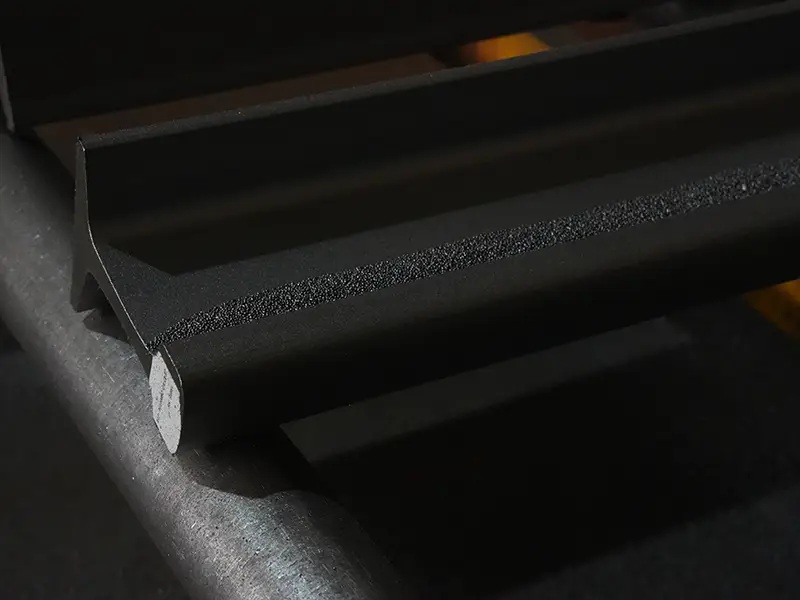
Sandblasting Effect Details
Macro detail of the textured anchor pattern etched into the rail surface after abrasive blasting.
②
Masking & Protection Before Coating
Masking Non-Spray Areas
Critical surfaces – bolt holes, mating faces, rail ends – are masked to prevent coating where it is not required.
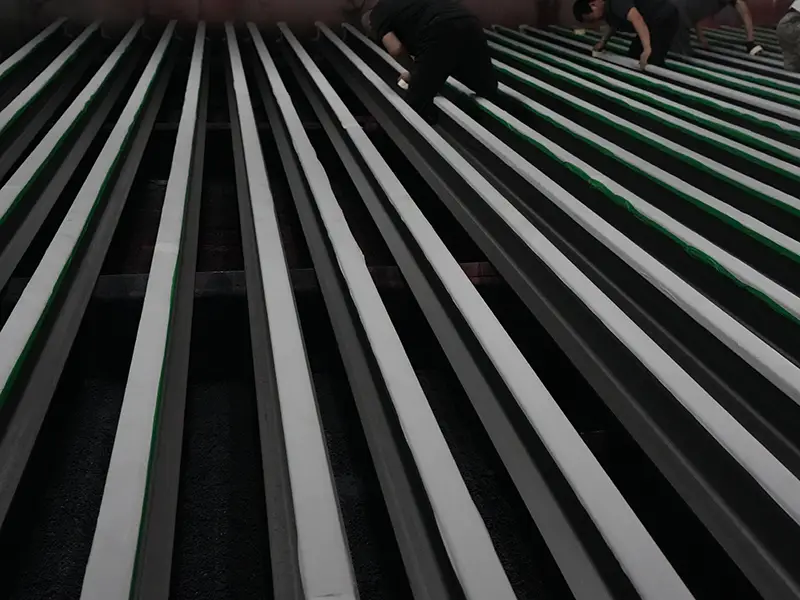
Protective Paper on Rail Tread
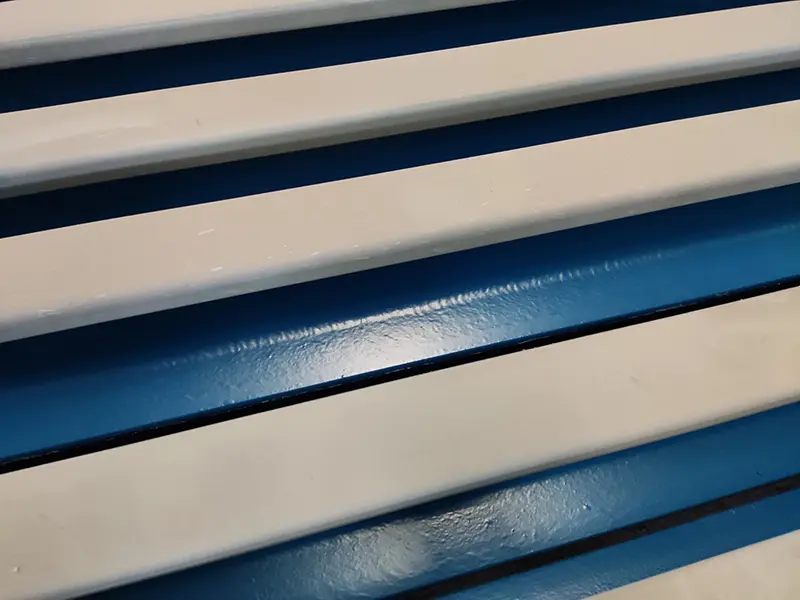
The running surface (tread) is covered so the wheel contact zone stays bare, preserving traction. Many customers require the rail crown uncoated precisely to prevent wheel slip.
③
Multi-Layer Coating Application
First Layer - Zinc-Rich Primer
Zinc-rich epoxy primer sprayed as the first sacrificial coat, providing cathodic protection at the steel interface.
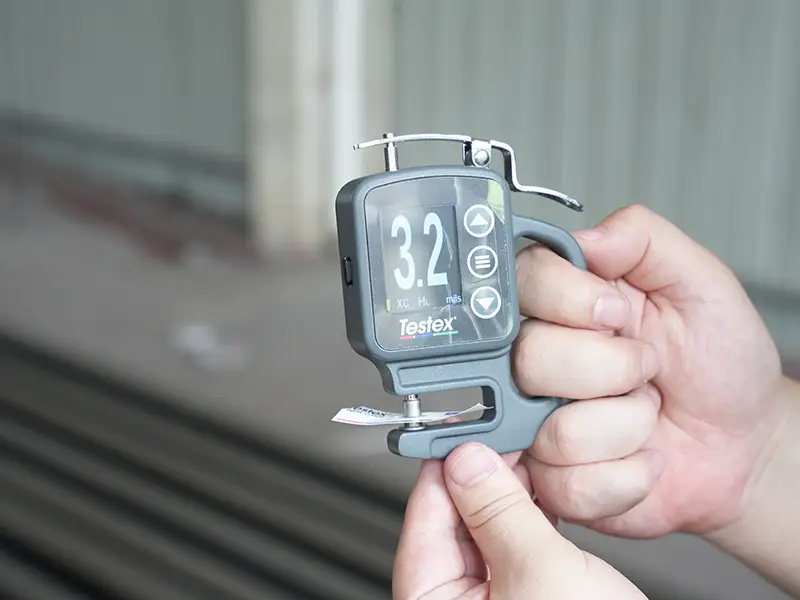
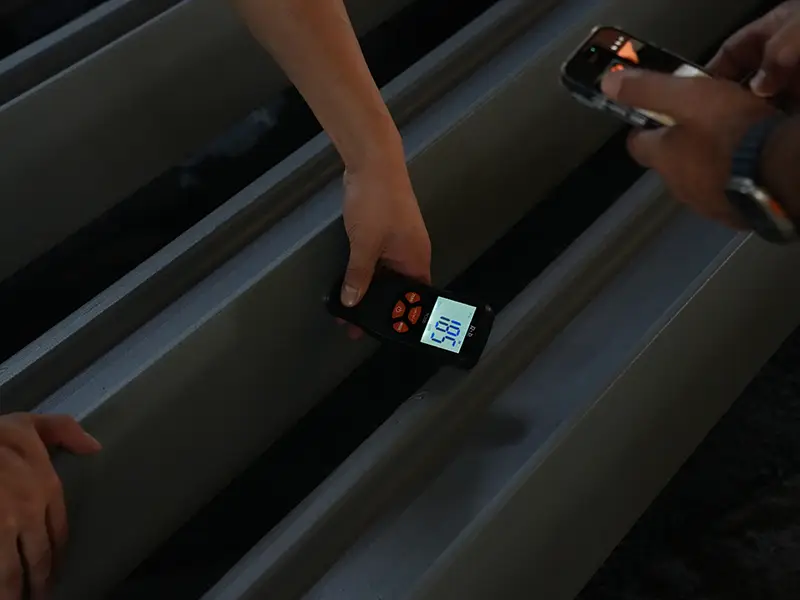
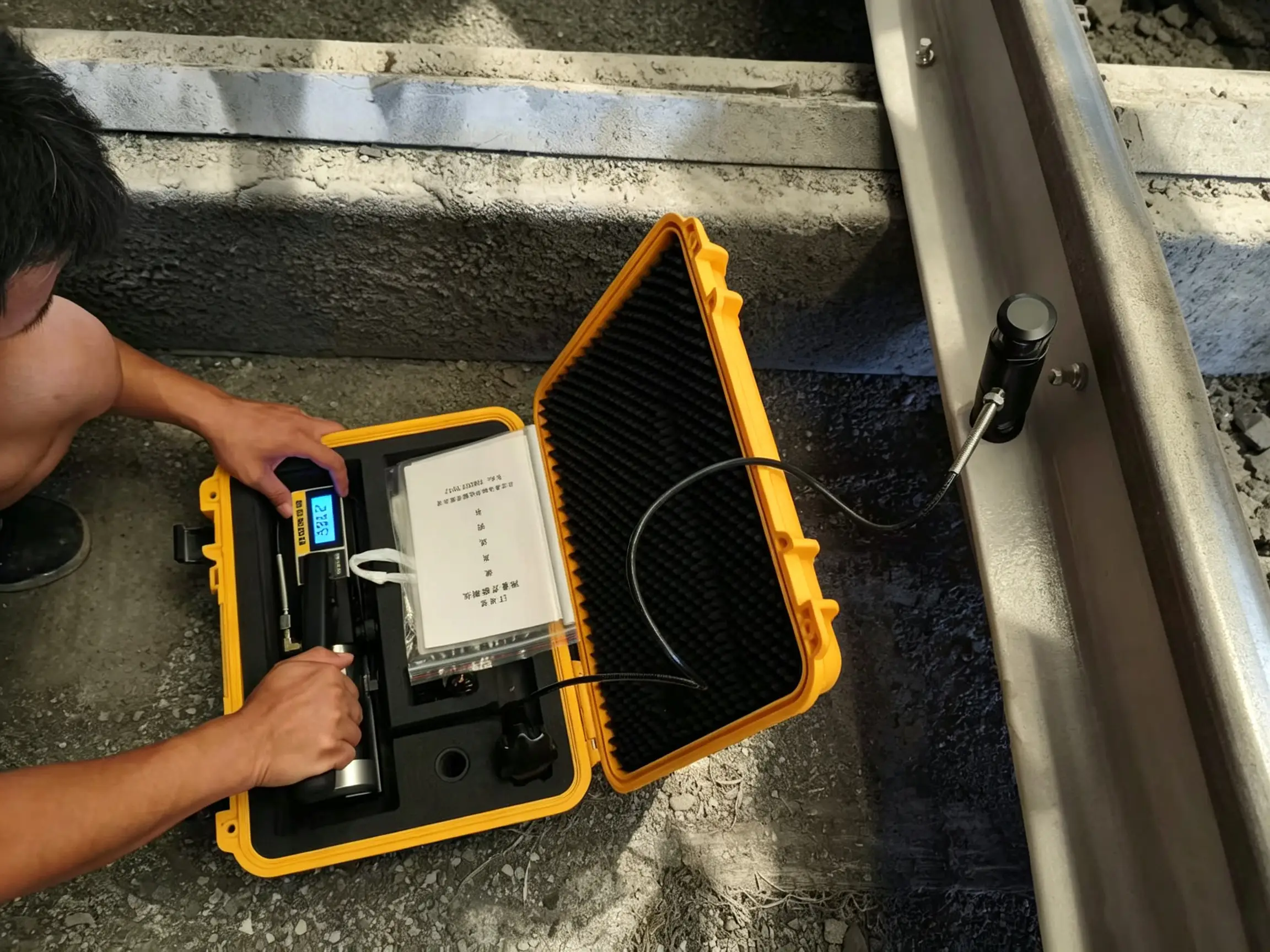
Intermediate Coat Thickness Detection
Dry film thickness (DFT) measured on the intermediate epoxy coat to confirm each layer meets its specified micron range.
Each-Layer Paint Inspection
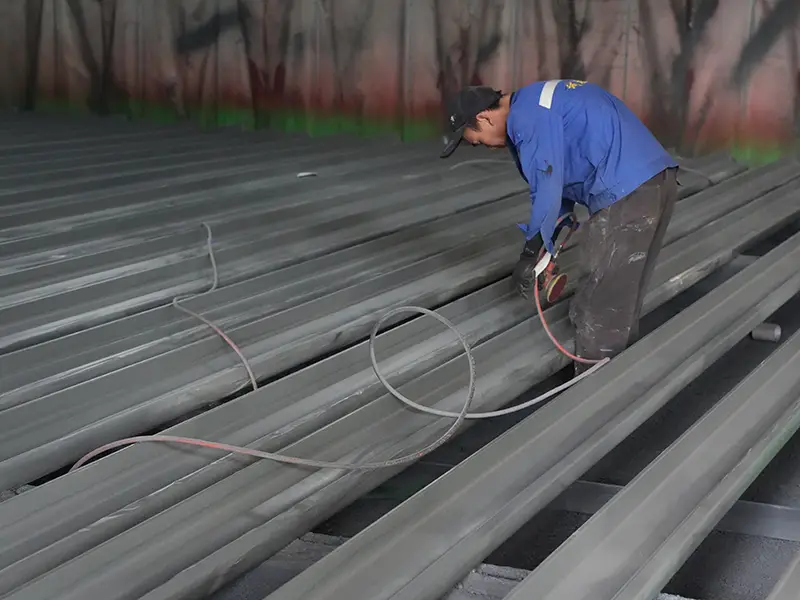
Visual and instrument inspection after every coat – coverage uniformity, film continuity and absence of defects.
Paint Grinding & Repair
Localised defects (runs, sags, pinholes) are sanded and touched up to restore a continuous protective film.
④
Acceptance Testing & Finished Product
Paint Adhesion Test
Cross-cut / pull-off adhesion testing validates the bond between the coating system and steel substrate.
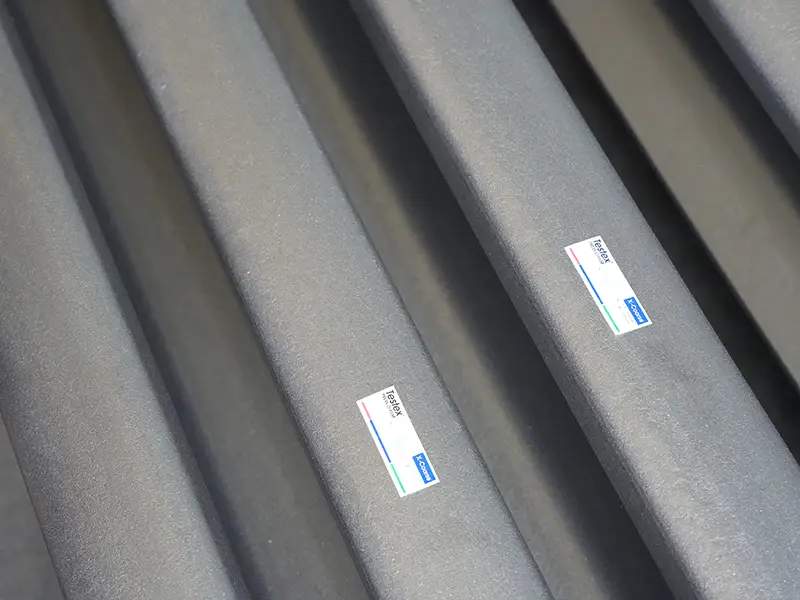
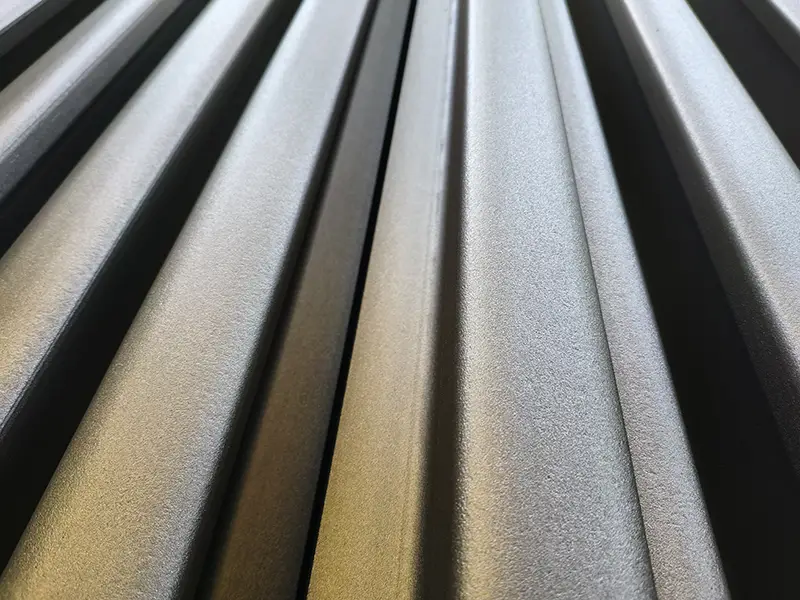
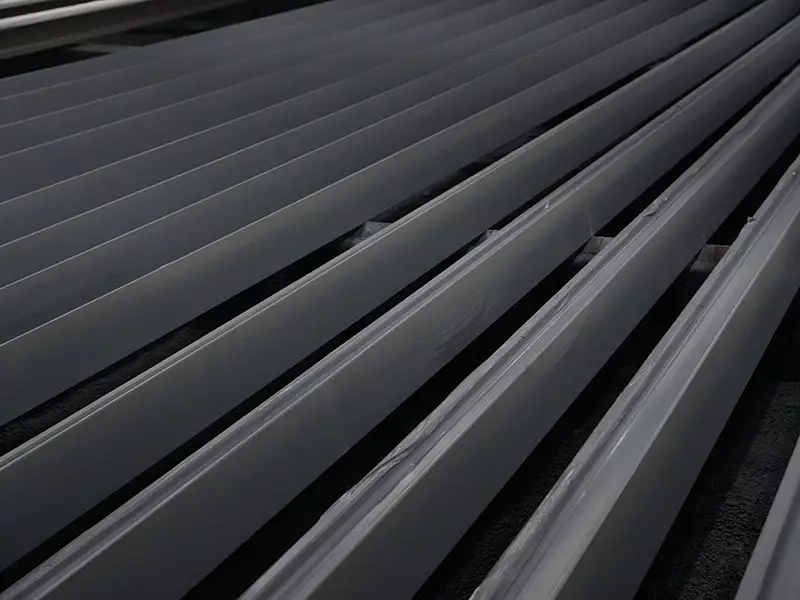
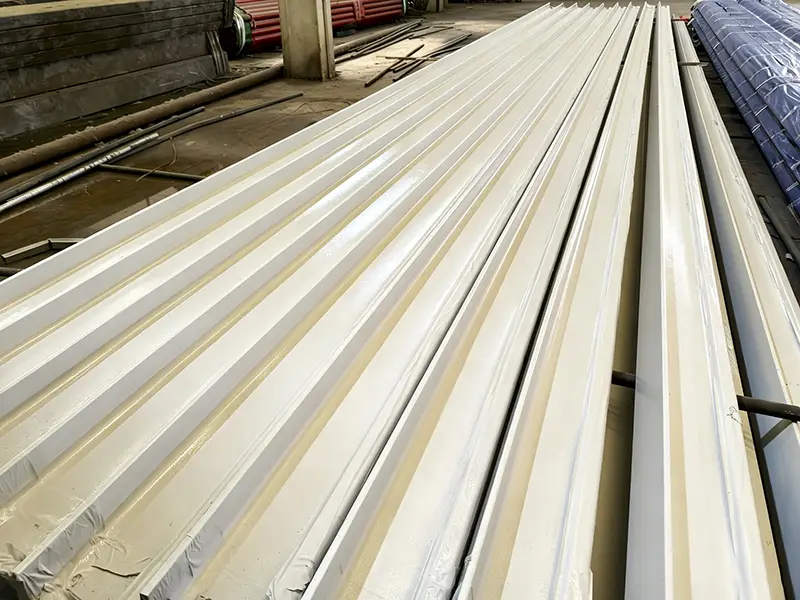
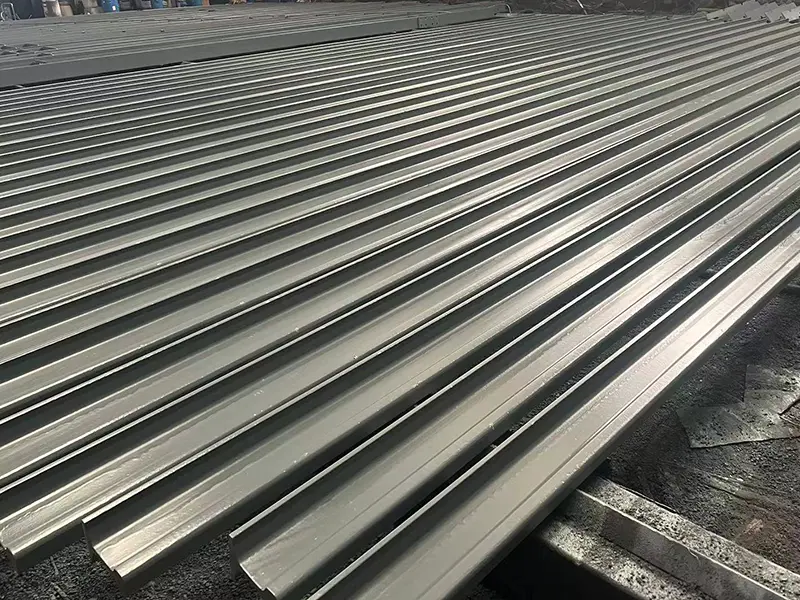
Coated Finished Product
The completed coated rail – a uniform, defect-free protective system ready for service in the mine environment.
⑤
Export Packaging
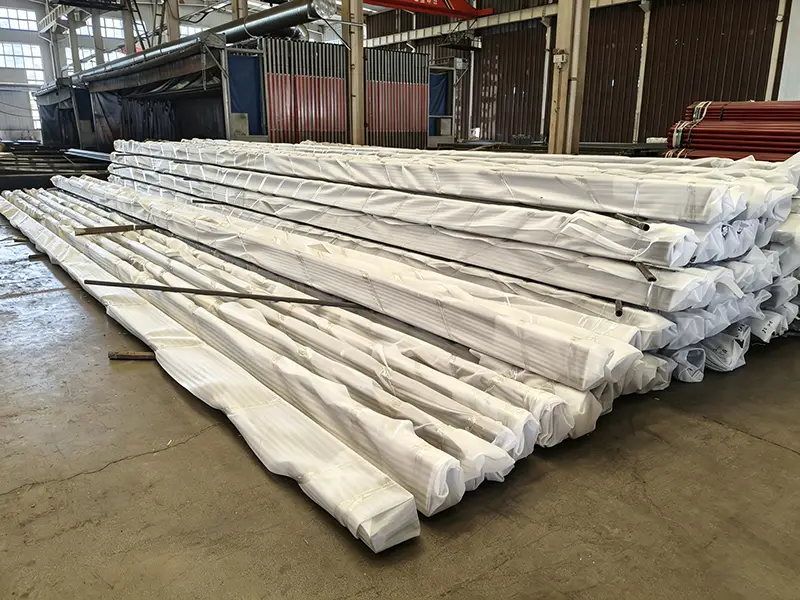
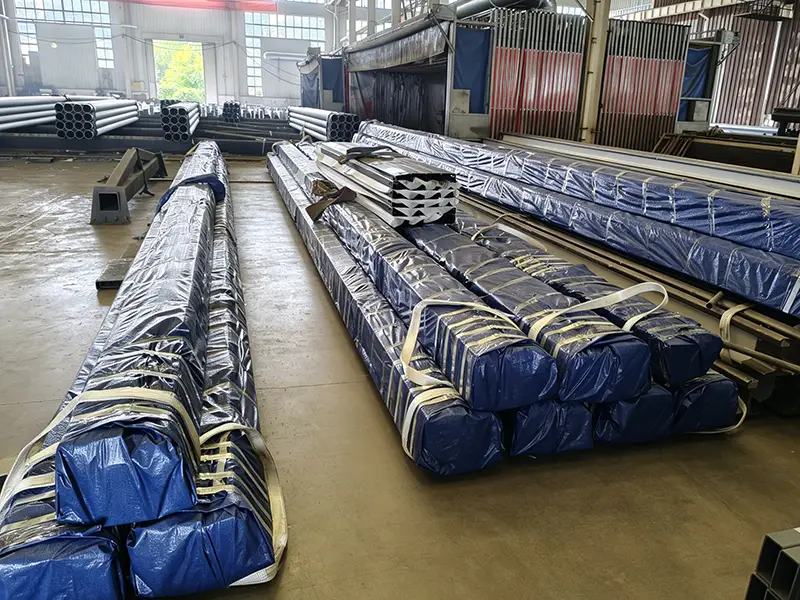
Packaging Step 1 - Soft Film Protection
Rails wrapped in VCI soft film for corrosion inhibition and surface protection during transit.
Packaging Step 2 - Hard Plastic Re-Packaging
A second hard plastic film layer secures the bundle against handling and long sea-freight exposure.
Coating Systems
Rail Anti-Corrosion Coating Systems
Epoxy Coating System
Exceptional adhesion and chemical resistance, ideal for high-impact zones and cathodic protection compatibility.
✔ Excellent barrier protection
Polyurethane Topcoat System
UV-resistant, color-stable, and outstanding weathering performance, perfect for exposed rail applications.
✔ Gloss retention & abrasion resistance
Multi-Layer Heavy Duty Protection
Combination of zinc-rich primer, epoxy intermediate, and durable topcoat for extreme C5/Im environments.
✔ Up to 25 years service life
Customized Thickness & Color Systems
Tailored DFT (dry film thickness) from 120μm to 400μm+ and any RAL color according to project specs.
✔ Design for port, mining, coastal
🔹 Each system is selected based on environmental exposure and project lifespan requirements.
Our Method
How We Design Rail Anti-Corrosion Coating Solutions
①
Environment Analysis
We evaluate corrosion exposure, humidity, and operating conditions (coastal, industrial, immersion).
②
Performance Requirement We define service life targets and protection level based on ISO 12944 & client durability goals.
③
System Configuration We design coating layers, thickness, and application process — tailored for each rail asset.
Blue rail protection coating with uncoated rail head for crane rail application
Gray rail anti-corrosion coating applied on JIS50N steel rail for industrial applications
Shot blasting surface preparation on steel rail before coating application
A rail protection coating system is not a product choice — it is an engineering decision.
Get Started
Need a Rail Anti-Corrosion Coating Solution?
Tell us your project environment and requirements. Our engineering team will recommend a tailored coating system for your application.