

Introduction
Our client in Indonesia required a reliable gantry crane rail system for heavy-duty port operations.
To support their gantry crane running at Buatan Port, we supplied a full package including A100 crane rail, rubber rail pads, and rail clips. The goal was to deliver a stable track system capable of handling long-term cyclic loading in a coastal environment.
Project Background
Buatan Port is one of the region’s growing logistics terminals, where gantry cranes play a critical role in material handling. The client needed a durable, corrosion-resistant crane rail track that minimized vibration and ensured safe crane movement.
Based on their operating load and rail support structure, we recommended the A100 gantry crane rail with matching fastening components.
Supplied Products
1. A100 Gantry Crane Rail
The A100 profile offers excellent load-handling capacity, stiffness, and wear resistance.
Key advantages for port operations include:
- High vertical load capacity to support the crane’s wheel system
- Stable running surface that minimizes crane vibration
- Strong compatibility with welded or bolted fastening systems
2. Rubber Rail Pads
Under a port gantry crane, rail pads play a surprisingly big role.
They reduce metal-to-concrete impact, absorb vibration, and help distribute loads more evenly across the runway beam.
For this project, we supplied oil-resistant and weather-resistant rubber pads designed to:
- Reduce structural noise
- Minimize concrete fatigue
- Extend the lifespan of both rail and fasteners
These benefits make rail pads a simple but crucial part of any gantry crane rail system.
3. Welded Rail Clips
To fasten the A100 rail securely to the runway beam, the customer chose welded rail clips, which are widely used in port gantry crane systems for their strength and long-term stability.
Our welded clips provide:
- Stable, rigid fixation for port gantry cranes
- Reliable performance under repeated crane movement
- Long service life with minimal maintenance
On-Site Installation and Client Feedback
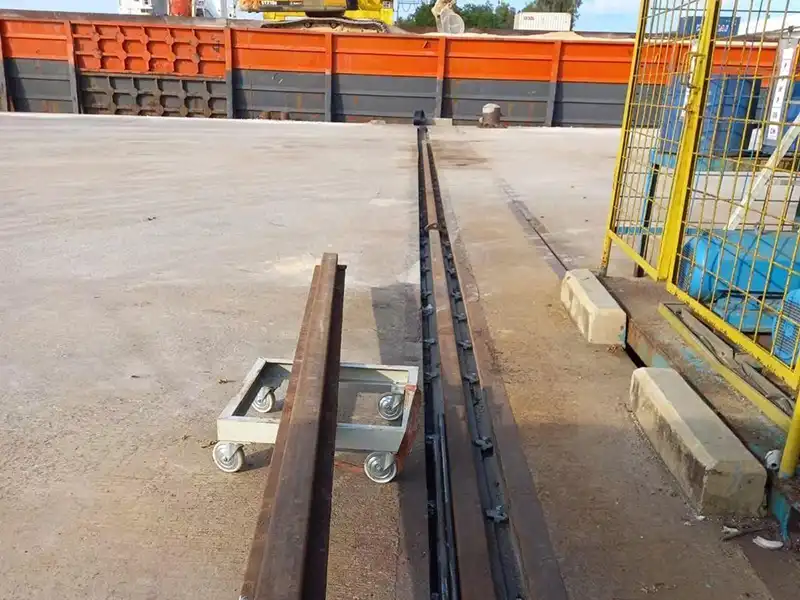
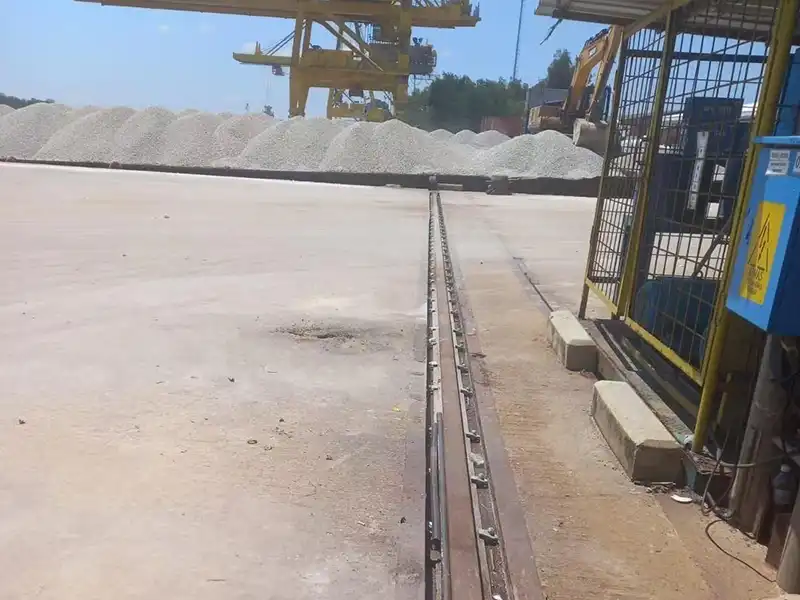
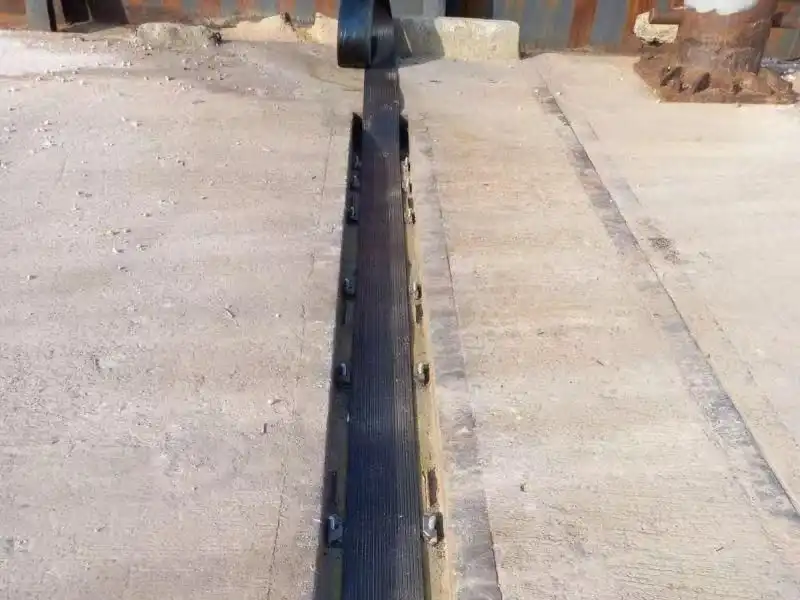
The client shared on-site installation photos showing the rail placement, pad positioning, and alignment work on the foundation. Their team followed our recommended steps, including:
- Cleaning and leveling the base surface before placing the pads
- Using a straightedge to set the initial rail line
- Fixing the rail clips in sequence to avoid distortion
Because the port operates in a humid coastal environment, extra attention was given to corrosion protection and torque control during fastening.
After installation, the port reported:
- Smoother crane travel during container handling
- Lower vibration transmitted to the base
- Stable rail positioning under lateral loads
- No issues related to rail movement or misalignment
These points confirmed that the system met their operational requirements.
Outcome & Project Value
This crane rail solution improved Buatan Port’s handling efficiency and reduced maintenance efforts. With A100 rails, rubber pads, and bolted clips working together, the runway achieved the right balance of strength, vibration control, and long-term durability.
For ports in Southeast Asia—where humidity, salt spray, and heavy loads are unavoidable—the success of this case demonstrates how proper gantry crane rail system design directly impacts crane performance and safety.