
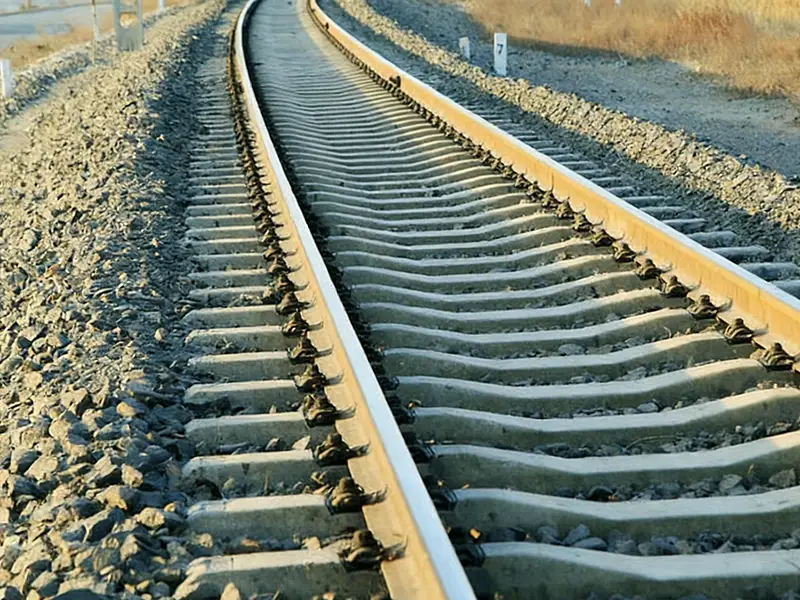
Railway tracks are rarely just straight lines. To navigate mountains, bypass obstacles, or connect different stations, engineers must incorporate curves. However, steel rails leave the factory as straight beams. Transforming these rigid, heavy bars into precise“bent rails” is a sophisticated engineering feat. This process combines material science, thermodynamics, and mechanical force.
Whether through high-heat “plastic surgery” or mechanical pressure, creating “bent rails” ensures that trains run safely and smoothly across diverse terrains.
Thermal Bending: Precision Through Heat
Thermal bending uses heat to make steel more flexible. When you heat a rail, its yield strength drops, allowing it to take a new shape.
The Flame Heating Method
This is the most common thermal technique. Engineers heat a specific section of the rail with a flame. As the steel expands and then cools, it creates a permanent curve.
For example, Maglev tracks use “F-type” steel rails. These require extreme precision. A CNC-controlled trolley moves a flame torch along a guide rail at a set speed. This ensures the heat is even. After heating, the rail cools naturally to lock in the curve. The challenge is ensuring the curve is smooth and continuous, avoiding any “S” shapes or jagged edges.
Cold Bending: Mechanical Pressure at Room Temperature
Not every curve requires heat. Cold bending happens at room temperature using massive mechanical force. This method is popular for urban transit systems like subways and trams.
The Rolling Method
In cities like Chengdu, technicians use rolling machines to pre-bend “grooved rails” for trams. By bending the rails before they are laid, engineers eliminate internal stress. This makes the installation more accurate and keeps the track stable over time.
Multi-Point and Four-Point Bending
For long-distance rails, a multi-point method is used. The rail is divided into small units. A hydraulic press applies pressure at specific points to create a series of tiny permanent bends. This step-by-step approach prevents the steel from “springing back” into a straight line, ensuring the final“bent rails” match the design perfectly.
The Secret of Reverse Pre-Bending in Production
Surprisingly, even “straight” rails often start as bent rails during the manufacturing process.
When a 100-meter rail is rolled in a mill, it is red-hot (800℃). Because the top of the rail is shaped differently than the bottom, it cools unevenly. If left alone, the rail would warp significantly as it cools.
To fix this, factories use “reverse pre-bending.” They intentionally bend the hot rail in the opposite direction. As the rail cools and shrinks, it pulls itself perfectly straight. Advanced systems now use fiber-optic networks and automated sensors to control this process with an accuracy of ±1 centimeter.
Maintenance: The “Rail Plastic Surgeons”
Maintenance is where the technology of bent rails saves lives and money. Over years of heavy use, rails on freight lines (like the Tangbao Line in China) can develop “hard bends” due to the weight of the trains.
Maintenance crews act as “rail plastic surgeons.” They use flame guns to heat the warped sections to about 800℃ (a dark red glow). They must be careful; if the steel reaches1000℃, the internal structure of the metal is ruined. By applying heat and pressure, they can straighten a warped rail or reshape it to the correct curvature.
This repair process can triple the lifespan of a rail.Fixing a single rail instead of replacing it saves significant maintenance costs.
Summary of Bending Techniques
| Process Type | Common Application | Key Feature |
| Flame Bending | Maglev F-rails, repairs | High precision for complex shapes |
| Reverse Pre-bending | Steel mills | Prevents warping during cooling |
| Rolling Method | Trams / Urban transit | Removes stress before laying track |
| Multi-Point Bending | Long-distance rails | High accuracy for long sections |
Conclusion
The technology behind bent rails is essential for modern infrastructure. From the massive rolling mills to the maintenance crews working on active lines, these techniques ensure our railway networks are both flexible and durable. As high-speed rail continues to expand, the demand for even more precise bending methods will drive the next generation of railway engineering.
Looking for Custom Bent Rails?
Glory Track provides precision rail bending services for crane systems, mining transport, and railway projects. Contact us for custom specifications and fast delivery.