
Crane Grab
A Crane Grab is a common lifting attachment used with cranes to handle bulk materials. It works with overhead cranes, gantry cranes, and portal cranes for loading and unloading loose goods.
The grab uses opening and closing jaws to collect material from a pile and release it at the target location. The crane operator controls the entire process from the cab, making operation simple and efficient.
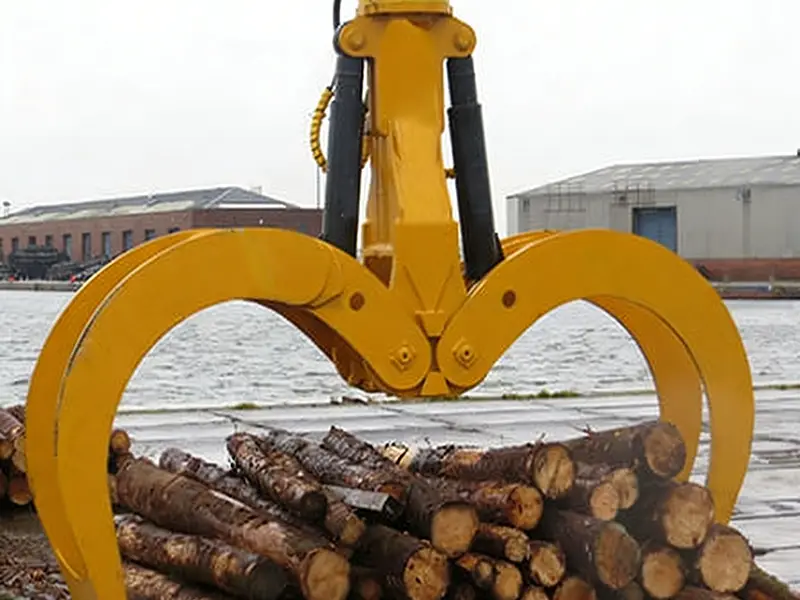
Crane grabs handle materials such as grain, sand, gravel, ore, scrap steel, waste, and timber. They are widely used in ports, terminals, power plants, mines, yards, and onboard vessels.
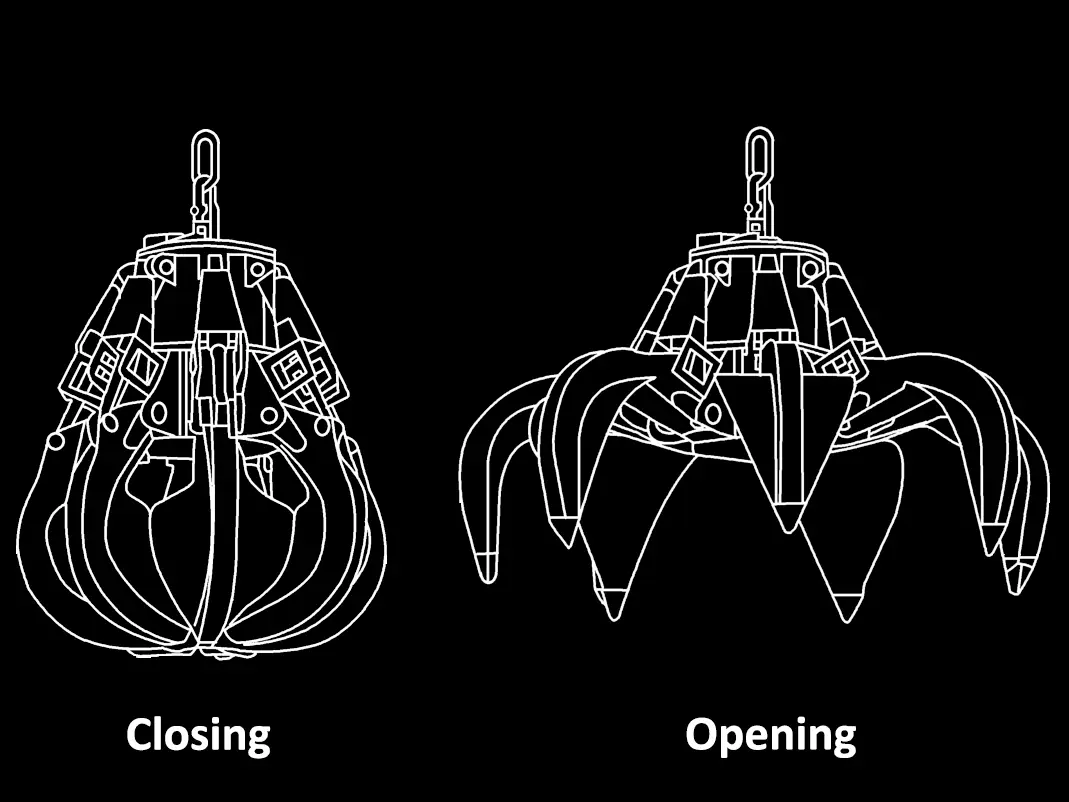
Working Principle of Crane Grab
A crane grab works by controlling the opening and closing of its jaw plates. When the jaws close inside a material pile, the grab collects and holds the load. When the jaws open while suspended above the target area, the material is released.
Different grab types use different drive methods:
- Mechanical grabs use wire ropes or linkage systems connected to the crane hoist to control jaw movement.
- Hydraulic grabs rely on hydraulic cylinders. Oil pressure extends or retracts the cylinders to open or close the jaws.
- Remote-controlled grabs integrate a self-contained hydraulic system. A wireless controller activates solenoid valves to reverse hydraulic flow and control jaw motion.
Regardless of the drive method, the basic working principle remains the same: controlled jaw movement enables efficient grabbing and unloading of bulk materials.
Types of Crane Grabs
Crane grabs can be classified by drive method and jaw shape, based on how they operate and what materials they handle.
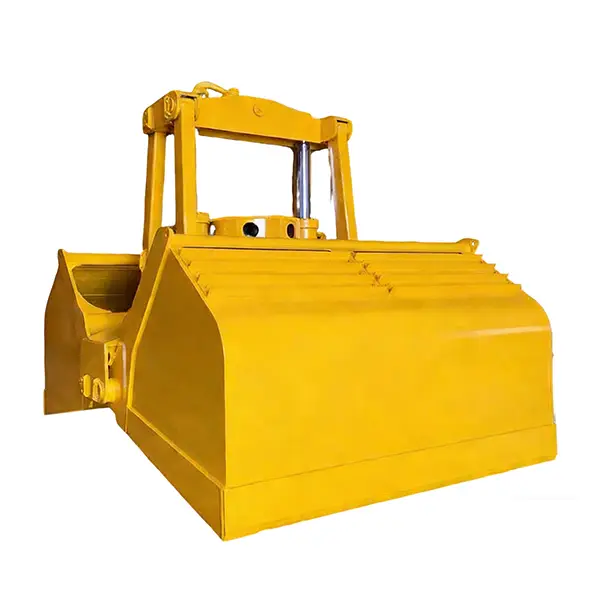
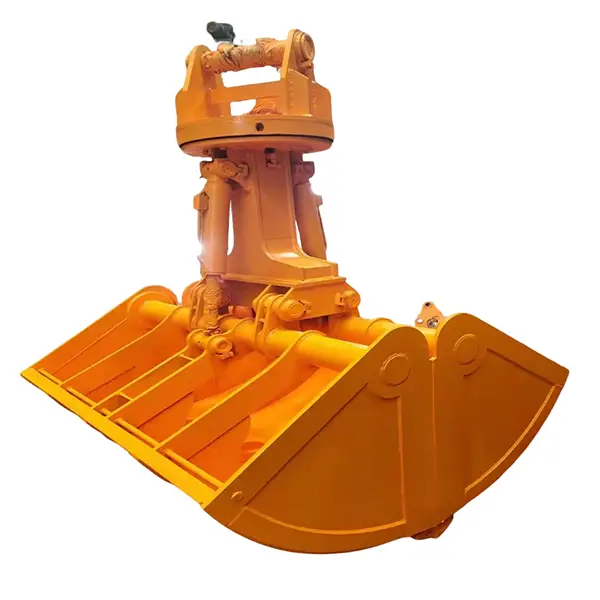
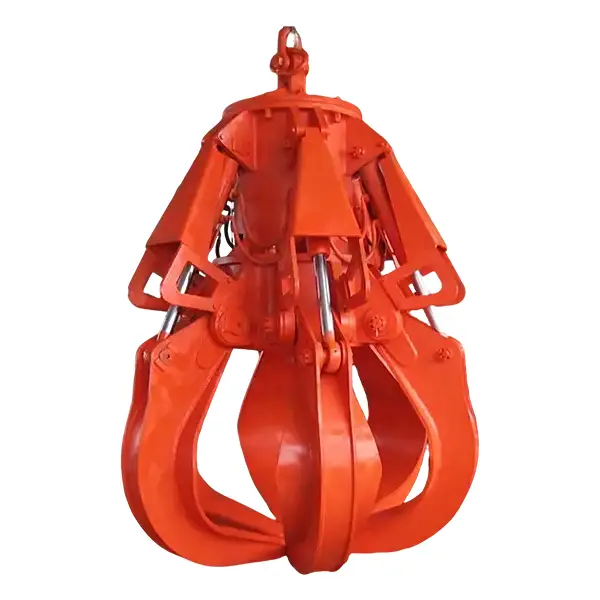
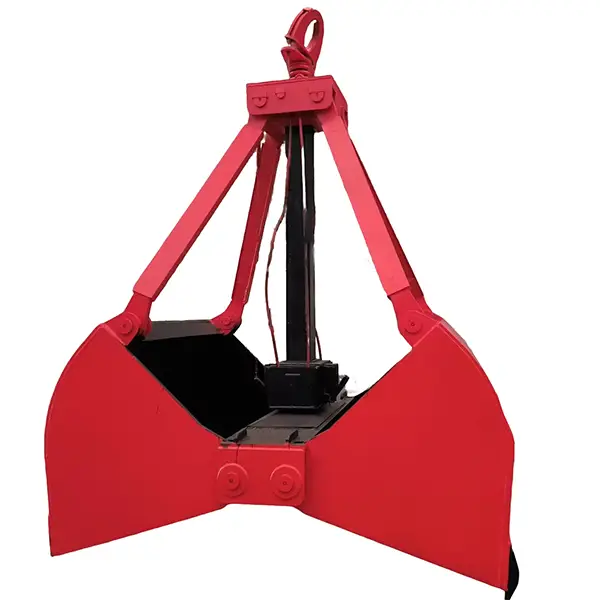
Classified by Drive Method
| Drive Type | Description | Typical Use |
|---|---|---|
| Hydraulic Crane Grab | Equipped with its own opening and closing system, usually driven by hydraulic cylinders. Offers smooth motion and strong grabbing force. | Complex working conditions, hydraulic cranes, excavators, portal cranes |
| Mechanical Crane Grab | No built-in power system. Jaw movement relies on wire ropes or linkages from the crane. | Overhead cranes, gantry cranes, bulk material handling |
| — Double Rope Grab | Mechanical grab using two wire ropes for lifting and jaw control. Stable operation and high productivity. | Ports, terminals, yards |
| — Single Rope Grab | Mechanical grab using a single wire rope for lifting and jaw movement. Simple design but lower efficiency. | Light-duty or limited applications |
Note: Double rope grabs and single rope grabs are subtypes of mechanical crane grabs. They are classified based on the wire rope control method rather than jaw shape or material type.
Classified by Jaw Shape
| Grab Type | Description | Typical Use |
|---|---|---|
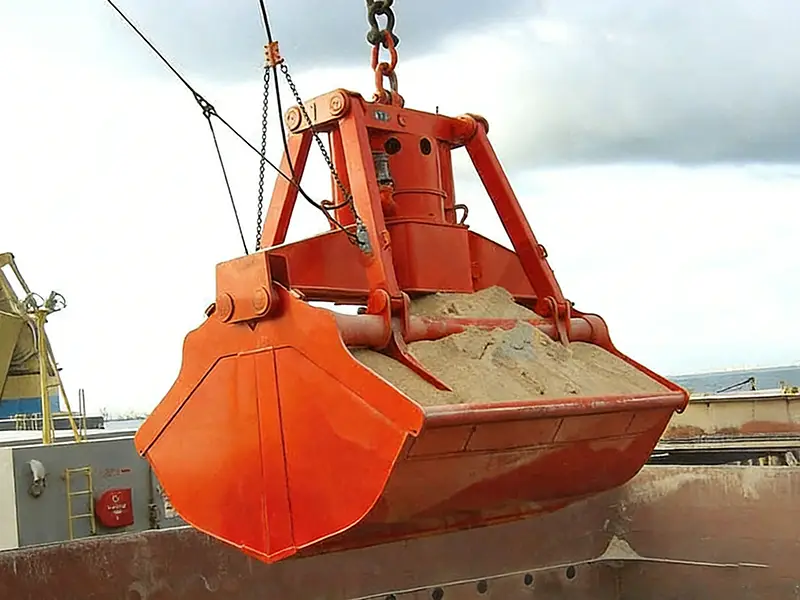
| Clamshell Grab (Grab Bucket) | Two full bucket-shaped jaws forming a closed cavity | Grain, coal, sand, gravel, ore |
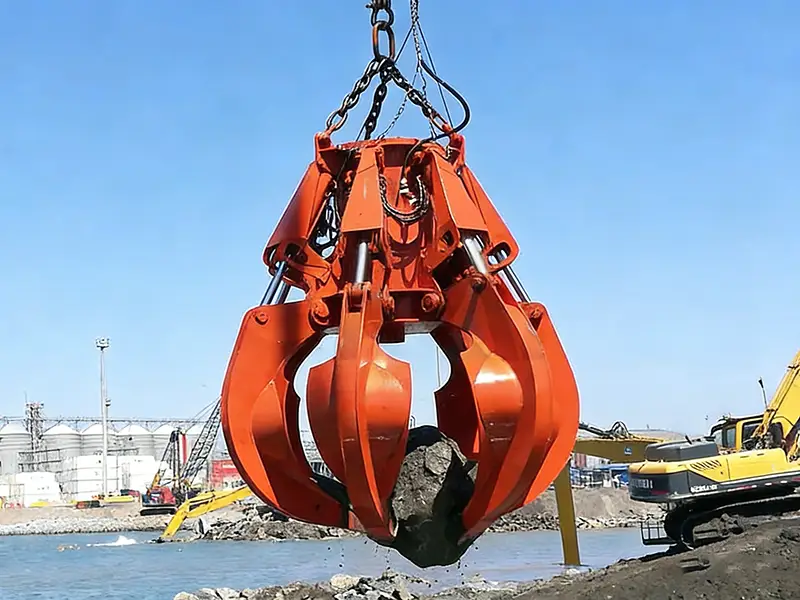
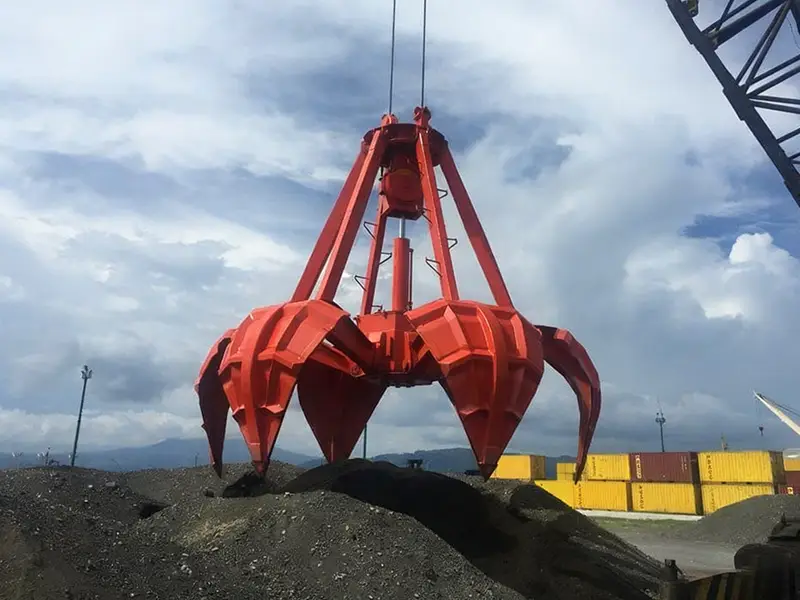
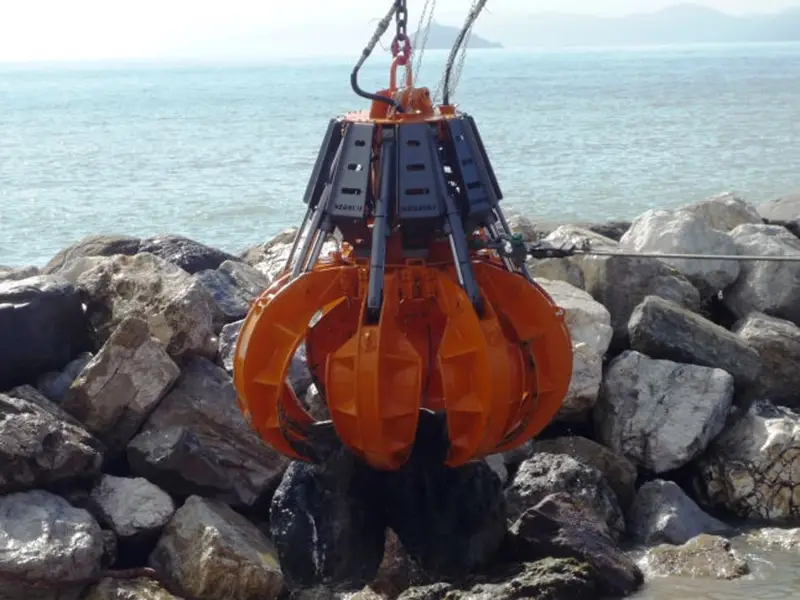
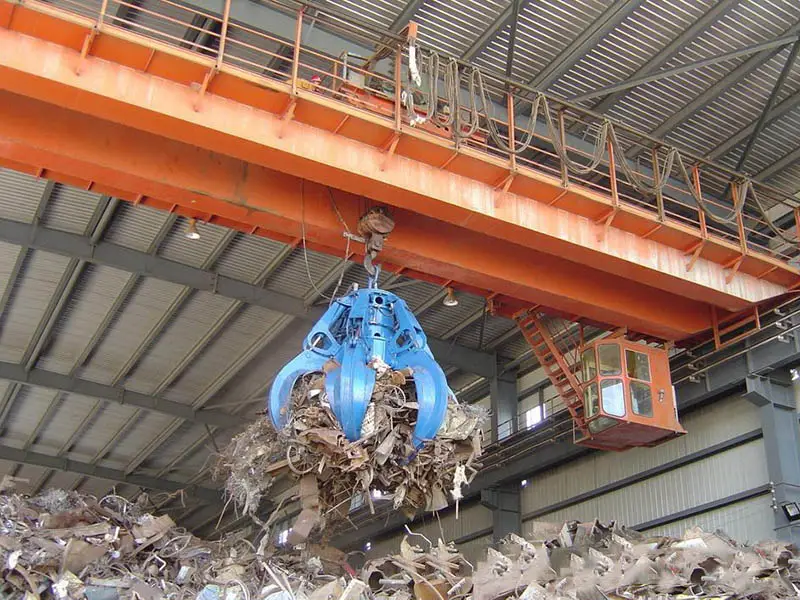
| Orange Peel Grab | Three or more curved tines | Scrap steel, bulky waste, large or irregular materials |
Crane Grab Applications
Crane grabs are widely used in bulk material handling across many industries. They adapt to different cranes and work efficiently in demanding environments.
Ports and Terminals:Used for loading and unloading bulk cargo such as coal, grain, ore, and scrap steel from ships and barges.
Railway Yards and Logistics Centers:Handle bulk materials during transfer between railcars, storage yards, and trucks.
Power Plants:Commonly used for coal handling, ash removal, and bulk fuel transfer.
Mines and Quarries:Suitable for grabbing ore, stone, and other heavy raw materials in open or confined areas.
Scrap Yards and Recycling Facilities:Ideal for handling scrap metal, industrial waste, and irregular materials, especially with orange peel grabs.
Construction and Industrial Sites:Used for moving sand, gravel, demolition waste, and general bulk materials.
How to Choose the Right Grab Bucket
Double-Rope Mechanical Grab
A double-rope mechanical grab is best suited for dry bulk materials such as coal and ore in stable environments. It uses wire ropes for jaw control, offers reliable operation, and features a simple structure with low maintenance requirements. This type is widely used in ports, yards, and bulk terminals where continuous operation and cost control matter.
Recommended for: dry materials, high-duty cycles, cost-sensitive projects
Hydraulic Grab
A hydraulic grab is designed for wet, sticky, or mixed materials that require precise control. Hydraulic cylinders provide smooth jaw movement and consistent grabbing force, even under harsh conditions. With high sealing levels available, it performs well in waste handling and complex environments, delivering up to 30% higher cycle efficiency compared to mechanical grabs in similar conditions.
Recommended for: waste handling, wet materials, demanding operating conditions
Clamp-Type Grab
A clamp-type grab is engineered for irregular and bulky materials, especially scrap steel. Multiple gripping points ensure stable lifting and reduce the risk of material slipping during hoisting. This design helps minimize material loss while improving safety during handling.
Recommended for: scrap yards, recycling facilities, irregular metal handling
Need Expert Support?
→ Need help selecting the right grab bucket?
Submit your contact information to receive a free compatibility analysis based on your crane type, material, and working conditions.