
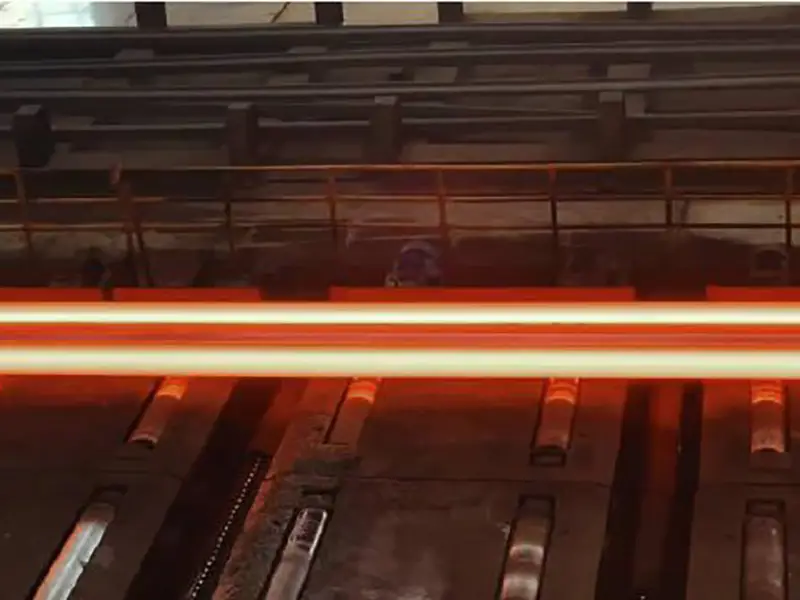
Ports and heavy-haul operations push crane rails to their limits. Every wheel load, sideways force, and rapid travel cycle grinds away at the rail head, and standard rails often wear out long before anyone expects. The result? Costly downtime and frequent replacements. Head-hardened rails change that equation. They strengthen the rail head with a higher surface hardness, giving the track better wear resistance, greater stability under heavy loads, and a noticeably lower life-cycle cost.
What Are Head-Hardened Rails?
Head-hardened rails—often called HH rails—use controlled cooling or induction hardening to boost the hardness of the rail head while keeping the inner core tough and flexible.
This hardened top layer (the case depth) stands up to rolling wear, metal flow, and plastic deformation. That’s why HH rails perform so well in environments where wheels hit the same spots over and over again with high, concentrated forces.
Why Ports & Heavy-Haul Operations Need HH Rails
Ports and heavy-haul systems generate some of the most demanding wheel–rail interactions in any industrial setting. STS cranes, RTGs, RMGs, and heavy freight wagons apply repetitive high loads and side forces that quickly exceed the limits of standard rail materials.
Head-hardened rails solve several critical pain points:
Less Wear, Longer Service Life
The hardened surface slows down metal loss, reducing the rate of wear on the gauge and top of the rail head.
Lower Maintenance and Fewer Shutdowns
With slower wear comes longer intervals between grinding, alignment correction, and rail replacement.
Better Joint and Welding Performance
Higher hardness improves resistance to head checking, pitting, and plastic deformation—major causes of premature joint failure.
Reduced Life-Cycle Cost
While HH rails cost more upfront, the reduced maintenance and longer service life result in significant LCC savings for port terminals and heavy freight operators.
Key Performance Metrics to Evaluate
When comparing rail options, these technical indicators provide the most insight into real-world performance:
- Surface hardness (HB/HRC) – Higher hardness reduces abrasive wear.
- Case depth – A thicker hardened layer increases durability.
- Wear rate – Ideally measured in mm per million load cycles or per ton-kilometer.
- Service interval – Time between corrective maintenance or replacement.
- Life-cycle cost (LCC) – A complete view of total spending over the rail’s operational life.
Ports and railways typically select HH rails where standard grades (e.g., R260) can no longer withstand the operating cycle without excessive maintenance.
Installation & Maintenance Best Practices
Even the best rail material needs proper installation to achieve maximum lifespan.
Key recommendations include:
- Precision machining of rail ends to avoid impact loading
- Supplying consistent weld quality using approved procedures
- Ensuring alignment and side-restraint accuracy on crane beams
- Regular inspections for wear, head checks, and bolt-hole cracking
- Grinding or lathing when necessary to restore rail profile
When supported by good maintenance practice, HH rails can deliver multiple years of additional service life compared with standard rails.
Conclusion
Head-hardened rails aren’t just an upgrade—they’re a practical requirement for ports and heavy-haul systems that operate under extreme wear. If you’re planning a new installation or evaluating an existing rail line, our engineers can review your load conditions and recommend the most suitable HH rail grade and processing options.