
In construction, railway components and machinery manufacturing, Q235 steel is one of the most widely used basic steels. People often use it for common structural parts, rail accessories, and factory supports. But many face a dilemma when selecting materials: What are the key differences between Q235 steel and the stronger Q355 steel? Should they choose Q235 or Q355?
This article looks at real applications like rail fittings and structural sections. Starting from the properties of Q235 steel, it compares the main differences between Q235 and Q355. This will help you pick the right material.
What is Q235 Steel? What Are Its Key Features?
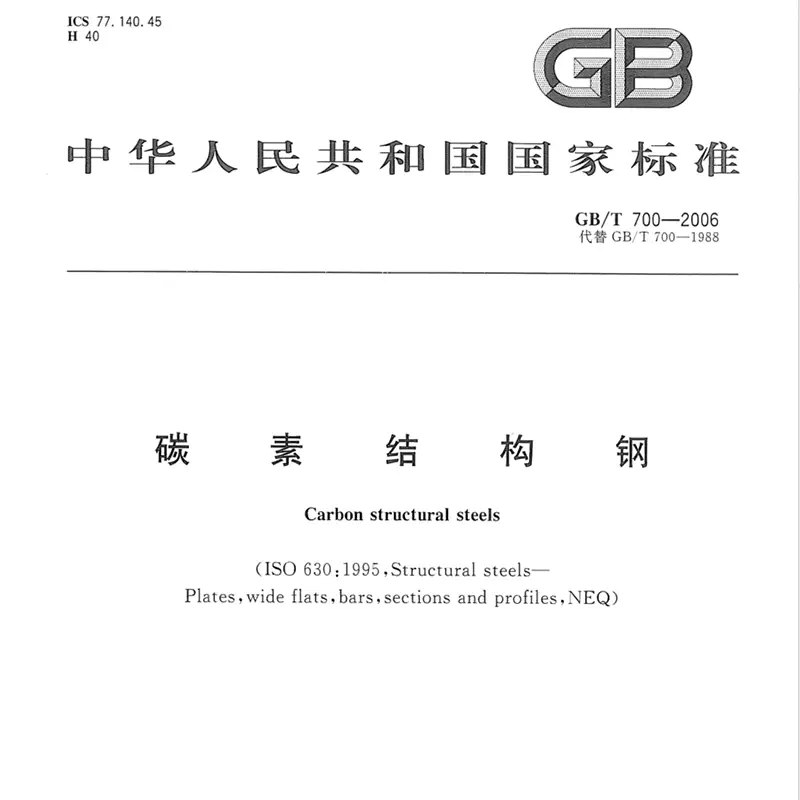
Q235 steel is a common carbon structural steel. It follows the GB/T 700-2006 standard.
The “Q” stands for “Yield Strength,” and “235” means its yield strength is ≥235 MPa when the thickness is ≤16 mm.
As a low-carbon steel (carbon content ≤0.22%), it offers clear advantages in rail accessories and profile manufacturing:
- Strong processing adaptability: It has high plasticity (elongation ≥26%), making it easy to cut, drill, weld, and bend. It works well for complex parts like base plates of rail clamps and connecting holes of fishplates. Q235 steel handles these shapes easily. Welding is simple with common J422 electrodes, and no special process adjustments are needed.
- Good cost efficiency: It contains no alloy elements, and its production process is simple. Its unit price is lower than Q355 steel. For non-critical load-bearing profiles, like common angle steel or light channel steel used in factory buildings, Q235 steel helps reduce costs effectively.
- Wide range of uses: It is often used in civil construction for embedded parts, light shelving, and non-load-bearing factory supports. It also suits low-stress applications such as plant rail tracks, light rail systems, rail clamps, and general connecting profiles. It provides enough stability for daily loads (e.g., rail transport ≤10 tons) and resists deformation well.
Q235 Steel vs. Q355 Steel: 5 Key Differences
Many customers are confused: Can Q235 steel be used for heavy-duty rail components? Will Q355 steel be more durable for fishplates? Below, we compare the differences between the two steels using data, considering the stress characteristics and operating environments of rail components:
| Property | Q235 (Mild Carbon Steel) | Q355 (High-Strength Low-Alloy Steel) | Key Differences |
|---|---|---|---|
| Yield Strength | ≥235 MPa (thickness ≤16 mm) | ≥355 MPa (thickness ≤16 mm) | Q355 offers approx. 51% higher yield strength than Q235. |
| Chemical Composition | C ≤0.22%, no alloying elements, S ≤0.045% | C ≤0.18%, contains Mn, V, etc., S ≤0.025% | Q355 has fewer impurities and is alloy-strengthened. |
| Low-Temperature Toughness | Grade D: Impact energy ≥27 J at -20°C (mainly for normal temperature) | Grade E: Impact energy ≥27 J at -40°C | Q355 is suitable for low-temperature and outdoor environments. |
| Corrosion Resistance | Moderate; requires galvanizing, service life ~15 years | Better; alloying improves rust resistance, service life ≥30 years | Q355 offers better durability and lower maintenance costs. |
| Workability | Easy to weld and bend; no special process requirements | Requires low-hydrogen electrodes and preheating before welding | Q235 is easier and more convenient to process. |
Q235 or Q355? Choose Based on These 3 Types of Scenarios
Choosing between Q235 and Q355 depends heavily on the actual situation:
- Three Scenarios Where Q235 Steel Is Suitable
Light rail accessories: Examples include hand-pushed rail clamps inside factory areas (load ≤5 tons) and connecting angle steel for indoor storage light rails. These parts bear small forces and face no harsh environmental conditions. Q235 offers good cost efficiency and workability for such uses.
Non-critical load-bearing profiles: These include light-duty load-bearing rails and steel base plates. These applications do not need high strength, and Q235 is sufficient.
Normal-temperature, low-load rails: Examples are sightseeing light rails in parks and material transport tracks in small workshops. Their matching fishplates and ordinary connecting parts made from Q235 steel keep costs low while meeting usage needs.
- Three Scenarios Where Q355 Steel Is Preferred
Heavy-duty rail accessories: Examples include fishplates for freight rails (load ≥30 tons) in ports and mining, and rail clamps for heavy haulage tracks. These parts bear large loads over long periods. Q355 steel better resists deformation and fracture.
Outdoor or harsh environment accessories: Examples are fishplates for open-air railways and rail clamps in coastal areas. Q355 material, with anti-corrosion treatment, offers stronger rust resistance. It reduces damage from rain and salt spray, extending part life.
Weight reduction: For example, supports for large equipment can be made thinner with Q355 (saving 15%–20% material compared to Q235), while still maintaining strength.
Frequently Asked Questions: 3 Common Questions About Q235 Steel
- Can Q235 replace Q355 steel?
No. If a project requires a yield strength of 300 MPa or more, Q235 steel is not strong enough. Using it could lead to safety risks, such as deformation or fracture of the steel. - What types of Q235 material are available? How to choose?
Q235 is divided into grades A, B, C, and D. For everyday use, choose Q235B (suitable for normal temperatures). For low-temperature environments, use Q235D. Avoid Q235A (no impact test requirements, lower safety). - Can Q235 material be used for outdoor rail clamps?
Yes. But it is best to apply hot-dip galvanizing or anti-corrosion paint. This treatment will extend its service life.
conclusion
As a trusted supplier, Glory Track provides both Q235 and Q355 steel products. We help you select the right material based on your project’s needs, budget, and environment. With Glory Track, you get reliable performance and the best value — ensuring you never pay for more strength than you actually need.