
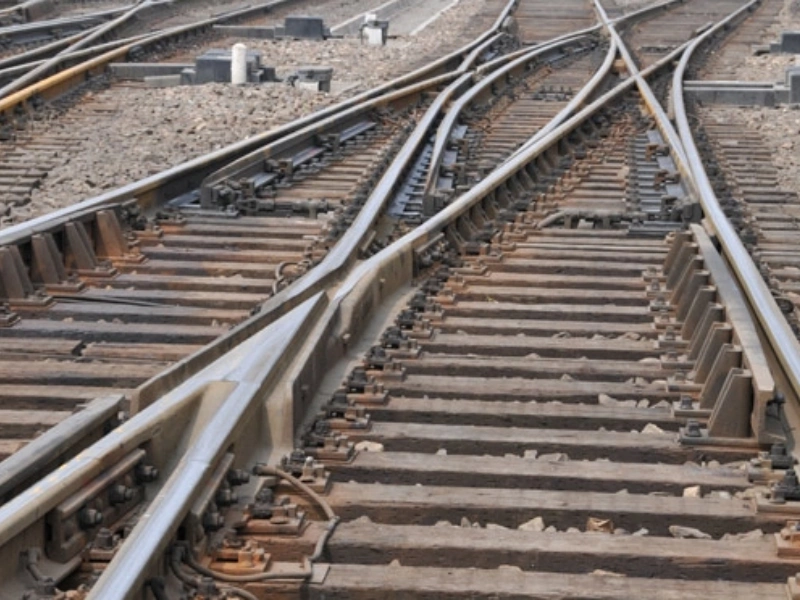
Railway turnouts, or switches, are essential for directing trains from one track to another. Proper railway turnout installation is crucial to keep trains running safely, ensure smooth transitions, and maintain track stability over time.
Installing turnouts isn’t as simple as it sounds. With their complex rail shapes and moving parts, the process demands precise alignment, accurate track gauge, and the right rail types. If done right, these components work seamlessly to support safe and efficient train operations.
This guide will walk you through the key steps and important factors for installing railway turnouts in modern rail systems.
What Is a Railway Turnout?
A railway turnout is a special track structure that enables trains to transfer from one track to another.
Typical turnout systems include several key components:
- Switch rails
- Stock rails
- Frog (crossing)
- Guard rails
- Switch sleepers
- Rail fastening systems
These components must work together with high precision to guide train wheels safely through the switching area.
Railway Turnout Installation Location Requirements
The position of a railway turnout should follow the track design plan as closely as possible.
In some cases, minor adjustments may be allowed during construction. However, the relocation must not affect the effective length of the track or other operational conditions.
For example:
- In general railway lines, the turnout position may be adjusted slightly during installation.
- In large stations or throat areas, the allowable movement range is much smaller because track geometry and train operations are more complex.
Maintaining the correct turnout location ensures proper track alignment and safe train movement through the junction.
Rail Type Compatibility in Turnout Installation
Rail compatibility is one of the most important aspects of turnout installation.
On main railway lines, the rail profile used in the turnout should normally be the same as the rail type used on the mainline track. This helps maintain consistent load distribution and reduces wear.
For station tracks, industrial railways, or private rail sidings, the turnout rail type should not be smaller than the rail used on the connected track.
If the turnout rail profile differs from the connecting track, transition rails should be installed:
- A section of rail with the same profile as the turnout should be installed before and after the turnout.
- The recommended length is typically around 6.25 meters, though in restricted conditions it may be reduced to about 4.5 meters.
This transition helps avoid stress concentration and improves the smoothness of train movement.
Spacing Between Adjacent Turnouts
When two turnouts are installed close to each other, additional design considerations are required.
If the distance between two adjacent turnouts is less than about 9 meters, the following rules are usually applied:
- The two turnouts should use the same rail type, or
- A transition rail should be used to connect different rail profiles.
For railways equipped with track circuits, the spacing must also meet the requirements for installing insulated joints. In general, insulated joints should not be placed directly at the connection point between different rail types.
Key Requirements for Railway Turnout Installation
Railway turnout installation must follow standard engineering drawings and construction specifications. Several technical parameters must be carefully controlled during installation.
1. Sleeper Arrangement
The spacing of turnout sleepers should match the spacing used for rail joints in the adjacent track.
Additionally:
- Rail joints should be positioned near the center of the sleeper spacing.
- For single turnouts, the turnout sleepers should be aligned along the outer side of the straight track.
Proper sleeper spacing helps distribute wheel loads and maintain track stability.
2. Switch Mechanism Operation
The switching mechanism must operate smoothly and reliably.
During installation, special attention should be paid to the movement of the switch rails:
- The tip of the switch rail must closely contact the stock rail.
- The switching device should move freely without obstruction.
Typical minimum movement values for the first switch rod include:
- Straight switch rail: about 142 mm
- Curved switch rail: about 152 mm
- Flexible switch rail: about 180 mm
Correct switch movement ensures the turnout can safely guide trains onto the selected route.
3. Track Gauge and Clearance Control
Track geometry is one of the most critical factors in turnout performance.
The allowable track gauge deviation in a turnout area is typically very small:
- At the switch point with locking devices: about ±1 mm
- At other locations: approximately +3 mm / −2 mm
In addition, several key clearances must be controlled:
- Check gauge should generally not be less than 1391 mm
- Back-to-back clearance should not exceed 1438 mm
Maintaining these tolerances helps prevent wheel derailment and ensures smooth passage through the turnout.
Accurate track geometry is especially important because even small deviations can affect train stability and long-term rail wear.
Why Precise Turnout Installation Matters
Turnouts are among the most complex and heavily stressed parts of railway infrastructure. Improper installation can lead to:
- excessive rail wear
- wheel impact and vibration
- switch malfunction
- potential derailment risks
Precise turnout installation ensures that trains can safely pass through junctions while minimizing maintenance requirements.
High-quality rails, fastening systems, and precision-manufactured turnout components all contribute to long-term track reliability.
Conclusion
Proper railway turnout installation is all about precision—getting the right rail type, perfect track gauge, and smooth switch operation. By following best practices and using high-quality components, you ensure not only safe and efficient train operations but also the long-term durability of your track system.
At Glory Track, we provide top-notch rail products designed for seamless turnout installation. Our solutions help boost performance, reduce maintenance, and extend the lifespan of your infrastructure. Trust us to keep your rail systems running smoothly for years to come.