
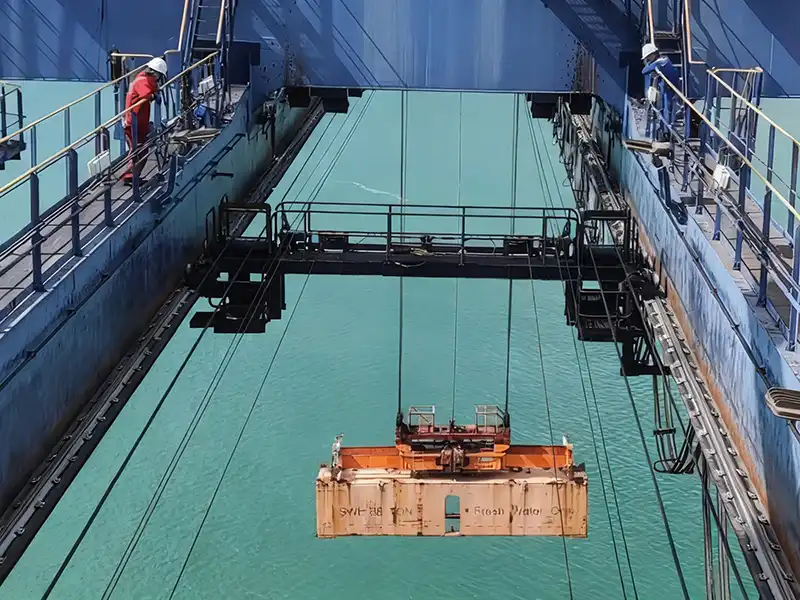
Short rails play a critical role in trolley and rail systems used in container cranes, shipyard cranes, and heavy industrial lifting equipment. As crane performance improves and lifting cycles accelerate, the short rail becomes one of the most heavily stressed components along the trolley rail path. Its condition directly affects the stability of the trolley crane, the smoothness of the rail trolley system, and the long-term reliability of the entire trolley rail system.
To help operators improve maintenance planning and reduce rail failures, this article outlines the most common damage patterns observed on short rails—especially those used on quay cranes, heavy-duty gantries, and crane trolley applications.
The Role of Short Rails in Trolley and Rail Systems
A short rail is installed at hinge points or transition areas where the trolley rails experience the highest impact loads. These locations often see rapid trolley acceleration, abrupt braking, and repeated directional changes. In both single-girder and double-girder cranes, the rail trolley must pass across the short section without vibration spikes or misalignment.
The trolley rail works together with the long rails, pads, and mounting components to maintain smooth movement within the trolley and rail system. In high-load quay cranes, operators sometimes refer to these sections as short crane rails because they carry concentrated impact forces coming from the heavy-duty trolley crane.
Depending on crane design, short rails may be bolted, clamped, or welded. Although welded solutions are common in yard cranes, bolted short rails remain widely used in large trolley rail systems in port container terminals.
Common Short Rail Damage Patterns
Short rails experience five major failure modes due to impact loading, rail geometry, manufacturing factors, and improper alignment.
2.1 Cracking at Locating Block Notches
Locating blocks require a notch cut into the rail head or web, which weakens the short rail structure. Residual stress from manufacturing and repeated impact from the crane trolley often trigger fatigue cracks at these points. Realigning or redesigning block positions can significantly reduce the risk.
2.2 Cracks at Connections Between Short and Long Rails
Reinforced short rails used in heavy-duty trolley systems sometimes crack where they connect to long rails. Poor welding procedure, incorrect heat input, or insufficient preheating may create weak zones. This issue appears frequently on older trolley rail installations.
2.3 Edge Chipping and Surface Spalling
Bolted short rails can develop edge chips when the rail trolley system places uneven pressure on the steel surface. Misalignment, rail seat irregularities, or vibration from the trolley railing structure all contribute. If not corrected, chipping can damage trolley wheels and increase operational vibration.
2.4 Longitudinal Rail Cracks
Longitudinal cracks often appear when the rail material contains microdefects or when heat treatment creates temper brittleness. These multi-layer cracks propagate quickly under high horizontal loads from the trolley crane. Using quality alloy steel and consistent quenching improves resistance.
2.5 Cracks at Welded Joints
When short rails are welded in place, improper procedures can cause brittle or porous welds that crack after only a short period of service. Re-welding without correcting the root cause usually leads to repeated failure.
Improving Short Rail Performance
To extend rail life and ensure smooth operation across every section of the trolley and rail system, operators should:
use higher toughness steel for short crane rails
verify alignment across the entire trolley rail system
install rail pads that reduce impact transfer
maintain correct trolley wheel geometry
ensure proper welding and NDT procedures
Consistent inspection can dramatically reduce downtime in high-demand terminals.
Conclusion
Short rail failures—such as cracking, edge chipping, weld defects, and longitudinal fractures—stem from design, alignment, and material factors. Understanding these patterns helps operators maintain reliable trolley rails and ensures stable, safe trolley movement within any rail trolley system. With proper installation and ongoing monitoring, a well-designed short rail can support years of efficient crane operation in even the most demanding industrial environments.