
Customers often ask about steel rail lifespan, but there is no single standard answer. Some rails can serve for 30–40 years, while others need replacement in less than 10 years. This variation is similar to vehicle mileage. It mainly depends on load conditions, operating environment, and maintenance level.
In general, under proper maintenance, the typical rail lifespan ranges from 20 to 40 years. The actual service life is influenced by rail grade, load parameters, track conditions, and maintenance standards. This article explains the aging mechanisms, key influencing factors, and methods to extend rail lifespan.
Mechanisms Behind Steel Rail Deterioration
Rails are subjected to repeated loading from trains, cranes, and mining equipment. The failure process is the combined effect of wear, fatigue, and corrosion. These mechanisms gradually reduce structural performance and shorten steel rail lifespan.
1. Wear: Mechanical Loss at Wheel-Rail Contact
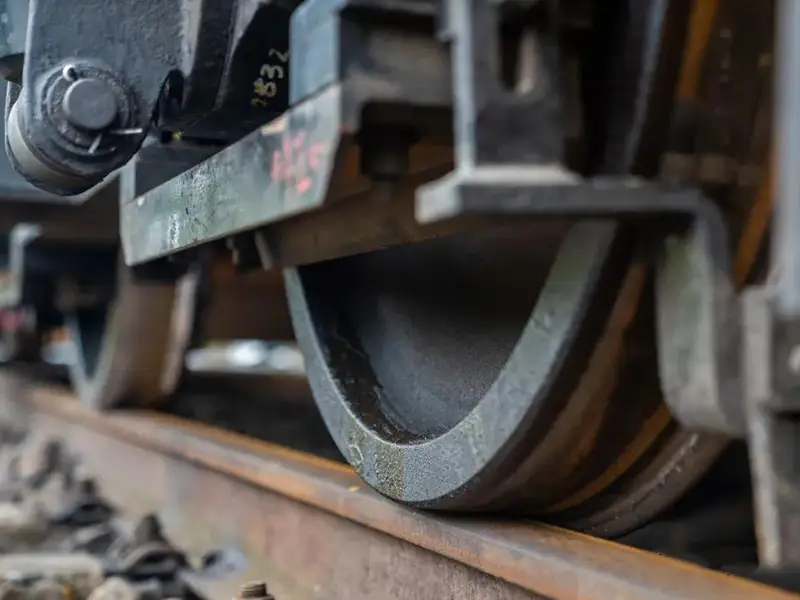
The wheel-rail interface experiences very high contact stress. Wear is more severe in curves, braking zones, and starting areas. Under repeated loads, friction continuously removes material from the rail surface. This leads to thickness reduction and profile deformation, directly affecting steel rail lifespan.
2. Rolling Contact Fatigue: Hidden Internal Damage
Rolling contact fatigue is less visible than wear. Repeated wheel loading generates microcracks a few millimeters below the surface. These cracks are difficult to detect in early stages. Over time, they propagate and connect, causing spalling or even rail fracture. This significantly reduces steel rail lifespan, especially in high-speed and heavy-haul lines.
3. Corrosion: Environmental Degradation
Moisture, salt spray, and chemical dust can cause corrosion. Corrosion does not usually lead to immediate failure. However, it reduces the effective cross-section and accelerates wear and crack growth. In ports, mines, and tunnels, corrosion is a major factor affecting steel rail lifespan.
These three mechanisms interact with each other. Therefore, evaluating rail lifespan requires a comprehensive approach.
Five Key Factors Affecting Steel Rail Lifespan
1. Load and Axle Weight
Load is the most direct factor influencing rail lifespan. Higher axle loads increase contact stress. This accelerates wear and fatigue. For example, rails under 25-ton axle loads may have only half the lifespan of those on standard passenger lines.
2. Traffic Frequency
Traffic volume determines the number of load cycles. Busy freight lines accumulate fatigue faster. Low-frequency lines, such as branch tracks, can achieve a longer rail lifespan, often exceeding 30 years.
3. Operating Environment
Environmental conditions strongly affect steel rail lifespan:
- Humid areas: increased corrosion risk
- Dusty environments (mines, cement plants): abrasive wear
- Marine environments: severe electrochemical corrosion
- Cold regions: thermal stress and welding challenges
4. Installation and Alignment
Poor installation reduces steel rail lifespan. Misalignment, uneven fastening force, or improper rail inclination can cause stress concentration. Localized overloading leads to early wear and crack formation. Many premature failures originate from installation defects.
5. Maintenance Level
Maintenance is critical for extending rail lifespan. Regular grinding removes surface cracks. Lubrication reduces side wear in curves. Tightening fasteners and correcting alignment prevents impact damage. Proper maintenance can extend lifespan by more than 30%.
Steel Rail Lifespan in Different Applications
Railway Systems
- Conventional lines: 25–30 years
- High-speed rail: 35–40 years with high-strength rails
- Heavy-haul railways: 10–15 years under extreme loads
Port Crane Rails
Crane rails operate under high wheel loads but low speeds. The main issue is localized wear due to repeated movement over fixed paths. Typical steel rail lifespan is 10–20 years.
Mining Rail Systems
Mining rails face impact loads, dust, moisture, and steep gradients. These harsh conditions shorten rail lifespan, often to 5–8 years. High-strength alloy rails can improve durability.
Tunnel and TBM Systems
Tunnel environments are confined and humid. Rail replacement is difficult and costly. Corrosion and structural stability are key concerns. These factors directly influence steel rail lifespan.
Practical Methods to Extend Steel Rail Lifespan
✔ Proper Rail Selection
Correct selection is the foundation of long rail lifespan:
- Heavy load: R350HT, U75V, bainitic rails
- Standard freight: R260, U71Mn
- Crane rails: QU70, QU80, QU100, QU120, A75,A100,A120
- Corrosive environments: weather-resistant rails
✔ Complete Rail Track System
Rails should not be used alone. A complete system includes rails, clips, pads, and sleepers. A well-designed system distributes stress and absorbs impact. This is essential for improving steel rail lifespan.
✔ Regular Maintenance
- Grinding: remove fatigue cracks
- Lubrication: reduce side wear
- Inspection: detect internal defects
- Alignment correction: maintain track geometry
These measures significantly extend steel rail lifespan at low cost.
When Should Steel Rails Be Replaced?
Rails should be replaced before failure. Key criteria include:
- Excessive wear beyond limits
- Deep fatigue cracks
- Internal defects detected by inspection
- Severe spalling or deformation
- Rail breakage
In practice, replacement is often done in sections. High-stress areas such as curves and switches are prioritized. This approach helps manage steel rail lifespan efficiently.
Conclusion
There is no fixed standard for rail lifespan. It depends on load, frequency, environment, installation quality, and maintenance. Under proper conditions, rails can last 25–40 years. In harsh environments, lifespan may be much shorter.
To maximize steel rail lifespan, three factors are essential: proper selection, a complete rail track system, and regular maintenance.
If you are planning a new project or rail replacement, we can help. Glory Track supplies a full range of rails and rail components, including GB, UIC, DIN, AREMA, and JIS standards. Custom cutting, drilling, and heat treatment services are available. Contact us for technical support or a quotation.