
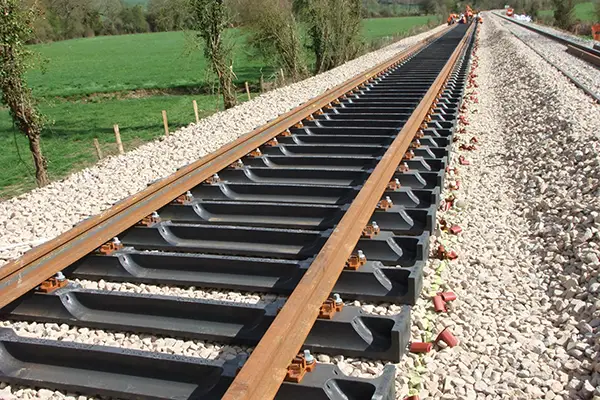
What Are Railway Sleepers and Why Are They Important?
Railway sleepers, also known as railroad ties, are essential components of a railway track system.They support the rails, ensure train stability, and distribute loads evenly into the track bed. Sleepers also help maintain the proper alignment, gauge, and direction of the rails. To perform effectively, sleepers must offer a balance of strength and flexibility—they need to absorb the pressure of a passing train through slight deformation and then return to their original shape to preserve track integrity.
A Brief History of Railway Sleepers

Railway sleepers were originally made from wood due to its flexibility, insulation, and ease of handling. Wooden sleepers resist shifting under pressure and, after anti-corrosion treatment, can last up to 15 years. Early on, wooden sleepers made up about 90% of railway ties worldwide. At their peak, around 3 billion pine sleepers were installed globally, consuming vast timber resources. As alternatives became necessary, steel sleepers were introduced and gradually used worldwide, including Europe. By the late 19th century, France developed the first reinforced concrete sleepers. Concrete sleepers began replacing wooden ones in the early 20th century. Large-scale production of concrete sleepers in China started in the 1950s, marking a significant shift in railway construction materials.
Types of Railway Sleepers Used Today

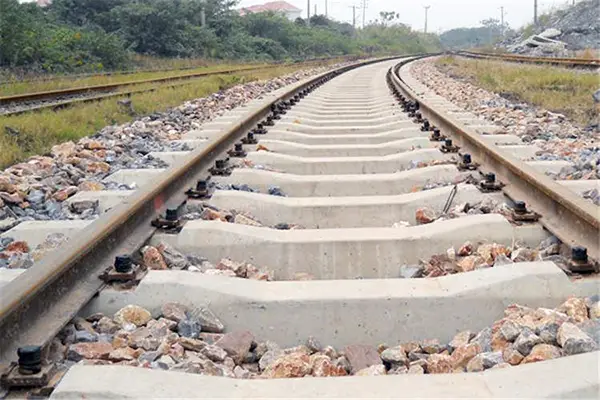
Railway sleepers are made from different materials, mainly wood, steel, and concrete. Although wooden sleepers are now seldom used, concrete sleepers have become the preferred choice for modern railways. Their precise dimensions and strong resistance to corrosion ensure excellent track stability, which enhances both safety and passenger comfort during train operations.
Wooden Sleepers: Features, Benefits, and Drawbacks

The standard length of common wooden sleepers is 2.5 meters, with cross-sections classified into two types, I and II, used on different grades of railway lines. Sleepers for railway switches are wider and range in length from 2,600mm to 4,800mm. These switch sleepers come in 12 sizes, each increasing by 200mm, chosen based on the actual width of the switch. On bridges, sleeper cross-sectional size varies according to the spacing of main or longitudinal beams.
Wooden sleepers offer good elasticity, which helps absorb the impact of passing trains. They are easy to process, transport, install, maintain, and repair. Connecting wooden sleepers to steel rails is relatively straightforward, and they also provide effective insulation.
However, because wooden sleepers come from different parts of the tree, their elasticity, strength, and durability can vary. This inconsistency may cause uneven tracks under train loads, increasing wheel-to-rail impacts. Wooden sleepers require large amounts of high-quality timber and have a shorter lifespan, often failing due to rot, mechanical wear, or cracking. Due to timber scarcity, concrete sleepers have mostly replaced wooden ones on major lines. Nevertheless, wooden sleepers are still widely used in special cases, such as turnouts and bridges, where unique sizes or shapes are needed.
Steel Sleepers: Where They Work Best and Why
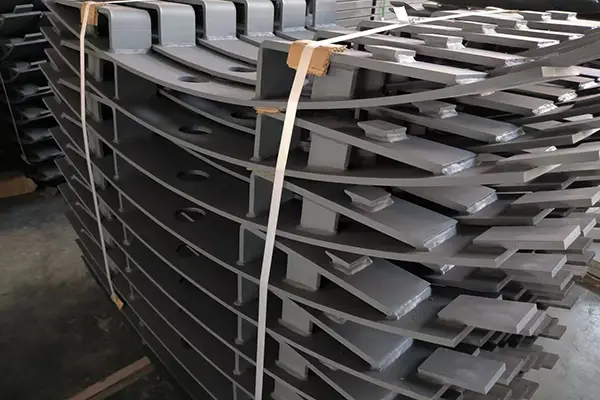
In the early days of railway development, steel sleepers were used mainly on tropical railway lines where wooden sleepers were vulnerable to termite damage and fungal decay. Steel sleepers provide several advantages, including a straightforward production process, high load-bearing capacity, strong resistance to longitudinal and transverse forces, reliable track gauge maintenance, and the ability to be repaired through electric welding.
However, steel sleepers are more expensive than other types. They cannot be used on insulated lines and are susceptible to corrosion from acidic soils, industrial gases, and humid or salty air. They also generate noticeable noise when trains pass. Today, steel sleepers are not widely used but remain common in heavy-haul railways at critical points like bridge-to-roadbed transitions and industrial railways where track stability is vital. Before 1949, steel sleepers were installed on narrow-gauge railways and dedicated steel enterprise lines in Northeast China, as well as certain parts of speed-up turnouts.
Concrete Sleepers: Modern Standard for Stability
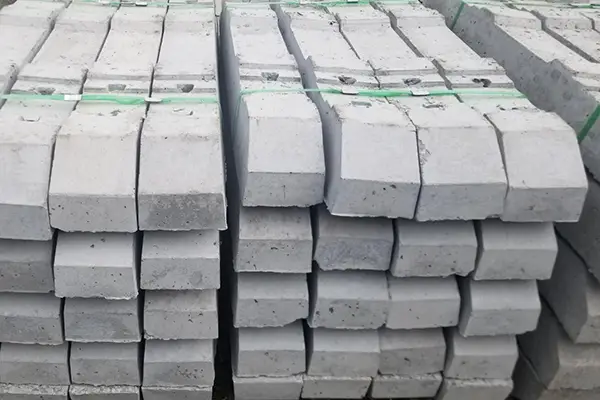
Concrete sleepers are made from cast concrete and reinforced with steel. They are classified into two types based on reinforcement: prestressed steel bar sleepers and ordinary steel bar sleepers. Prestressed sleepers offer better crack resistance and use less steel.
Since the 1950s, many countries have produced reinforced concrete sleepers on a large scale. Their heavy weight and strong stability help maintain seamless and steady tracks. Concrete sleepers are weather-resistant and have a long service life of about 50 years. Their uniform size ensures consistent track elasticity and smoothness. Fasteners are easy to replace, and installation allows flexible track design. Manufacturing is relatively simple, making concrete sleepers suitable for high-speed and heavy-load railways. They also require less maintenance and have a lower damage rate compared to wooden sleepers.
A key drawback of concrete sleepers is their low elasticity, which increases pressure and vibration on the track bed. This accelerates ballast wear, causes track settlement, and negatively affects locomotives and vehicles. Therefore, tough ballast and elastic cushioning are necessary when using concrete sleepers.
How to Choose the Right Railway Sleeper for Your Track
Selecting the appropriate railway sleeper depends on several factors. For heavy-haul railways requiring high load capacity, high-strength steel sleepers or specialized concrete sleepers are recommended to ensure smooth train operations. Concrete sleepers are also ideal for high-speed railways and urban transit systems that demand high stability and durability.
From a cost perspective, wooden sleepers have lower upfront purchase costs than steel sleepers. However, over time, concrete sleepers require less maintenance, while steel sleepers need costly rust and corrosion care. In humid environments, wooden sleepers deteriorate faster, making concrete sleepers a more practical option. Conversely, in regions with abundant timber resources, wooden sleepers remain more accessible.
Comparison Table: Wood vs Steel vs Concrete Sleepers
| Feature | Wood Sleepers | Steel Sleepers | Concrete Sleepers |
| Durability | Moderate – prone to decay and insect damage | High – resistant to wear and corrosion | Very high – strong and weather-resistant |
| Cost | Low initial cost, higher maintenance | Moderate cost, lower long-term maintenance | Higher initial cost, low maintenance |
| Weight | Lightweight | Moderate weight | Heavy – may increase transport and handling cost |
| Installation | Easy to install manually | Easy to install, standardized | Requires machines due to weight |
| Best Use Case | Low-traffic or temporary lines | Mining, crane rails, or narrow-gauge rails | High-speed rail, metro, and heavy freight lines |
Get Expert Advice on Railway Sleepers – Contact Glory Track Today
Selecting the right sleeper is vital for safe and efficient rail operations. At Glory Track, we offer durable steel, cost-effective wooden, and long-lasting concrete sleepers to fit every requirement. Reach out today for expert guidance and a no-obligation consultation.