

Understanding Rail Gnawing: A Hidden Cause of Crane Derailment
What Is Rail Gnawing in Bridge Cranes?
One of the root causes of bridge crane derailments is rail gnawing — a condition often overlooked during routine maintenance.
Large rail-mounted cranes are widely used in construction, metallurgy, mining, and port operations, but they may derail during movement due to factors like track misalignment or wheel failure. This often presents as the wheel flange slipping off the rail or the wheel lifting above the track. In severe cases, it can lead to structural deformation, causing the crane to tilt or even topple, resulting in serious accidents.
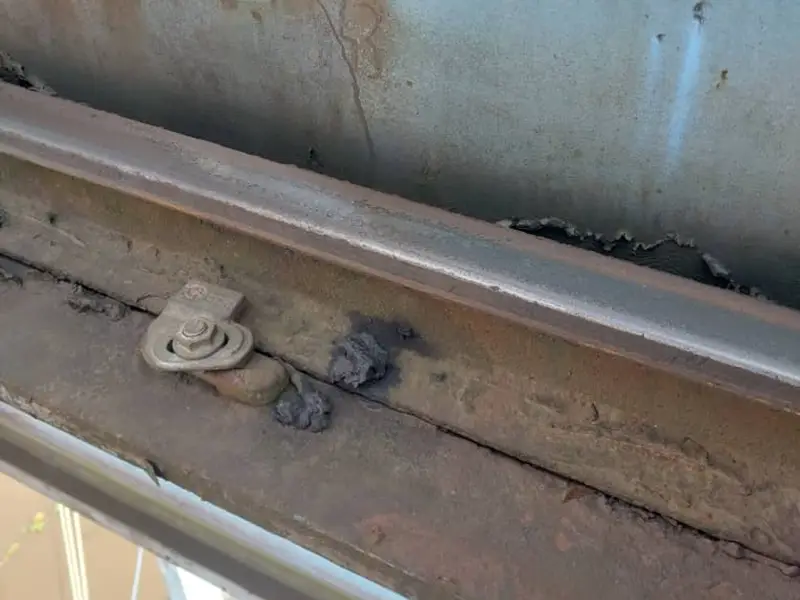
Rail gnawing occurs when the wheel flange comes into contact with the rail side, instead of maintaining the proper clearance. This contact generates lateral thrust, leading to friction and wear. When prolonged, this condition can cause serious damage and derailment.
Main Harms of Rail Gnawing
1. Accelerated Wheel Wear
Crane wheels, typically made of cast steel and designed to last over a decade, are essential to crane mobility. However, rail gnawing accelerates flange wear, significantly shortening their service life and compromising both safety and productivity.
2. Increased Track Damage
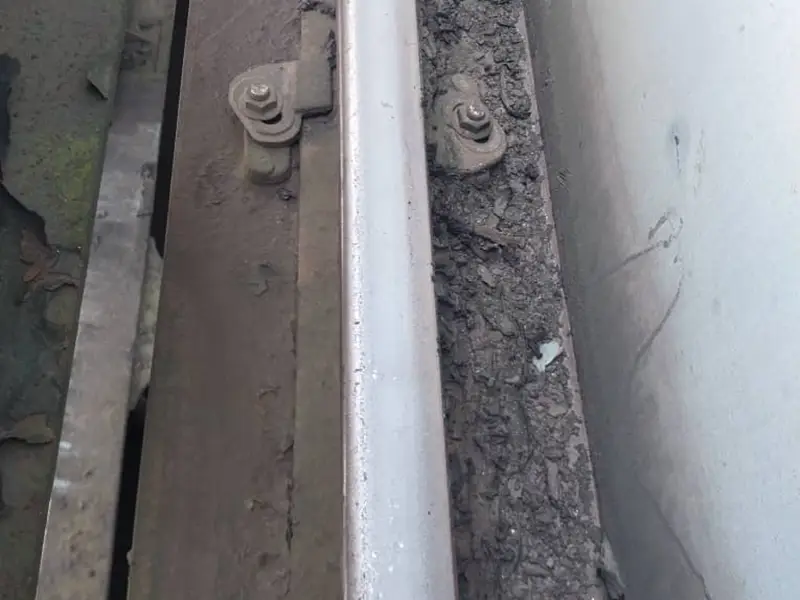
Due to the rigid contact between wheels and rails, rail gnawing intensifies track wear. Over time, this weakens the alignment and stability of both the main and auxiliary trolleys, increasing the risk of failure during operation.
3. Higher Risk of Derailment
Severe wear on the wheels or rails may cause the wheel flange to ride over the railhead, leading directly to bridge crane derailment.
4. Structural Vibrations and Building Impact
The friction and lateral forces from rail gnawing create abnormal vibrations and loud noise, which can disrupt the work environment and even threaten the structural integrity of the facility over time.
How to Tell If Your Crane Is Gnawing the Rail
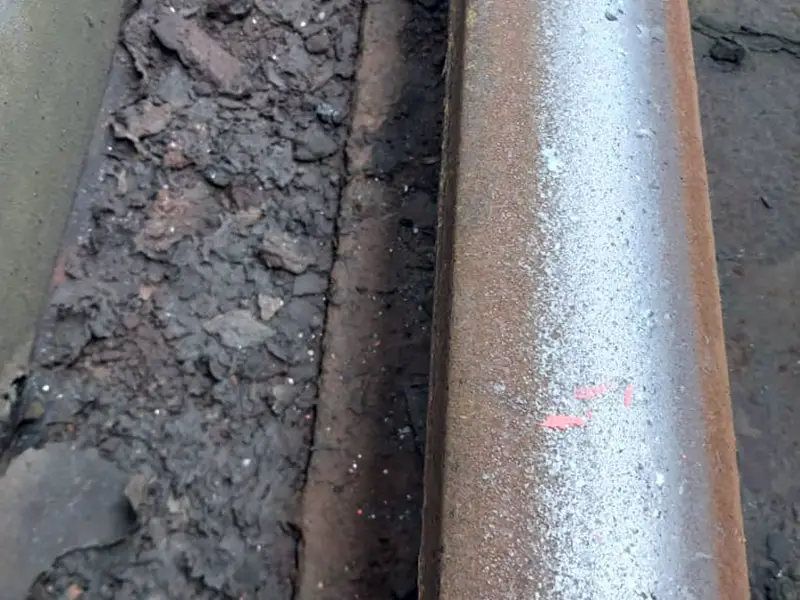
- Visible shiny wear marks or polished flats appear on the side of the rail, often accompanied by sharp edges and bright metal spots on the railhead.
- The wheel flange-to-rail clearance fluctuates abnormally during crane movement.
- The crane tilts during operation, with wheels showing signs of lateral drift or misalignment.
- Loud metallic scraping or grinding sounds occur, and in severe cases, the trolley bounces slightly—a condition known as rail climbing.
Top Causes of Bridge Crane Derailment
There are many reasons that cause the rail gnawing of cranes, but the main reasons are in these two aspects: one is the deformation of the track; the other is the defects in the industrial manufacturing technology of the crane, as well as the insufficient installation ability and skills of the installers.
Track Deformation and External Conditions
- The crane frequently moves back and forth on the tracks. This causes intermittent pressure on the rail surface and alternating stress inside the rails. Over time, this repeated force can deform or shift the tracks.
- Ideally, a crane moves in a straight line. However, carrying a load often affects its path. Different companies have varying management methods, and operators have different skill levels. This can cause the load to be pulled obliquely outward during hoisting. Such behavior inevitably causes rail gnawing.
- Changes in the track foundation, such as geological subsidence, also impact crane operation. Whether a crane runs smoothly depends largely on track condition. The common practice is to adjust the track regularly.
- Large height differences between the two tracks can cause the crane to shift sideways during movement, leading to rail gnawing. If adjacent rails on the same side are not level, wheels will drift sideways when crossing joints, causing rail gnawing.
- Slippery substances like oil, water, or frost on the rail surface can make wheels slip, tilting the crane and causing rail gnawing.
- Additionally, excessive horizontal bending of the track beyond tolerance causes wheel flanges to rub against the rail sides.
Wheel Misalignment and Installation Defects
- Long-term overloading or residual stress in the crane’s main beam can deform the main beam, end beam, and frame. This deformation causes the wheels to skew, leading to rail gnawing.
- If the driving wheels have significantly different diameters, they travel different distances per rotation. Over time, the side with the larger wheel pulls the crane out of alignment, causing rail gnawing.
- If the drive units are not synchronized, the wheels may turn at different speeds. A damaged motor or mismatched drive settings can cause the crane to drift and wear unevenly against the rails. A large gap in the couplings can also lead to uneven wheel movement, worsening rail gnawing.
- If the wheel and rail profiles do not match, incorrect flange clearance can cause problems. A gap that is too narrow will press the flange against the rail; too wide, and the same issue occurs.
- Additionally, if all four wheels are not on the same horizontal plane, one driving wheel may hang or slip, forcing the crane to veer off course. Debris on the track surface can also disrupt wheel speed and contribute to rail gnawing.
How to Fix Rail Gnawing?
Track Adjustment and Alignment
After the new track is installed, it must go through strict adjustment before it can be put into use. Appropriate tools should be prepared before the adjustment, such as a steel tape measure, a level gauge, a tensioner, and thin steel wire, etc. Use the steel tape measure to measure the gauge between the two rails, and use the level gauge to check whether the horizontal heights of the two rails are the same. Use the tensioner and thin steel wire to adjust the horizontal straightness of the track.
Before the adjustment of the old track, it should be inspected in detail, and the contents of the inspection are:
- Check whether there are cracks or broken rails.
- Check all the bolts and nuts for looseness and damage.
- Check whether there is any damage to the pressure plate and gasket of all tracks.
How to Fix Crane Wheel Misalignment and Transmission Issues
Keep the span and diagonal deviation within ±7 mm for large wheels, and within ±3 mm for small wheels. The positional difference between wheels should be no more than 2 mm.
Replace worn wheels in pairs to eliminate diameter imbalances and ensure proper alignment. This helps restore installation accuracy and reduces movement errors caused by manufacturing deviations.
Solutions to transmission problems
The Electrical drive is out of sync: Measure the speed of the motor. If it is confirmed that the problem is with the motor, replace it with a motor of the same manufacturer and model. If necessary, consider using a real-time automatic control system or a frequency conversion system to ensure motor synchronization. If it is a resistance problem, adjust or replace it.
Mechanical transmission out of sync: The rail gnawing caused by mechanical components such as couplings, reduction gearboxes, bearings, keyways, and shafts during the transmission process is due to reasons such as the assembly process, machining process, and service life. It can only be adjusted or replaced according to common mechanical maintenance methods.
How to Prevent Rail Gnawing and Crane Derailment
Crane rail gnawing will bring incalculable economic losses and safety hazards, managers should take relevant means to avoid derailment accidents due to lack of maintenance, can refer to the following preventive measures:
1. During normal operation, a bridge crane allows some free tilt between the wheel flange and the rail, meaning there is a certain amount of lateral movement between them (usually around 20–30mm). The larger this distance, the lower the chances of rail gnawing.
2. Use the method of lubricating the wheel flanges and the sides of the rails to reduce the running friction resistance and reduce the wear of the wheels and rails.
3. Regularly check whether the end beam is deformed and correct it on time to make it meet the technical requirements, thus fundamentally solving the problem of rail gnawing. During the inspection, if it is found that the diagonal distance, perpendicularity, and levelness of the wheels exceed the tolerance, adjustments should be made promptly.
4. clean and sweep the foreign objects and sundries on the track on time to avoid the phenomenon of track climbing.
Glory Track has over 15 years of experience supplying crane rails, rail fasteners, and custom steel components for heavy-duty industrial applications. If you are facing issues with rail gnawing, crane derailment, or track alignment, our team can provide engineering support and high-quality rail systems tailored to your needs.
Contact us today to learn more about our products and services.