
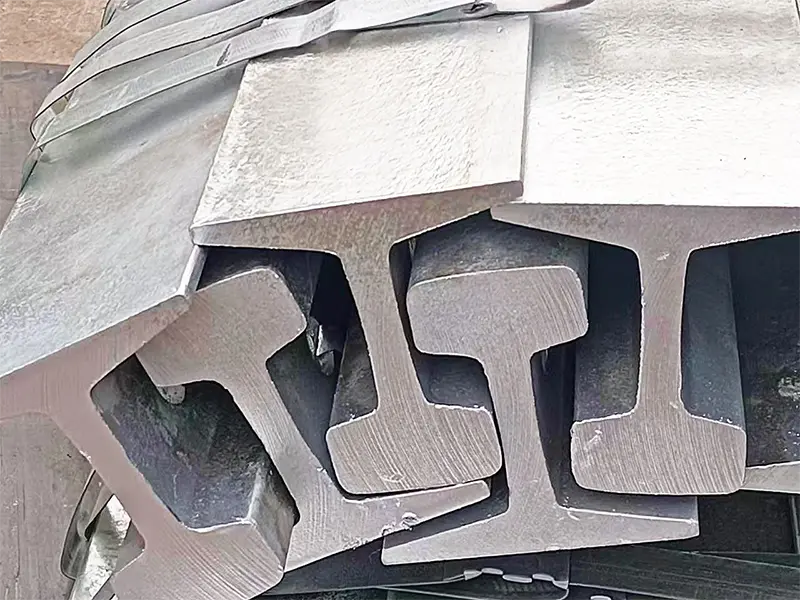
Introduction
Corrosion is one of the biggest challenges in rail systems, especially in outdoor and industrial environments. Many buyers consider galvanized rail as a solution due to its strong anti-corrosion properties.
However, galvanized rail is not always the best option. In some cases, it may even reduce performance or create safety risks.
This article explains how galvanized rail works, its advantages, its limitations, and where it should—or should not—be used.
What Is Galvanized Rail?
Galvanized rail refers to steel rail that has been coated with a layer of zinc, typically through a hot-dip galvanizing process.
In this process, the steel reacts with molten zinc to form a protective alloy layer. This coating helps prevent corrosion by isolating the steel from moisture and air.
As a result, galvanized rail is often used in environments where rust protection is a priority.
Advantages of Galvanized Rail
1. Excellent Corrosion Resistance
The zinc coating acts as a barrier against water, oxygen, and chemicals. This significantly slows down rust formation and extends service life in exposed environments.
2. Low Maintenance Requirements
Compared to untreated steel, galvanized rail requires less frequent maintenance, especially in outdoor or humid conditions.
3. Suitable for Light-Duty Applications
In low-load or non-critical systems, galvanized rail can provide a cost-effective corrosion protection solution.
Limitations of Galvanized Rail
While galvanized rail has clear benefits, it also comes with important limitations that must be considered.
1. Risk of Hydrogen Embrittlement
During the pickling and galvanizing process, hydrogen atoms may enter the steel.
For high-strength rails, this can lead to delayed cracking under stress. In rail systems that experience repeated loads, this risk cannot be ignored.
2. Reduced Fatigue Performance
Hot-dip galvanizing involves temperatures around 450°C. This heat exposure may affect the steel’s microstructure.
As a result:
- Hardness may decrease
- Wear resistance may drop
- Fatigue life may be reduced
This is critical for heavy-duty rail systems.
3. Welding Difficulties
Modern rail systems often require welding to form continuous tracks.
However, galvanized coatings must be removed before welding. Otherwise, zinc can cause:
- Porosity
- Cracks
- Weak weld joints
After welding, restoring corrosion protection at the joint is difficult and often less effective.
4. Dimensional and Surface Issues
The galvanizing process may lead to uneven coating, especially around edges and bolt holes.
This can:
- Affect installation accuracy
- Interfere with fastening systems
In addition, zinc is relatively soft and can be easily damaged during handling.
5. Wheel-Rail Contact Problems (Critical)
The rail head must not be galvanized.
Zinc has low hardness and poor wear resistance. Under wheel pressure:
- The coating wears off quickly
- Adhesion between wheel and rail decreases
- Slippage risk increases
Loose zinc particles may also contaminate fastening systems.
When Galvanized Rail Is NOT Recommended
Galvanized rail is generally not suitable for:
- High-speed railway systems
- Heavy-haul railway lines
- Mainline railway tracks
- Applications requiring frequent welding
In these scenarios, mechanical strength, fatigue resistance, and safety are more important than corrosion protection.
When Galvanized Rail Can Be Used
Despite its limitations, galvanized rail is still a good choice in specific conditions:
- Crane rails with low to moderate loads
- Non-running edges of rail sections
- Industrial internal rail systems
- Garden or light-duty rail tracks
- Applications without welding requirements
In these cases, corrosion resistance may outweigh performance concerns.
Alternative: Painted Rail for Corrosion Protection
For many industrial applications, painting is a more practical solution.
Compared to galvanizing, painted rail offers:
- No impact on mechanical properties
- Easier maintenance and repair
- Better compatibility with welding
It is widely used for crane rails and industrial rail systems where both durability and flexibility are required.
Conclusion
Galvanized rail provides strong corrosion protection, but it is not a universal solution.
For high-performance rail systems, the risks related to fatigue, welding, and safety may outweigh the benefits.
The key is to choose the right protection method based on the actual working conditions.
If corrosion resistance is required without compromising performance, painted rail is often the better option.
Need Help Choosing the Right Rail Solution?
At Glory Track, we provide not only steel materials but also practical rail system solutions for different applications.
Contact us to discuss your project requirements and find the most suitable option for your rail system.