
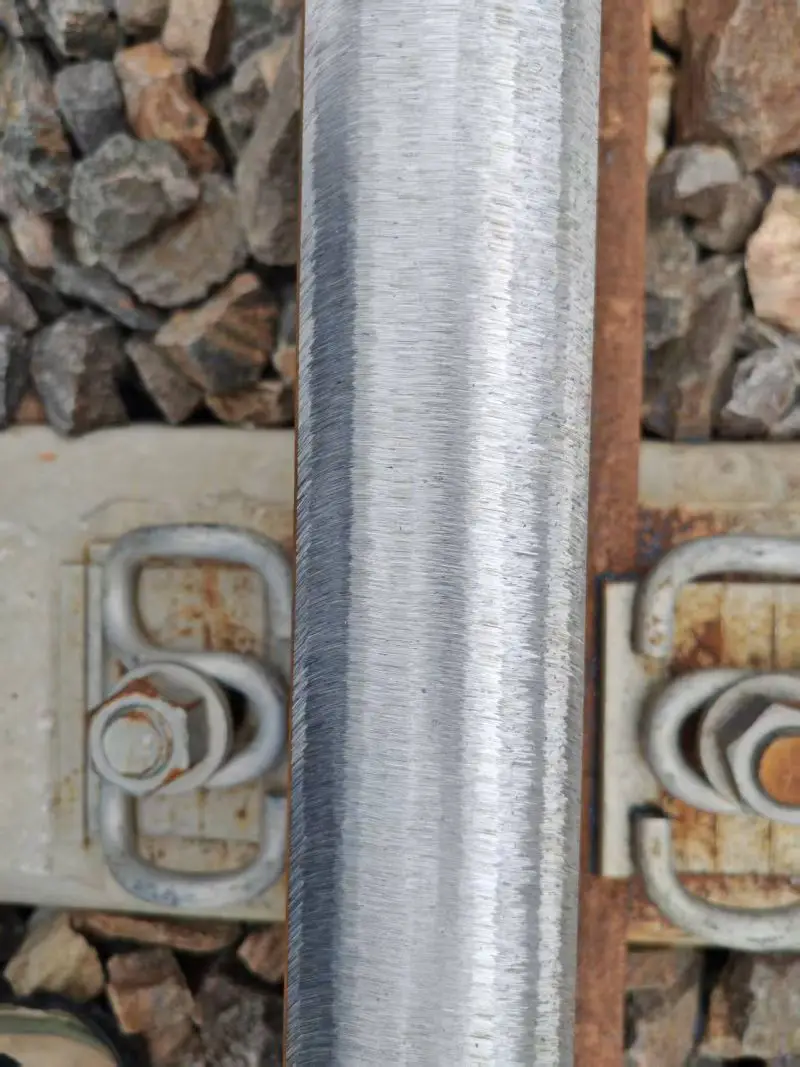
In railway, port, mining, and urban rail transit maintenance systems, rail grinding is a core process for ensuring track safety, extending rail service life, and reducing train operating losses. Many mistakenly believe that rails only require periodic inspection after installation. In reality, under long-term heavy-haul rolling, high-frequency friction, impact loading, and temperature differentials, rails continuously develop fatigue damage, surface deformation, thermal damage, and other defects. Without systematic rail grinding maintenance, these defects gradually worsen over time. They increase train vibration and operating noise while also creating serious safety risks such as rail breaks and derailments. In the long run, they can dramatically increase overall track maintenance costs.
1. Why Is Rail Grinding Necessary? Analysis of Common Rail Defects
As the primary load-bearing component in direct contact with train wheels, rails endure sustained high-intensity stresses. Their surface and internal structure undergo irreversible damage over time, which is the fundamental reason rail grinding is indispensable. In daily operations, rails mainly suffer from four categories of defects:
1.1 Rolling Contact Fatigue Defects
The repeated rolling and sliding of train wheels impose cyclic contact stresses on the rail head. Over time, this leads to the formation of fish-scale cracks (head checks), surface spalling, shelling, and transverse cracks. In the early stages, cracks exist only in the shallow surface layer. If not promptly removed through grinding, these cracks propagate deeper into the rail, eventually causing rail fracture—a major safety hazard for line operations. Such defects occur most frequently on heavy-haul port tracks and freight railway lines.
1.2 Wear and Geometric Deformation Defects
Long-term compressive stress causes various types of plastic deformation, including rail corrugation, head lipping (fat edge), side wear, and saddle-shaped wear. Rail corrugation creates periodic peaks and troughs on the running surface, generating severe vibration and roaring noise as trains pass. This not only affects ride comfort but also accelerates wear on wheels, fasteners, bogies, and other components. Head lipping and side wear change the wheel-rail contact position. This creates localized stress concentration and accelerates overall track deterioration.
1.3 Thermal Damage Defects (Rail Burns)
Wheel braking, idling, slipping, or improper grinding techniques can cause instantaneous high temperatures on the rail surface, resulting in rail burns. The extreme heat quenches the surface metal, causing oxidation, bluing, and embrittlement, which forms extremely hard localized spots. These hard spots amplify wheel-rail impact forces, creating a vicious cycle of “aggravated damage—increased impact—worsening defects,” severely compromising rail surface integrity.
1.4 Profile Degradation and Weld Defects
Newly manufactured rails, as well as rails after long-term service, can exhibit deviations from standard UIC or AREMA head profiles, leading to an unbalanced wheel-rail contact relationship. Simultaneously, rail welded joints are prone to defects such as peaks, dips, and burrs, becoming sources of impact along the line and accelerating the aging of the entire track system. Rail grinding is the only efficient method to repair such defects and restore the standard rail profile.
2. Four Mainstream Types of Rail Grinding and Their Applicable Scenarios
Based on line conditions, defect severity, and maintenance objectives, the industry categorizes rail grinding into four types: pre-grinding, preventive grinding, corrective grinding, and switch & crossing grinding. These processes differ significantly in construction parameters, grinding depth, and application scenarios.
2.1 Pre-Grinding (Mandatory for New Rails)
Pre-grinding is primarily applied to newly constructed lines or newly replaced rails. During rolling, transportation, and installation, new rails develop decarburized layers, fine burrs, construction indentations, and weld irregularities. Pre-grinding uses a shallow grinding depth of 0.2–0.85 mm to thoroughly remove surface defects and calibrate the standard rail head profile, establishing an optimal initial wheel-rail contact condition. This process reduces the probability of future defects from the source, laying the foundation for long-term stable operation.
2.2 Preventive Grinding (The Most Cost-Effective Maintenance Strategy)
Preventive grinding is the currently recommended primary track maintenance process, suitable for rails that have been in service for 1–2 years and exhibit only minor, shallow defects. At this stage, rail corrugation is typically less than 0.2 mm, and fatigue cracks have not yet propagated deeply. Through a micro-precision grinding amount of 0.1–0.3 mm, the crack growth path can be severed, slight corrugation controlled, and the standard profile maintained. High-speed and heavy-haul lines undergo preventive grinding once a year, while conventional lines undergo it every two years. This approach dramatically reduces overhaul costs and multiplies rail service life.
2.3 Corrective/Remedial Grinding (Defect Repair Process)
Corrective grinding is required for aged rails that have exceeded defect limits. Corrective grinding is used when rails develop severe defects. These may include deep cracks, large-area shelling, severe corrugation (≥0.5 mm), rail burns, or lipping deformation. In such cases, multi-pass low-speed precision grinding is required. With a grinding depth controlled at 0.5–1.5 mm, deep-seated defects are completely removed, deformed rail heads are restored, and the standard rail dimensions and smoothness are recovered. This process is mainly used for refurbishing aging lines, requiring strict control over grinding depth to avoid excessive material removal that weakens the rail base.
2.4 Switch and Crossing (S&C) Grinding
Switches, stock rails, and crossings are the areas with the most complex stress distributions and the highest concentration of defects, suffering from high impact loads and uneven wear. Conventional grinding equipment cannot be adapted to these geometries. Dedicated S&C grinding uses low-speed, high-precision methods focused on repairing crushed switch rails, cracked crossings, and worn wing rails, while precisely calibrating the asymmetric rail head profiles to ensure smooth switch transitions and safe passage.
3. Rail Grinding Equipment and Core Consumable Requirements
The effectiveness of rail grinding depends on the precision of the grinding equipment and the compatibility of the abrasive wheels. Both factors directly determine the rail surface quality, the elimination of burns, and operational efficiency.
3.1 Mainstream Grinding Equipment
Large-scale track maintenance typically employs rail grinding trains equipped with 16 to 120 high-precision grinding units. Each motor power ranges from 7.5 to 30 horsepower, and the grinding angles can be precisely adjusted. Operating speed is adjusted as needed: typically 2–3 km/h for corrective work, and 5–8 km/h for pre-grinding and preventive grinding, balancing precision and productivity. Local welds and S&C blind zones are touched up using small, specialized grinding equipment to comprehensively cover all line defects.
3.2 Core Abrasive Wheel Compatibility Standards
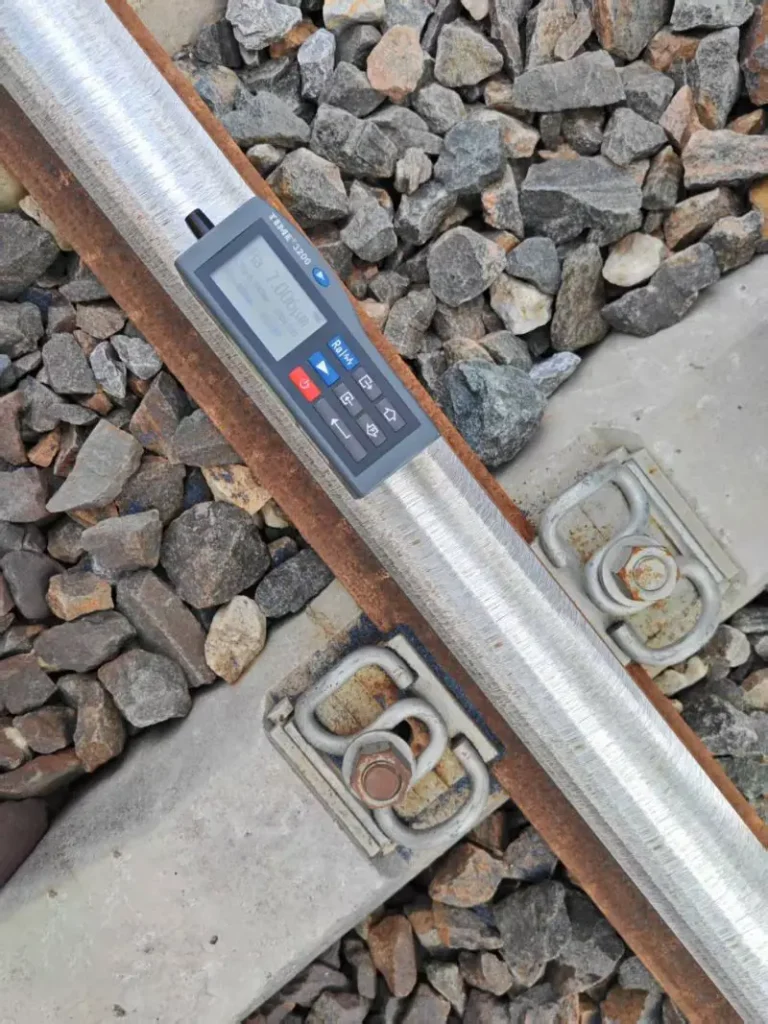
The abrasive wheel is the core consumable in rail grinding. Incompatible wheels directly cause rail surface burns, poor surface finish, and short wheel life. High-quality specialized grinding wheels must match different working conditions: conventional U71Mn rail is suitable for brown fused alumina wheels, which offer high toughness and cost-effectiveness. High-speed and heavy-haul U75V rails require higher-performance grinding wheels. White fused alumina and zirconia alumina wheels are commonly used because of their high hardness, sharp cutting ability, and excellent self-sharpening performance. These materials help reduce the risk of high-temperature rail burns during grinding. A combination of grit sizes achieves a rail surface roughness of Ra ≤ 8 μm, meeting industry acceptance standards.
4. Core Value and Industry Significance of Rail Grinding
Systematic rail grinding maintenance is the key to cost reduction, efficiency improvement, and safety enhancement in track maintenance. Its core value is reflected in four dimensions:
4.1 Eliminating Safety Hazards
Rail grinding thoroughly removes fatal defects such as fatigue cracks, burns, and shelling, preventing rail breaks and derailment accidents, and ensuring all-weather safe operation of railways, metros, and mining and port tracks.
4.2 Extending Equipment Service Life
Rail grinding restores the standard wheel-rail contact relationship and helps distribute localized stress more evenly. This extends the rail replacement cycle and reduces wear on train wheels, bearings, and track fastening systems.
4.3 Optimizing Operational Experience
Eliminating corrugation and unevenness reduces train vibration and noise, enhancing passenger ride comfort and decreasing rail transit noise pollution.
4.4 Reducing Maintenance Costs
The low-cost maintenance model of preventive grinding can replace expensive rail overhauls and replacements, dramatically cutting the overall lifecycle maintenance cost of the line.
5. Conclusion
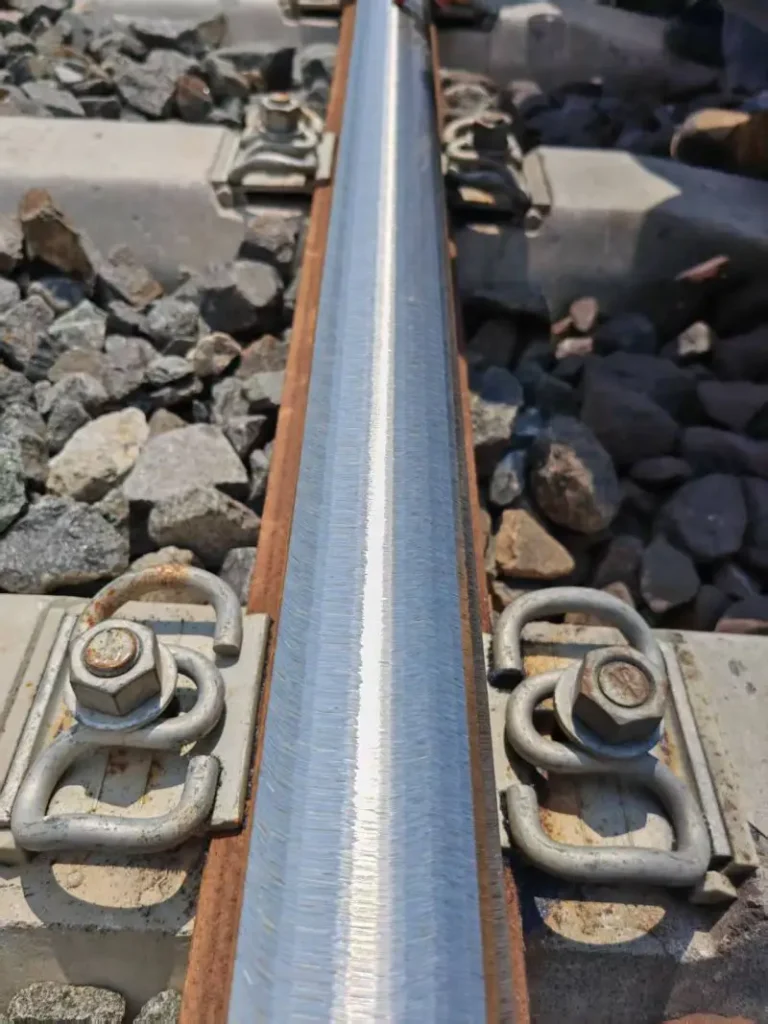
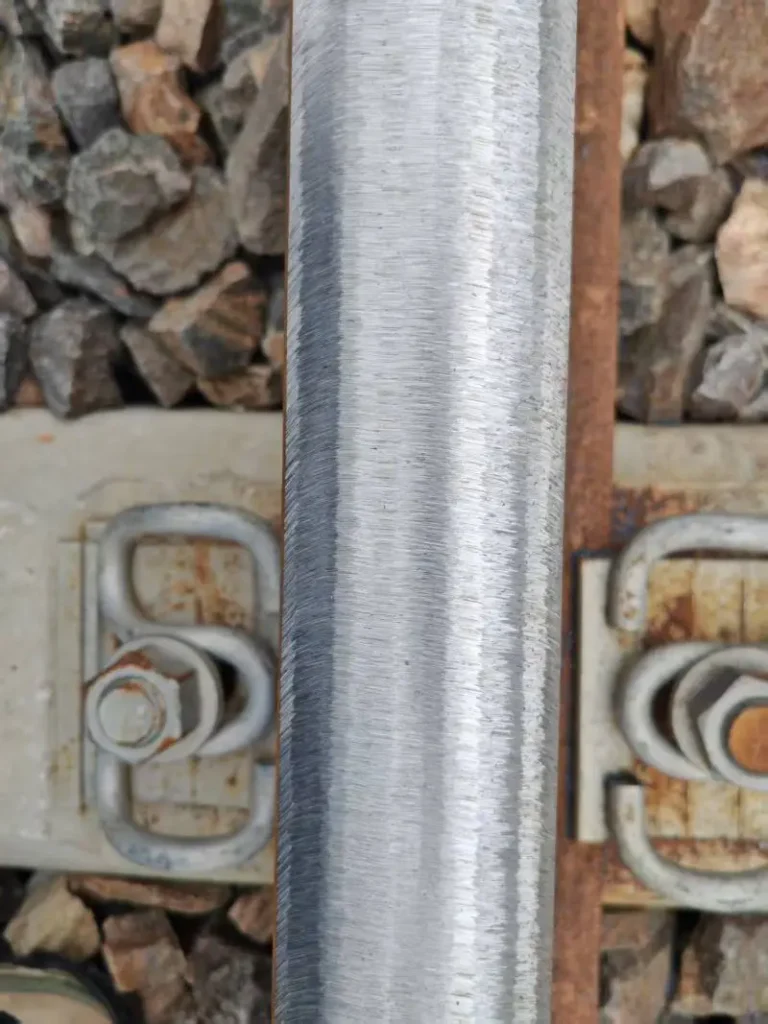
Rail grinding is not merely simple surface polishing; it is a professional track maintenance process integrating defect detection, profile restoration, stress optimization, and long-term care. Whether for new rail pre-conditioning, routine preventive maintenance, or the defect repair of aging lines, standardized rail grinding is the core means of ensuring track stability, safety, and durability. As the rail transit industry evolves toward high precision, intelligence, and long service life, precision grinding technologies and high-quality abrasive consumables adapted to different working conditions have become essential components in the rail maintenance sector, serving as the critical core for improving line operation quality and controlling maintenance costs.