
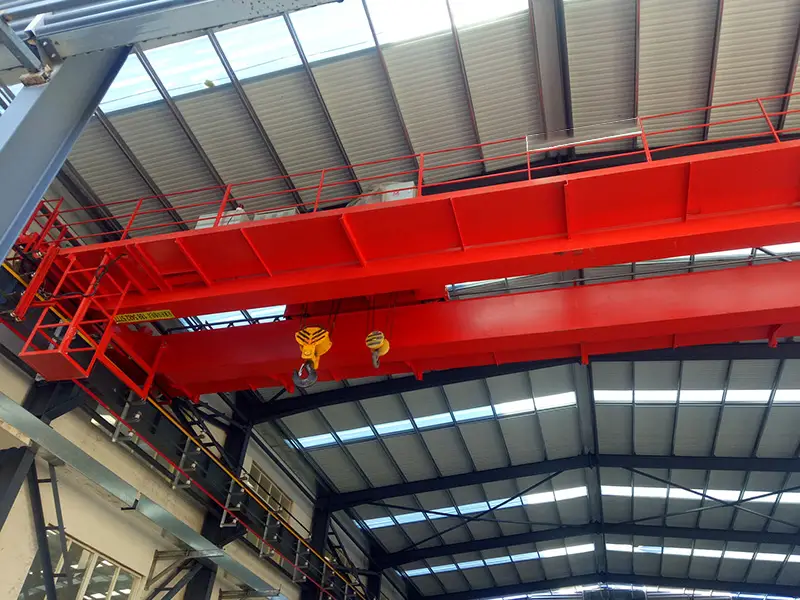
Crane rail vibration is a big deal in any facility that uses heavy cranes.These issues are more than just distractions. They signal underlying problems that can increase your maintenance costs and risk of equipment failure.
This guide provides clear, effective methods to control crane rail vibration and noise, helping you protect your equipment and improve operations.
Why Crane Rail Vibration And Noise Happens
The main causes of crane rail vibration are straightforward:
- Wheel-Rail Impact: Every time a crane wheel rolls over a rail joint or an uneven spot, it creates an impact. These repeated shocks travel through the rail and into the supporting structure.
- Rail Misalignment and Uneven Surfaces: If your rails are not perfectly aligned or have worn surfaces, they force the crane wheels to bounce and vibrate. Even small deviations can amplify the problem significantly.
- Friction and Squealing: When the metal wheel flange rubs against the side of the rail, it creates high-pitched squealing sounds. This friction also accelerates wear on both components.
- Structural Resonance: Your crane’s supporting structure has natural vibration frequencies. When the crane’s operation matches these frequencies, it can amplify the shaking, much like a tuning fork.
- Debris Contamination: Dust, metal chips, and other debris on the rail act like sandpaper. They increase friction and create more impact points, worsening vibration and wear.
Proven Solutions to Control Vibration and Noise
Addressing crane vibration and noise effectively requires a systematic approach that targets the source, path, and receiver of these disturbances.
1. Dampen Vibrations at the Source
The most effective way to control vibration is to prevent it from being generated in the first place.
- Use Rail Pads for Shock Absorption: Installing rail pads between the rail and the supporting structure is a fundamental step. These pads act as a cushion, absorbing impact energy and significantly reducing the vibration transmitted to the building .
- Apply Lubrication to Reduce Friction: A dedicated wheel flange lubrication system applies a precise lubricant film between the wheel flange and rail. This directly reduces frictional noise and minimizes wear.
- Maintain Clean Rails: A rail sweeper ensures the railhead remains free of debris. This promotes smooth wheel-rail contact and prevents vibration caused by contamination.
2.Isolate the Vibration Path
Even with source control, some vibrations will still be generated. The next step is to block their transmission.
- Secure the Track with Rail Clips: Properly designed rail clips hold the rail firmly in place, preventing micro-movements that lead to rattling and loosening over time. Their elastic design also helps in dissipating some vibrational energy.

- Consider Structural Damping Solutions: For specific, persistent resonant frequencies, technologies like Dynamic Vibration Absorbers (DVAs) can be highly effective. These devices are tuned to counteract and absorb vibrations at particular problem frequencies .
3. Protect Your Equipment and Environment
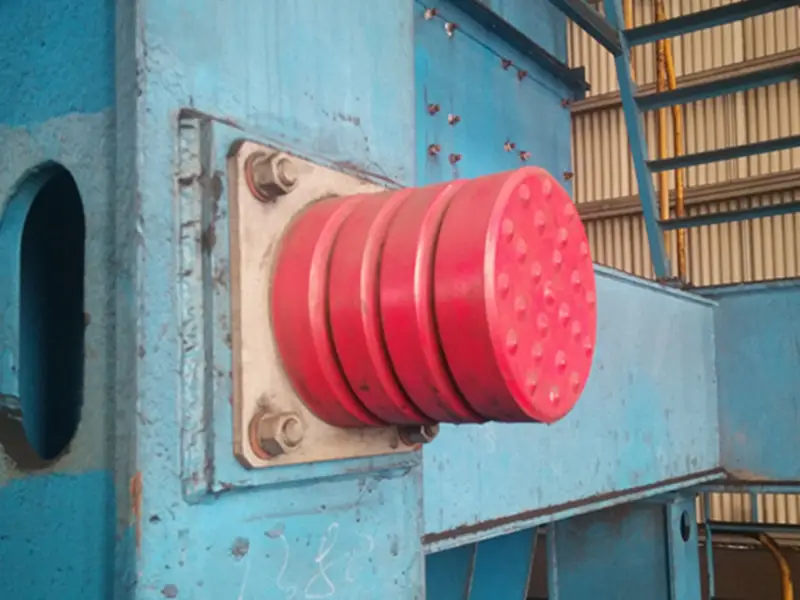
- Install Crane Buffers for End-of-Line Impact: Crane buffers absorb the crane’s kinetic energy at the end of its travel, preventing harsh metal-to-metal contact. They protect both the crane and the end stops while reducing vibration and noise during operation.
- Improve Structural Design: Simple measures like filling structural cavities with damping materials (e.g., polyurethane foam) can break up resonance chambers and reduce noise radiation from large surfaces.
Find Your Perfect Solution
The path to lower maintenance costs, less downtime, and a quieter, safer facility starts with a concrete plan. Since every operation is unique, the most effective strategy depends on your specific equipment, layout, and challenges.
Contact our vibration control specialists at Glory Track for a personalized assessment. We will help you diagnose the root causes and build a tailored plan to bring peace and quiet to your operations.