
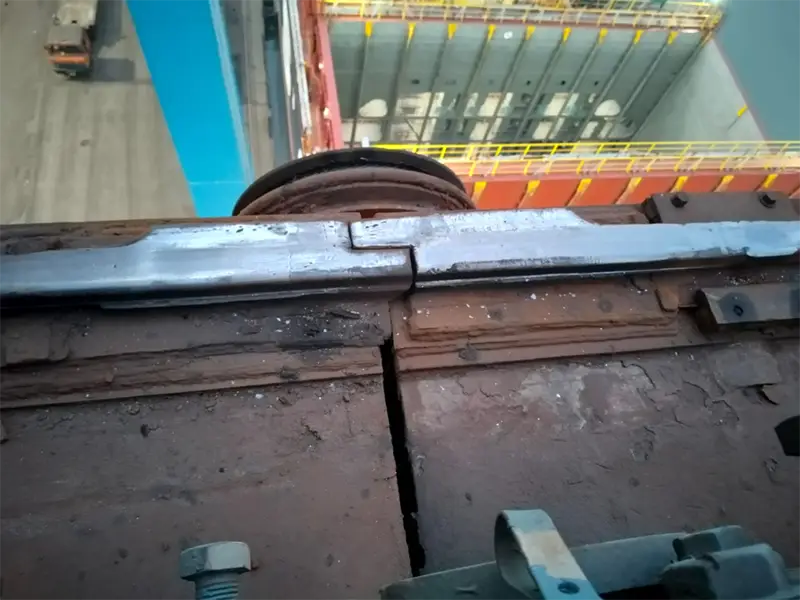
When a port crane maintenance contractor at Haldia Port, India, needed to refurbish a heavily worn trolley rail system on an aging STS container crane, Glory Track delivered 300 meters of custom A75 short rails in 42CrMo, along with steel sole plates, rail clips, rail stops, and rubber pads. The replacement package was designed to address severe rail wear and support the refurbishment of the crane’s trolley rail system.
Project Overview:STS Crane Refurbishment at Haldia Port, India
| Item | Details |
|---|---|
| Customer | Port Crane Maintenance Contractor |
| Location | Haldia Port, India |
| Equipment | STS Container Crane |
| Project Type | Trolley Rail System Refurbishment |
| Application | Container Handling |
| Rail Type | A75 Short Rail |
| Material | 42CrMo |
| Rail Length | 300 m |
| Supplied Components | Steel Sole Plates, Rail Clips, Rail Stops, Rubber Pads |
| Shipment Date | October 2025 |
The Challenge: Aging Trolley Rail System on an STS Crane
The STS crane at Haldia Port had been in continuous operation for many years, handling container cargo with high-frequency trolley movements. Over time, the original trolley rail system experienced progressive deterioration that compromised both operational safety and crane performance.
Severe Rail Head Wear
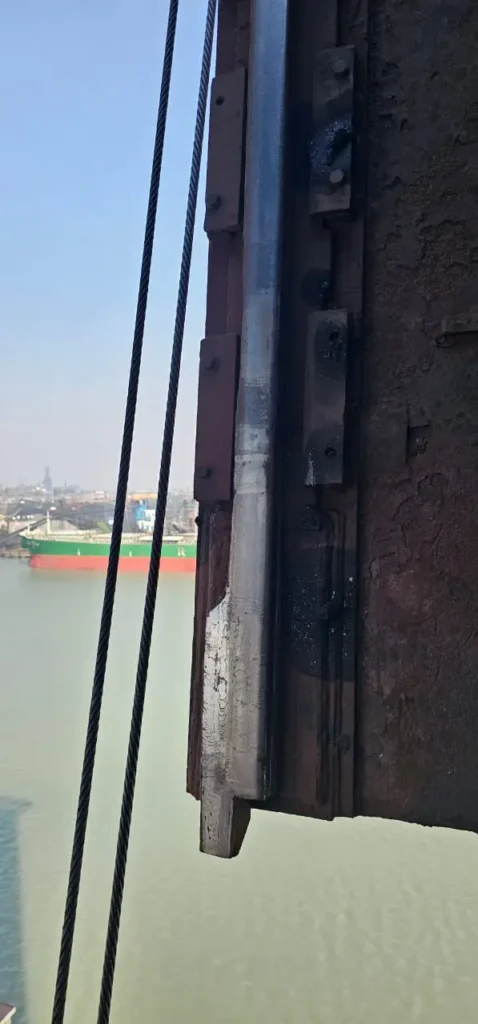
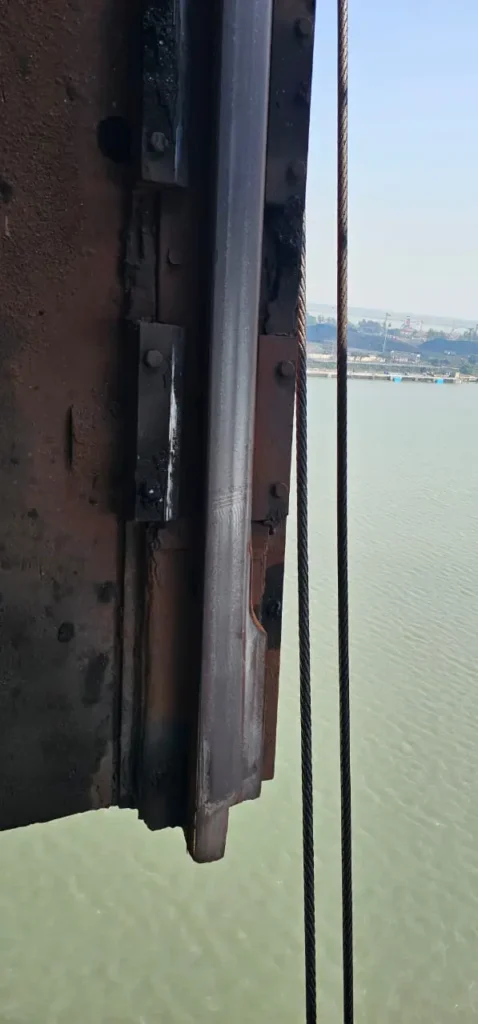
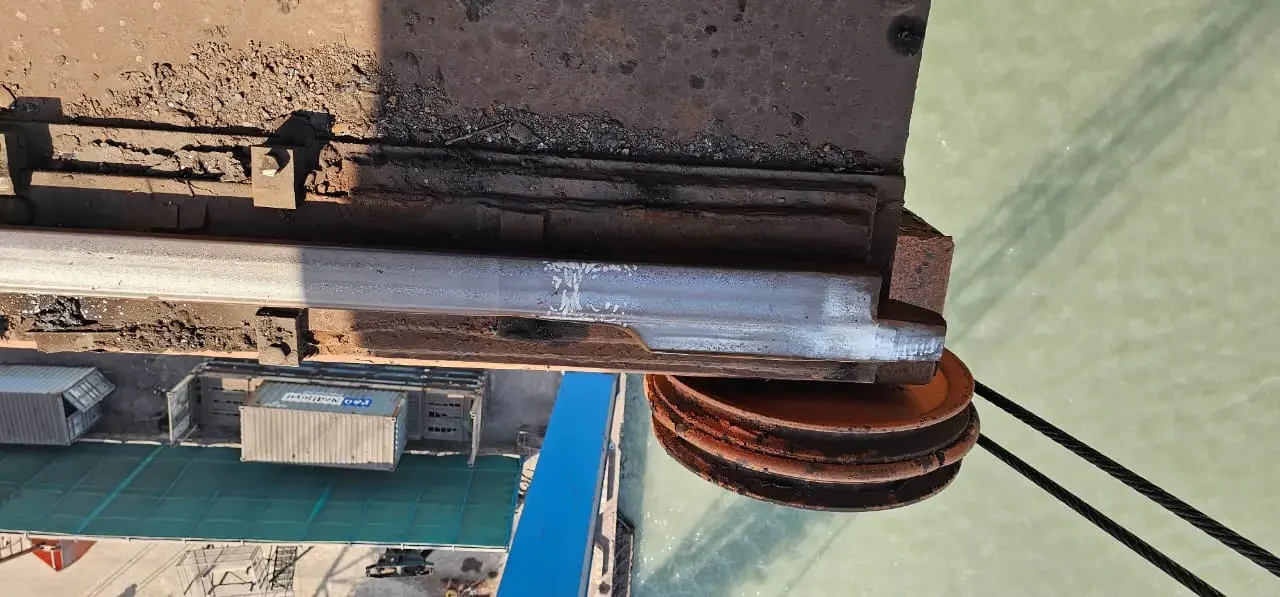
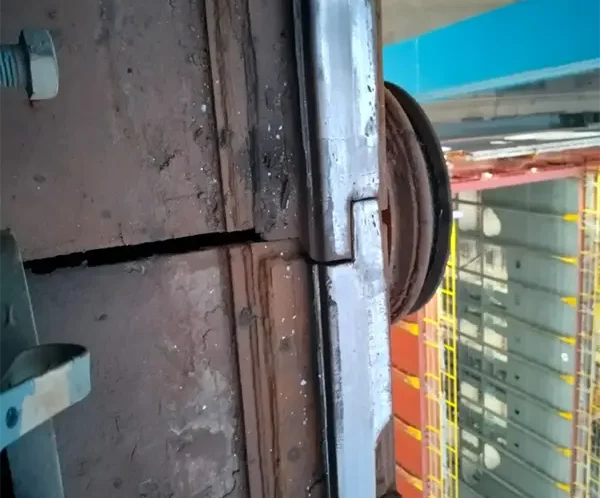
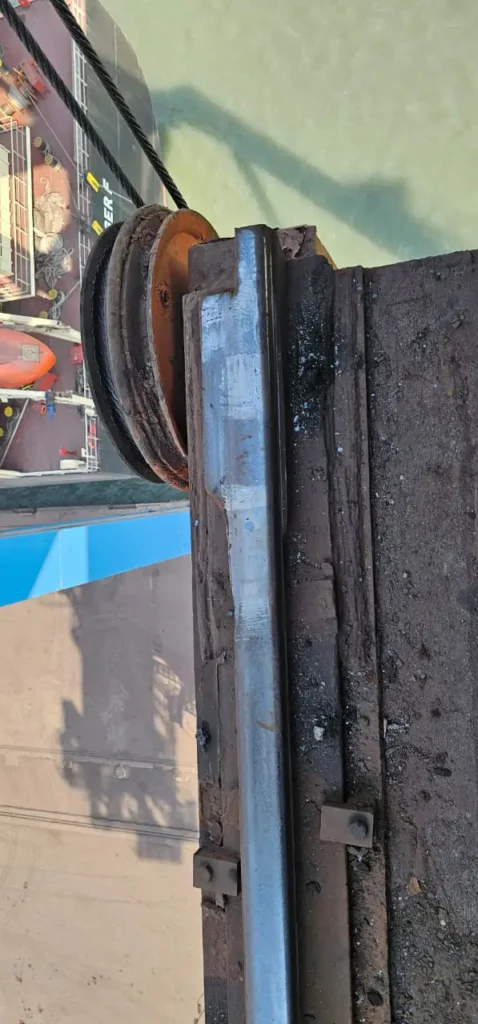
Years of wheel rolling under continuous loading had taken a heavy toll on the rail running surface. The original trolley rails exhibited a highly polished, worn appearance across the entire travel path. Figure 2 and Figure 4 clearly illustrate the extent of surface wear — the rail head had become flattened and shiny, with visible material loss along the contact band. This type of wear is typical in aging trolley rail systems where hardened wheels repeatedly pass over the same rail section, gradually eroding the surface profile.
Loss of Rail Profile Symmetry
The most critical finding was that the original trolley rails no longer maintained a symmetrical rail head profile. As the rail material wore away unevenly, the carefully designed curvature of the rail head was lost, resulting in an asymmetric shape that prevented proper wheel-to-rail contact. Close inspection of the rail running surface revealed noticeable profile distortion, with one side of the rail head worn more heavily than the other. In a container handling environment, this loss of symmetry in the trolley rail system can lead to wheel flange contact, increased lateral forces, and accelerated wear on both wheels and rails.
Increased Stress at Rail Joints
Rail joints are always vulnerable points in any trolley rail system, and the Haldia crane was no exception. Repeated wheel impacts at each joint passage had caused localized deformation and surface spalling around the joint gap. This condition not only generated excessive noise and vibration during trolley travel but also raised serious maintenance concerns about the long-term integrity of the entire rail system.
Replacement Solution for the Trolley Rail System
To address the extensive wear and restore full functionality to the crane’s trolley rail system, Glory Track provided a comprehensive replacement package designed specifically for STS crane trolley applications.
Custom A75 Short Rails
The replacement rails were A75 profile short rails, custom-machined to the exact lengths required for the trolley travel path. Unlike standard long rails, these short rail sections were specifically designed for trolley applications on STS cranes, allowing precise fitment within the existing crane girder structure while facilitating easier handling and installation during the refurbishment process.
42CrMo Material Selection
All 300 meters of A75 short rail were manufactured from 42CrMo alloy steel, a material choice driven by the demands of high-frequency trolley movement. 42CrMo offers higher strength and significantly improved wear resistance compared to standard carbon steel rails. For a trolley rail system subject to continuous start-stop cycles and concentrated wheel loads, this material upgrade provides better resistance to surface fatigue and extends the interval between future replacements.
Complete Rail Fastening Package
A reliable trolley rail system depends as much on its fastening components as on the rails themselves. Glory Track supplied a complete fastening package including steel sole plates, rail clips, rail stops, and rubber pads. The steel sole plates provide a stable, level foundation for the rails, while the rail clips secure the rail in position against lateral and vertical forces. Rubber pads beneath the plates absorb vibration and help distribute wheel loads more evenly into the crane structure. Figure 6 shows a similar fastening configuration on the crane’s long rail, illustrating the robust connection between rail, clip, and support structure.
Products Supplied
| Product | Specification |
|---|---|
| A75 Short Rail | Custom-machined |
| Material | 42CrMo |
| Quantity | 300 m |
| Rail Clips | Included |
| Steel Sole Plates | Included |
| Rubber Pads | Included |
| Rail Stops | Included |
Why Trolley Rail Systems Require Periodic Replacement
Crane owners and maintenance teams often search for guidance on trolley rail wear and maintenance intervals. Understanding why trolley rail systems degrade is key to planning effective refurbishment programs.
Common Causes of Trolley Rail Damage
The primary mechanisms driving rail deterioration in trolley rail systems include concentrated wheel loading, which creates high contact stresses on the rail head; progressive rail head wear from millions of wheel passes; profile deformation that alters the designed wheel-rail contact geometry; and joint impact damage where wheels strike the rail ends at each gap. These factors combine to accelerate wear once the rail profile begins to deviate from its original shape.
When Should Trolley Rails Be Replaced?
Knowing when to intervene is critical. Replacement of trolley rails should be considered when inspection reveals excessive rail head wear beyond allowable limits, significant profile loss affecting symmetry, uneven wheel contact causing flange engagement, or visible joint deterioration with spalling and deformation. Postponing replacement not only risks damage to trolley wheels and drive systems but can also compromise the safe handling of containers.
Expected Benefits After Replacement
The complete replacement of the trolley rail system with new A75 short rails and fastening components is expected to deliver several important operational improvements:
- Improved Wheel-Rail Contact – Restored symmetric rail profile ensures proper contact geometry with trolley wheels.
- Reduced Impact Loads – Fresh rail joints and secure fastening minimize impact forces during trolley travel.
- More Stable Trolley Movement – Smooth, even rail surfaces reduce vibration and sway during container handling.
- Longer Rail Service Life – 42CrMo material provides superior wear resistance for extended operation.
- Easier Future Maintenance – Short rail sections allow targeted replacement of individual segments if localized wear occurs.
Need a Replacement Solution for Your Trolley Rail System?
Glory Track supplies complete rail system components for port cranes, shipyards, and container terminals worldwide. Our product range includes:
- A75 Short Rails
- QU70 Rails
- Crane Rail Clips
- Steel Sole Plates
- Rubber Pads
- Complete Trolley Rail System Components
Contact our engineering team today to discuss your crane rail refurbishment requirements.