

Sheaves are essential components in lifting equipment, acting as grooved wheels that guide wire ropes and distribute loads efficiently. Proper selection and maintenance of sheaves ensure safe, reliable, and long-lasting crane operation. This guide covers crane sheave types, daily maintenance tips, regular inspection, and solutions for common crane sheave problems.

Classification of Crane Sheaves
Sheaves can be categorized by material and manufacturing method:
1. Cast Iron Sheaves
Gray cast iron (HT15-33) sheaves offer good machinability and minimal wear on wire ropes but are brittle, suited for light to medium duty. Ductile iron (QT40-10) sheaves provide higher strength and impact resistance, suitable for heavier operations.

2. Cast Steel Sheaves
Made from ZG25 Ⅱ or ZG35 Ⅱ, cast steel sheaves provide excellent strength and toughness. While their hard surface can increase wire rope wear, they are ideal for heavy-duty and special-grade lifting applications.
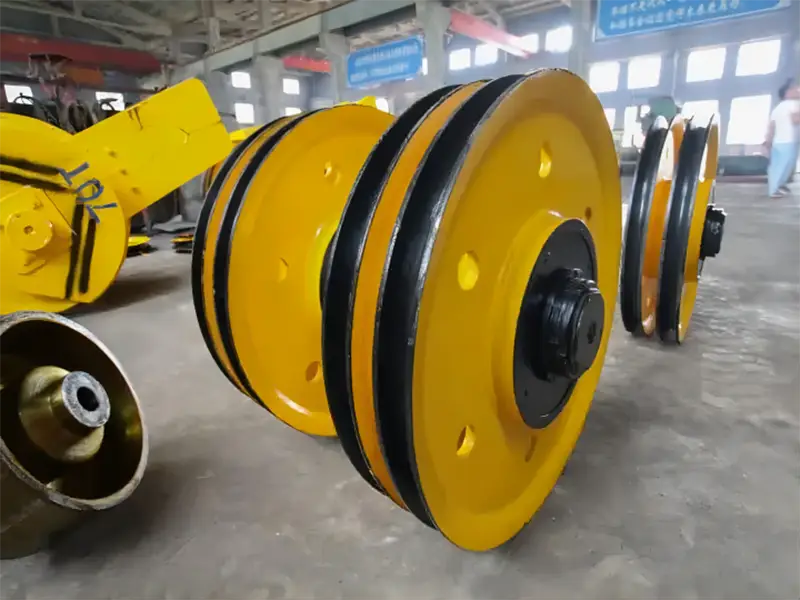
3. Welded Steel Plate Sheaves
Used for large sheaves (D > 800mm), A3 welded steel plate pulleys are strong yet lighter than cast steel, easing installation without reducing load capacity.

4. Other Sheave
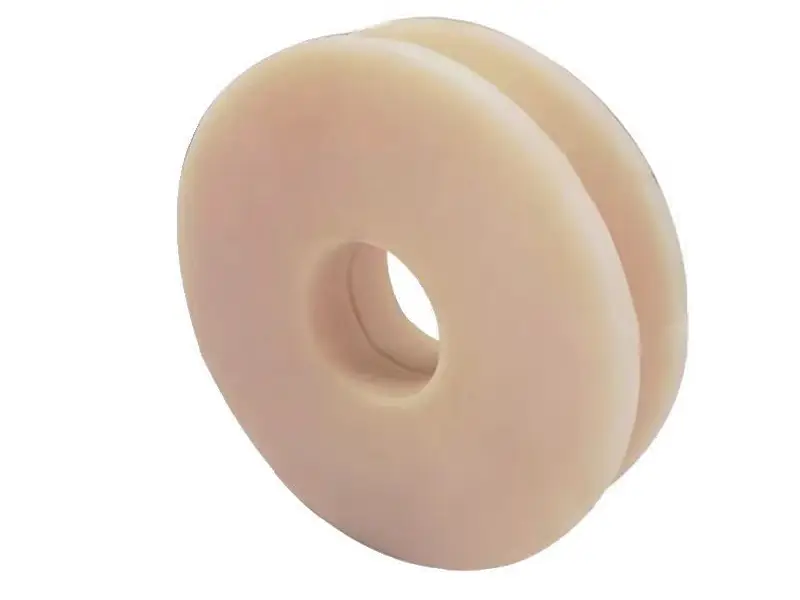
Nylon pulley are lightweight and wear-resistant but have lower strength. Aluminum alloy pulleys are soft on ropes, reducing wear and providing corrosion resistance.
Daily Maintenance of Crane Sheaves
Regular maintenance improves safety, reduces energy consumption, and prolongs service life:
1. Cleaning and Lubrication
Remove dust and debris from sheaves and chains with a soft brush. Apply lubricating oil or grease to reduce friction and wear, ensuring smooth operation.
2. Check Fixings
Inspect all bolts, pins, and fasteners. Tighten or replace any loose or corroded components to maintain system stability.
3. Rope or Chain Inspection
Regularly check wire ropes or chains for fraying, wear, or improper tension. Replace damaged parts immediately to avoid operational issues.
4. Auxiliary Equipment Check
Inspect sensors, protective covers, and other auxiliary equipment for proper operation. Replace damaged parts as needed.
Regular Inspection Intervals
- Daily Inspection – Observe for unusual noise, vibration, or stiffness. Stop operation if abnormalities occur.
- Routine Inspection – Small to medium sheave systems: every 6–12 months; large systems: every 1–2 years. Includes cleaning, lubrication, and fixing checks.
- Long-Term Maintenance – Every 5–10 years, replace worn parts, repair damage, and perform thorough cleaning and lubrication to maintain optimal crane performance.
Common Sheave Issues and Solutions
- Bearing Damage – Replace worn or failed bearings promptly.
- Abrasion – Excessive wear caused by friction; replace the sheave.
- Housing Deformation – From impacts or overload; replace housing immediately.
- Wire Rope Spacing Issues – Adjust spacing to prevent slippage or rope bunching.
- Stiff Rotation – Lubricate or replace bearings if rotation is heavy.
- Installation Problems – Reinstall and tighten fixing bolts if sheave is loose.
Proper maintenance of sheaves not only extends equipment lifespan but also enhances efficiency and reduces downtime.
Professional Crane Sheave Solutions
As a key component in lifting systems, the quality and maintenance of pulley directly affect operational stability. Glory Track provides high-performance crane pulleys, professional guidance, and technical support for safe and efficient lifting. Contact us to ensure your lifting equipment pulley systems operate reliably for years.