
Steel Profile
Steel profile is a type of long steel profile with specific cross-sectional shapes and dimensions.They are produced by processing steel billets through rolling and other methods at high temperatures. Steel profiles come in various shapes and specifications, and can be classified into I-beams, channel steel, angle steel, H-beams, and others according to their forms and sizes.These materials are widely used as fundamental structural components in construction and infrastructure projects.Depending on different applications, steel profiles are available in various dimensions, grades, and surface treatments to meet diverse engineering requirements.
Steel Profile Type We supply
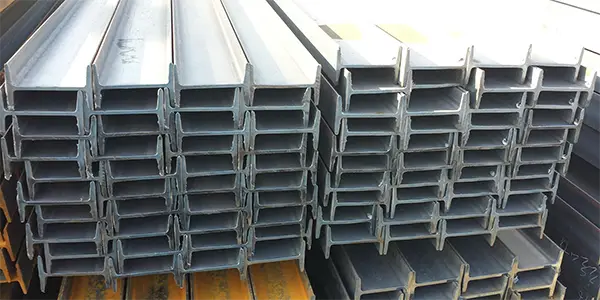
I-Beam
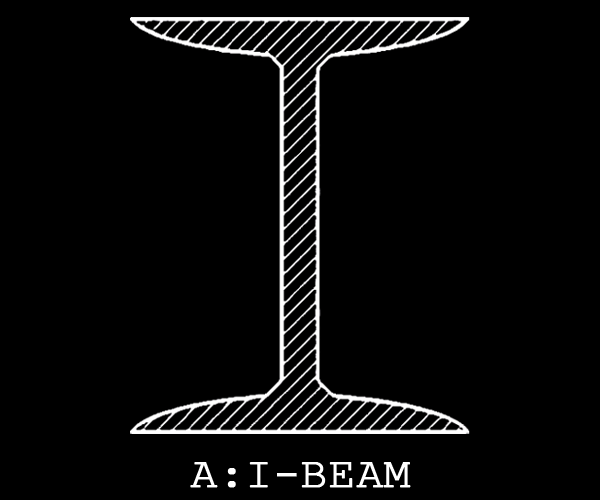
I-beam has an “I”-shaped cross-section, with sloped inner flange surfaces, typically at a 1:6 ratio, and flanges that are thinner on the outside and thicker on the inside. It is divided into standard and light-duty types. Standard I-beams are used in general construction, while light-duty I-beams have narrower flanges and thinner webs at the same height, making them lighter. I-beams are widely used in various building and metal structure applications, including beams and columns in industrial and civil construction, bearing supports in industrial structures, and steel piles and bracing structures in underground projects.
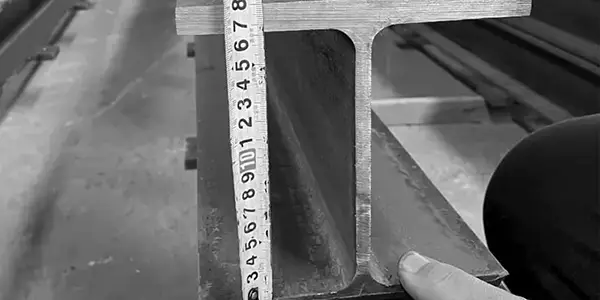
H-Beam
H-beam has an “H” shaped cross-section. Unlike I-beam, its flange surfaces are parallel without any slope, and the inner sides of the flanges are straight. As a result, H-beam offers higher rigidity and stability under various load conditions, with superior resistance to bending, torsion, and yielding.Due to its excellent load-bearing and seismic performance, H-beam is widely used in high-rise buildings, bridges, docks, and other large-scale construction projects, as well as in heavy machinery and steel structure warehouses. H-beam can also be used as crane rails.

Angle Steel
Angle steel, also referred to as angle iron, is structural steel product with an L-shaped cross-section where the two sides form a right angle. It comes in equal and unequal leg types. Angle steel can be made from various materials, such as carbon steel, stainless steel, or other alloy steels. Depending on its chemical composition and heat treatment process, its strength and corrosion resistance can vary. It is commonly used in construction, machinery manufacturing, and electrical and communication industries.
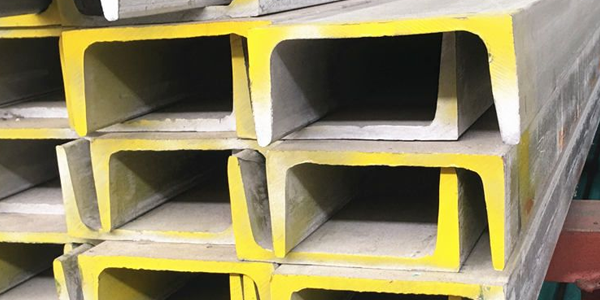
Channel Steel
Channel steel, also called U-channel steel, is a type of steel with a U-shaped cross-section, featuring two parallel legs connected by a central web. In construction, channel steel is commonly used in load-bearing components such as beams and columns. It is also widely applied in vehicle manufacturing, machinery, and bridge engineering. The selection of channel steel depends on the required load-bearing capacity, span, and compatibility with other components.
H-Beam vs I-Beam: How to Tell the Difference Steel Profile by Appearance
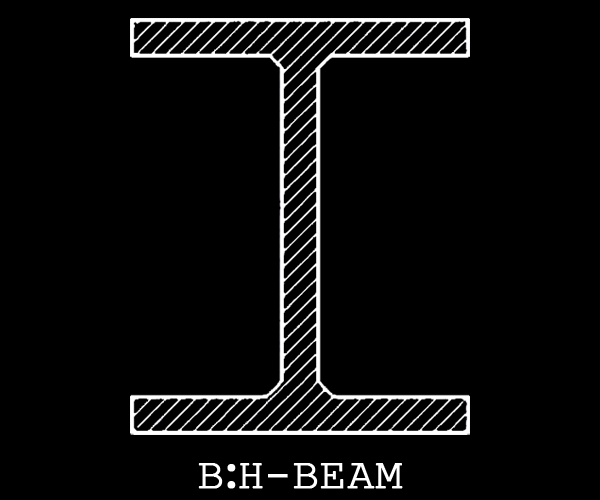
| Feature | H-beam | I-beam |
| Cross-Section Shape | The flange and web width are equal or close, forming a symmetrical “H” shape. The flange’s inner and outer sides are parallel, with no slope at the edges, and the thickness is uniform. The web-to-flange transition usually has right angles or small rounded corners. | The inner flange has a slope, the outer flange is narrower, forming a “I” shape. The flange gradually becomes thinner from the base to the edge, resulting in an asymmetrical section, with a thinner transition area between the web and the flange. |
| Size | The sizes are generally larger, with heights reaching over 1000mm. The flanges are relatively wide, and the overall structure is robust. | Common heights range from 100 to 600mm. The flanges are relatively narrow, and the overall structure is more slender. |
| Flange Thickness | The flange thickness is uniform, remaining consistent from base to edge. | The flange is thinner on the outside and thicker on the inside, as the inner surface of the flange has an inclination, causing the thickness to decrease gradually from the base to the edge. |
Tell us more about your project:
What is the intended application scenario for the rail?
Are there any specific standards or technical requirements to follow?
Do you need any processing services or accessories?
What is your expected delivery timeline?
Send us your details, and we’ll follow up with a custom solution that fits.