
Crane rail export packaging involves more than simply bundling the rails and loading them into containers. The length of the rails, their surface finish, the distance to be transported, and the loading conditions all influence the final packaging solution. Standard hot-rolled rails, drilled or beveled rails, and sandblasted or painted rails each have different surface protection requirements.
For export orders, packaging must address three practical challenges simultaneously: how to prevent rails from colliding and shifting during transport; how to minimize rust risk on long sea voyages; and how to facilitate loading, unloading, and cargo securing without driving up costs.
1. Start with Rail Length and Transport Method
Short rails are generally easier to handle and pack into compact bundles or wooden cases. Group rails of the same profile and length together, protect exposed ends where needed, and mark each package clearly. This reduces the risk of mixing lengths or damaging cut ends during handling.
Long rails present a different challenge. A 12 m rail may fit within the internal length of some 40 ft containers, but that does not mean it can be loaded, positioned, and secured easily.
For example, Hapag-Lloyd lists an internal length of 12,029 mm and a roof opening length of 11,552 mm for one 40 ft open-top container. Specifications vary by container and manufacturer. A 12 m rail therefore requires confirmation of the actual loading path, available clearance, bundle arrangement, and securing method before the equipment is booked.
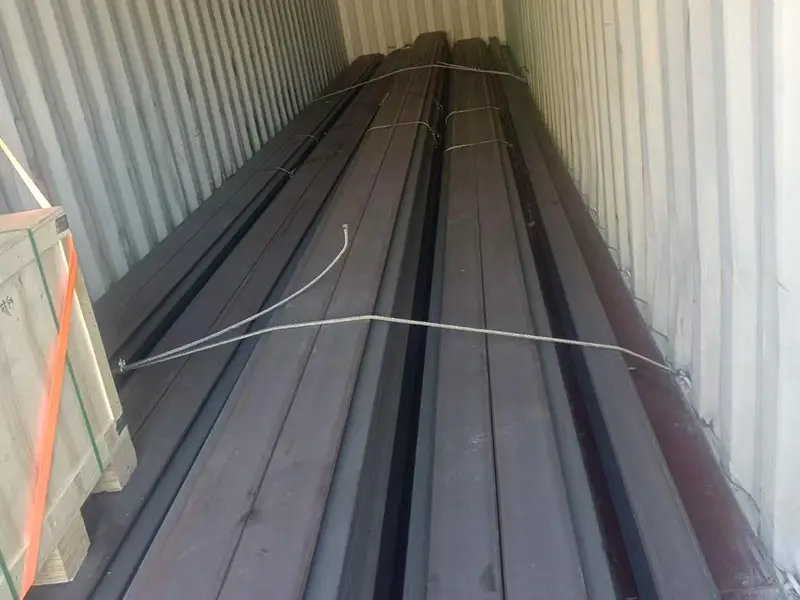
Compare open-top containers with flat racks, breakbulk shipment, or multiple transport units where appropriate. The decision should account for both dimensions and payload, not just whether the rail can physically enter the container.
2. Match the Packaging to the Rail’s Condition
Untreated hot-rolled rails
For standard orders where the buyer accepts possible surface rust, rails may be bundled without a full waterproof wrap. Align the rail heads and bases, then secure the bundle with suitable steel strapping. Use dry, sound dunnage to support the rails and separate adjacent bundles.
This is a lower-cost option, but it offers limited protection against condensation and humid sea air. It may not be suitable for long voyages or projects with strict appearance and corrosion requirements.
Painted or corrosion-protected rails
Painted rails need protection against abrasion, impact, and contact with other steel surfaces. Allow the coating to cure as specified before packing. Use suitable separators and edge protection where rails or steel bands could damage the finished surface.
For higher corrosion-protection requirements, consider VCI paper or film, a suitable outer moisture barrier, and desiccants where the packaging design calls for them. The selected materials must be compatible with the coating and any exposed metal.
Keep the rails dry before wrapping. Follow the packaging manufacturer’s instructions rather than assuming every package should be sealed or ventilated in the same way.
Cut, drilled, or machined rails
Bevel-cut ends, drilled holes, and machined surfaces may need additional protection. Fit suitable end guards where impact damage is a concern, and protect finished surfaces from direct contact with lifting gear, dunnage, or neighboring rails.
Steel strapping holds the rails together; it does not replace cargo securing inside the container. Protect the contact points so that tightening the bands does not damage the coating or finished rail surfaces.
3. Secure the Bundles for Transport
Bundle strapping and container securing serve different purposes. Strapping keeps individual rails together. Cargo securing prevents the loaded bundles from sliding, tipping, or shifting during transport.
Use suitable dunnage and blocking to support the bundles and separate them where necessary. Wooden braces or A-frame supports may be appropriate, but their size, position, and load capacity must suit the actual cargo arrangement.
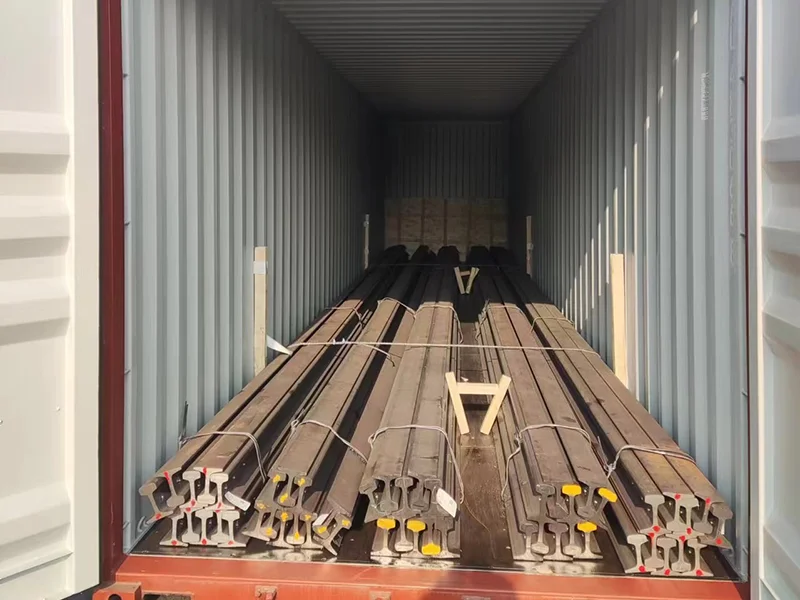
The securing plan should use approved, adequately rated lashing points and suitable restraints. Do not assume that a heavy bundle will stay in place because of its weight, or that the container walls and doors can act as unrestricted securing points.
Use suitable lifting slings and protectors when handling finished rails. Avoid dragging chains or wire ropes directly across rail heads, machined ends, or coated surfaces. The loading and securing arrangements should be checked by the responsible cargo-handling personnel.
Where solid-wood dunnage is used, check the destination’s phytosanitary requirements. ISPM 15 applies to regulated wood packaging materials, including dunnage, and requires the relevant treatment and marking where applicable.
4. When Is Additional Corrosion Protection Worthwhile?
A basic strapped bundle may be sufficient for an order where minor surface rust is acceptable. For long sea voyages, humid destinations, painted rails, or projects with strict delivery-condition requirements, additional protection is worth considering.
A higher-protection package may include VCI interleaving or wrapping, protective film around the bundle, and desiccants selected for the packaging arrangement. These measures address different risks: VCI materials help protect susceptible metal surfaces, while suitable barriers and moisture-control measures help manage exposure during shipment.
No single wrapping method guarantees a rust-free arrival. Results depend on the condition of the rails before packing, the materials used, package integrity, voyage conditions, and storage after arrival.
5. Example: A100 Rail Replacement for a Singapore Shipyard
For the second phase of a Singapore shipyard rail replacement project, Glory Track supplied 780 m of A100 crane rail, along with rubber pads, nuts, washers and plain washers. Each rail section had a specified tip-to-tip length of 12 m, with 45° bevel-cut ends.
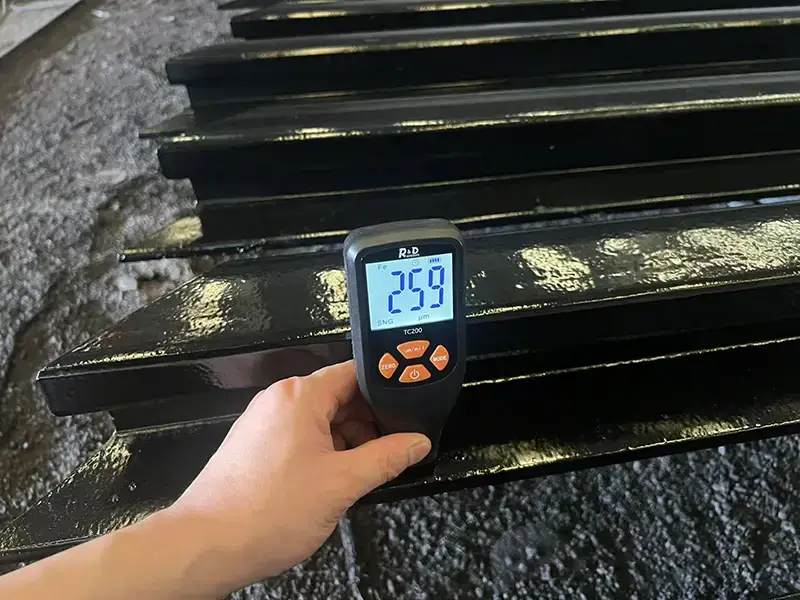
The rails were blast-cleaned to Sa 2.5 and coated with a three-coat Jotun system. Each coat had a specified dry film thickness of 80 μm, giving a total design thickness of 240 μm. Inspection records showed measured total dry film thicknesses of approximately 259–275 μm across the recorded measurement points.
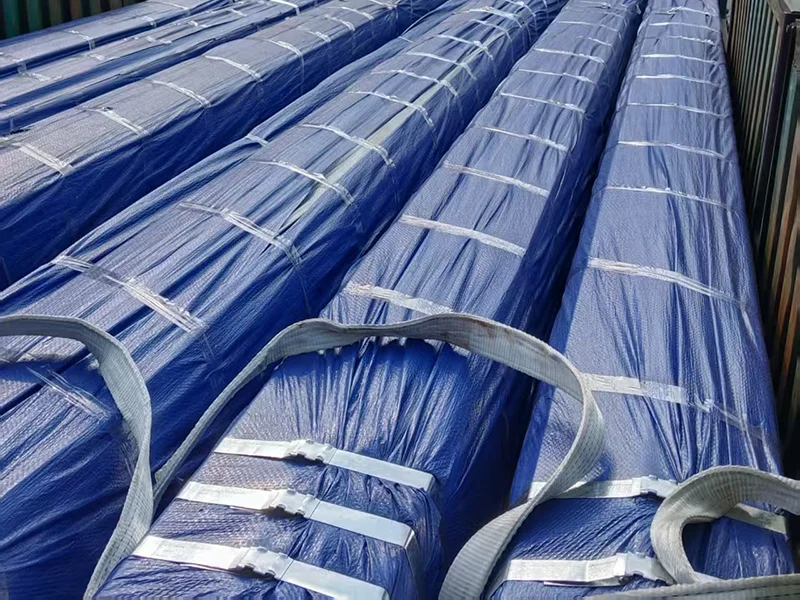
After coating and inspection, the rails were wrapped in blue protective film to help protect the finished surfaces during handling and sea transport. Steel straps were used to secure the rails into bundles for shipment. The rubber pads and fastening hardware were packed separately in wooden cases. The completed shipment was dispatched in open-top containers in late July 2026.
At 74.3 kg/m, the 780 m of A100 rail weighed approximately 58 tonnes before packaging and accessories. With 12 m rail sections and a substantial total cargo weight, the shipment required attention to both loading dimensions and container payload. The blue protective wrapping and steel strapping provided physical protection for the coated rails while keeping the bundles secured for transport.
What to Confirm Before Shipment
Before finalizing crane rail export packaging, confirm the finished rail lengths, machining and coating requirements, package dimensions, total weight, corrosion-protection expectations, destination requirements, and unloading arrangements.
These details determine whether standard bundling is sufficient or whether the order needs additional surface protection, specialized handling, or a different shipping method.
For an export quotation, provide the rail schedule, finished dimensions, processing details, coating specification, destination, and any packaging requirements. This gives Glory Track a clear basis for reviewing the rail supply and shipment arrangements.