
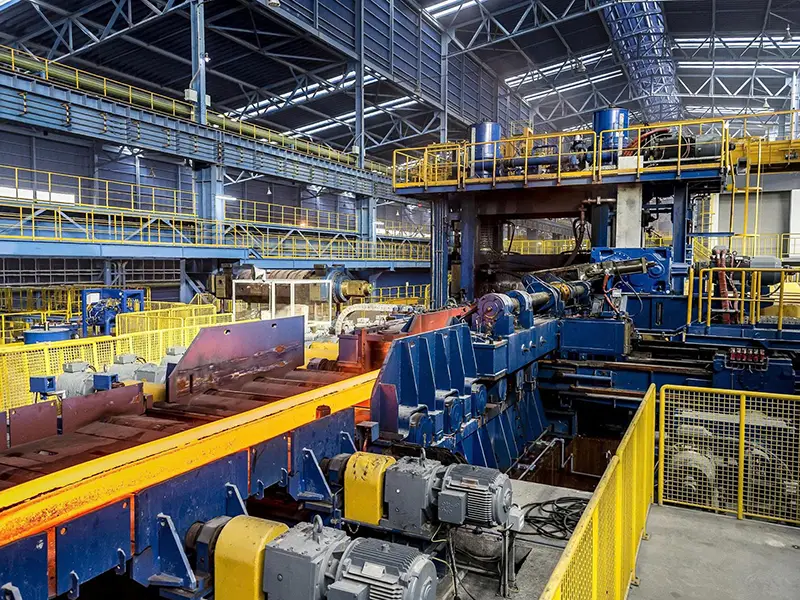
Steel rail is a critical component of railway, crane, and heavy industrial infrastructure. It is engineered to withstand extreme loads, repeated stress cycles, and long-term wear under demanding operating conditions.
This article explains how steel rail is manufactured, from raw steel blooms to finished, inspected rail products, and why each production stage is essential for performance and safety.
Starting Point: Steel Blooms and Rail Material Composition
Rail manufacturing begins with steel blooms, which are large semi-finished steel sections used as the base material for rolling rail profiles.
Typical rail steel composition includes:
- Carbon: 0.45%–0.60%
- Manganese: 0.70%–1.20%
These elements provide:
- High strength
- Wear resistance
- Fatigue resistance under repeated wheel or crane loading
This makes rail steel significantly stronger than standard structural steel.
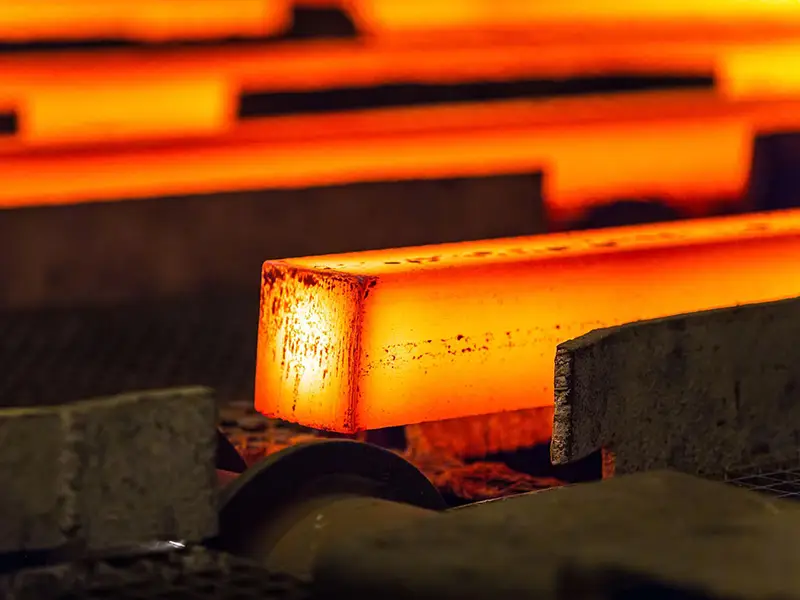
Reheating Process: Preparing Steel for Rolling
Before rolling, steel blooms must be heated to a controlled temperature in industrial reheating furnaces.
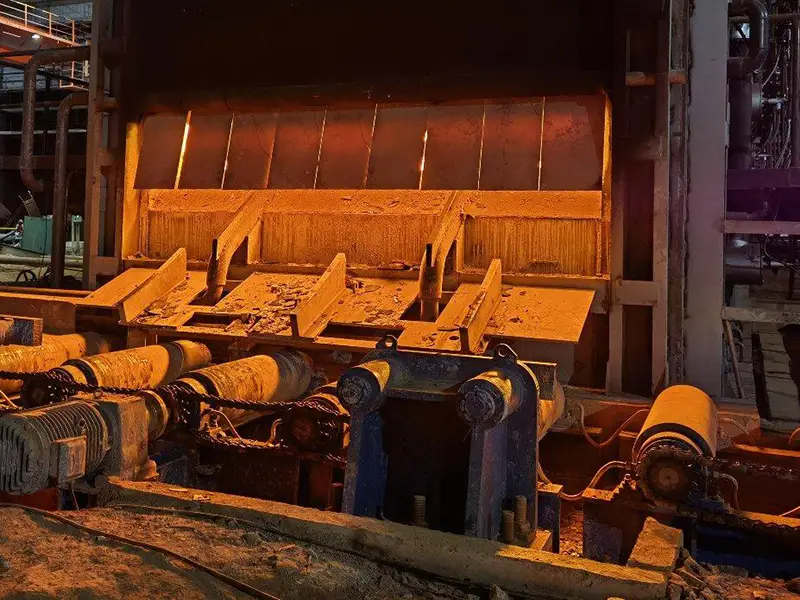
Two main furnace types are used:
Continuous Reheating Furnace
- Used for cold-charged blooms
- Ensures gradual, uniform heating
- Reduces thermal stress
In-and-Out Furnace
- Used when blooms are already hot
- Rapid reheating before rolling
- Minimizes production delay
Temperature control at this stage directly affects rail quality and dimensional stability.
Rail Rolling Process: Forming Head, Web, and Foot
Steel rail is not a simple shape—it consists of three functional sections:
- Rail Head: contact surface for wheels or crane loads
- Rail Web: vertical support structure
- Rail Foot: distributes load into sleepers or base plates
Rolling Method
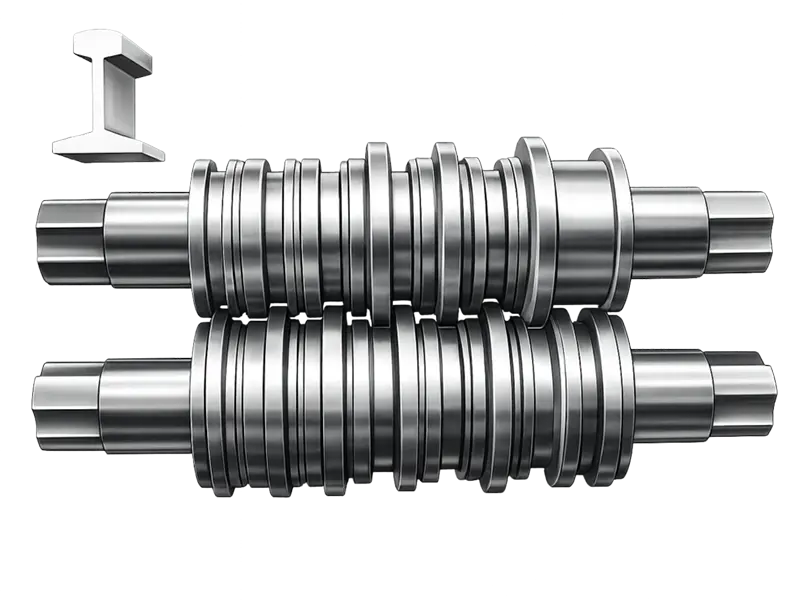
Rail is produced through multi-pass hot rolling using grooved rollers.
Key techniques include:
- Roughing passes: initial shaping
- Intermediate passes: forming profile structure
- Finishing passes: achieving final precision geometry
Closed Pass Rolling
To control metal flow and improve accuracy:
- Closed grooves are used in rolling mills
- Prevents excess material (fins)
- Improves surface quality and dimensional precision
Rail rolling requires precise control of temperature, force, and roll design due to high carbon steel behavior.
Common Rail Manufacturing Defects and Control
During rolling, several defects may occur if process control is not precise:
- Fins (excess metal at edges)
- Laps (folded surface defects)
- Roll marks (surface damage from worn rolls)
- Buckling or distortion
These defects are controlled through:
- Temperature stability
- Roll alignment
- Proper pass design
- Equipment maintenance
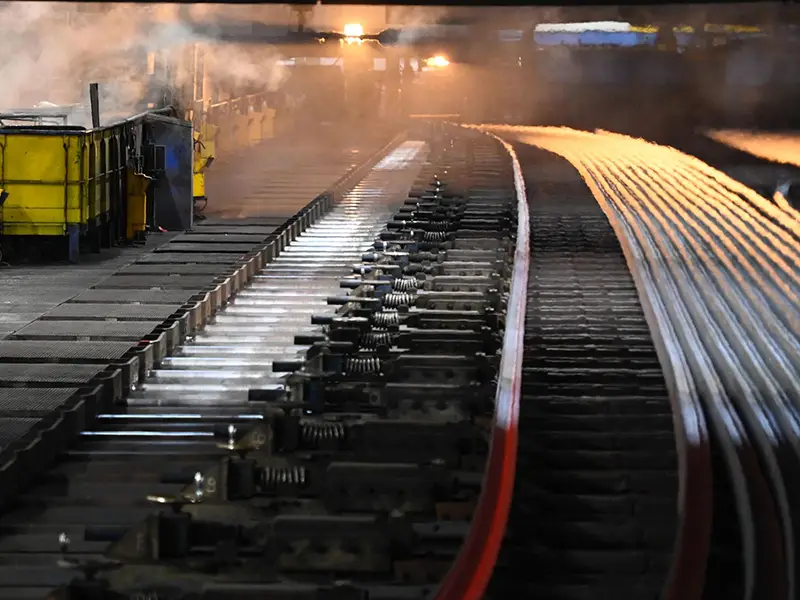
Cutting, Cooling, and Straightening Process
After rolling, rail is processed through several finishing steps:
Hot Cutting
- Rails are cut to standard lengths using hot saws
- Prevents deformation during cutting
Controlled Cooling
- Rails are cooled on cooling beds
- Often placed upside down to balance internal stress
Roller Straightening
- Mechanical levelling system
- Removes curvature and ensures alignment tolerance
Cooling control is critical to prevent brittleness and residual stress.
Rail Inspection and Quality Testing
Because rail is a safety-critical product, every rail undergoes strict inspection procedures:
- Tensile strength testing
- Impact testing
- Drop weight testing
- Dimensional inspection
- Surface defect detection
Each rail is traceable through identification markings for quality assurance and lifecycle tracking.
Why Rail Manufacturing Quality Matters
The manufacturing process directly determines:
- Track safety
- Equipment performance
- Service life
- Maintenance frequency
- Total lifecycle cost
High-quality rail reduces deformation risk and ensures stable performance under heavy industrial and transport loads.
Applications of Steel Rail Products
Manufactured steel rail is widely used in:
- Crane rail systems (ports, steel mills, shipyards)
- Heavy haul railway networks
- Mining transportation systems
- Industrial material handling systems
Conclusion
Steel rail manufacturing is a highly controlled engineering process combining metallurgy, thermal treatment, precision rolling, and strict quality inspection.
Understanding this process helps engineers and procurement teams select the right rail system for long-term safety and performance.