
Introduction
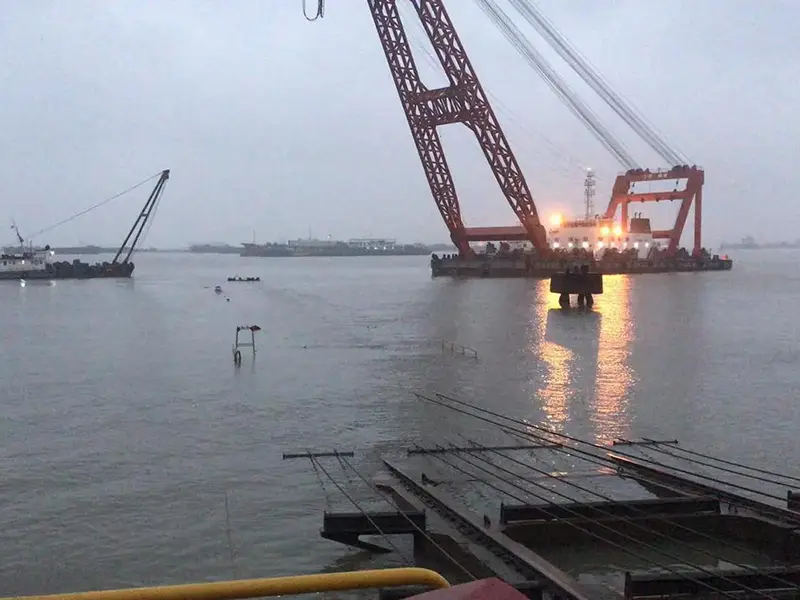
In most shipyards, vessel movement between land and water is not done directly. Instead, a guided structure is used to control the process. One of the most common solutions is the slipway rail system.
It is a simple concept in principle, but in practice it plays an important role in ship launching and retrieval operations. Many medium and large shipyards still use this type of system because it provides stable control and predictable performance during heavy-load movement.
Compared with dry dock construction, it requires less investment and can be put into operation in a shorter time.
Basic principle of operation
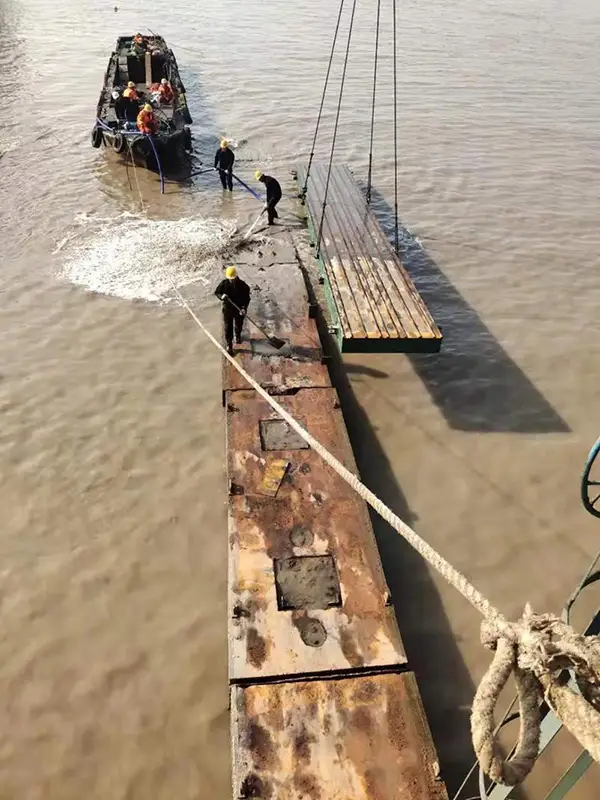
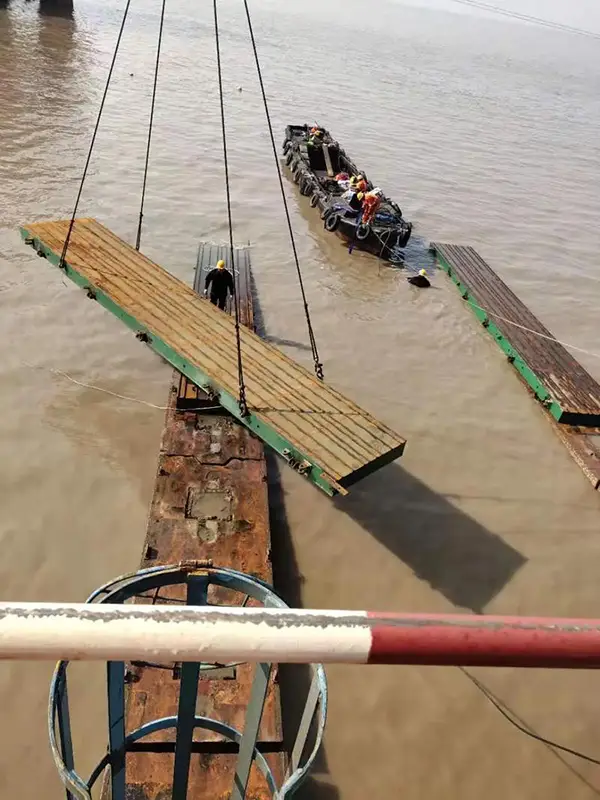
The system is based on an inclined rail structure that connects the shore with the water area.
A vessel is placed on a cradle or carrier, which then moves along steel rails installed on the slope. The rail line defines the path, while the slope determines the movement behavior.
During launching, the cradle moves downward along the rails. As it reaches the water, buoyancy gradually takes over the vessel load. During retrieval, the process is reversed, and the vessel is pulled back to land for maintenance or repair.
The movement is controlled and guided at all times, rather than relying on free floating or uncontrolled sliding.
Development background
The concept of rail-based ship launching has been used for more than 100 years.
Early systems appeared in the 19th century in Europe, where simple mechanical rail tracks and wheeled platforms were used to move small vessels. Later, similar systems were developed in North America under the marine railway concept.
With the introduction of steel structures and improved mechanical drive systems, slipway designs gradually became more standardized. Modern systems now use reinforced concrete foundations, high-strength rails, and hydraulic or motor-driven traction equipment.
Although materials and control methods have changed, the operating principle has remained largely the same.
Main components of the system
A typical slipway rail system consists of several integrated parts.
The foundation is a reinforced concrete slope designed to support heavy loads and provide a stable base for rail installation. The slope angle is selected according to vessel size and site conditions.
Steel rails are installed along the foundation and serve as the main load path. These rails must maintain alignment accuracy to ensure smooth movement of the cradle system under load.
The cradle is the load-bearing structure that supports the vessel during movement. It distributes weight across multiple points to avoid local stress concentration on the hull.
A drive system is used to control movement along the rails. Depending on the facility, this may be a winch system, hydraulic drive, or self-propelled mechanism.
Safety devices are installed throughout the system, including braking components, limit switches, and overload protection. These are necessary due to the high mass involved in operation.
Launching and retrieval process
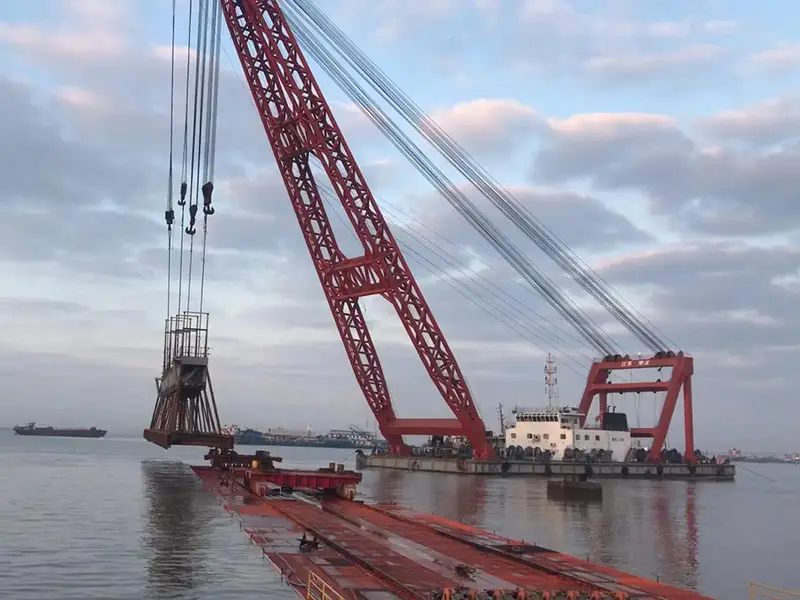
Ship launching starts with the vessel positioned on the cradle system. Once alignment is confirmed, the cradle begins moving down the inclined rails toward the water.
As the vessel enters the water, buoyancy gradually increases and reduces the load carried by the cradle. Once the vessel becomes fully buoyant, it separates from the system and floats independently.
Ship retrieval follows the opposite process. The cradle is positioned below the vessel in the water, the vessel is guided into place, and then the system pulls both back onto land.
Both operations rely on controlled movement rather than sudden force application, which helps reduce stress on the hull structure.
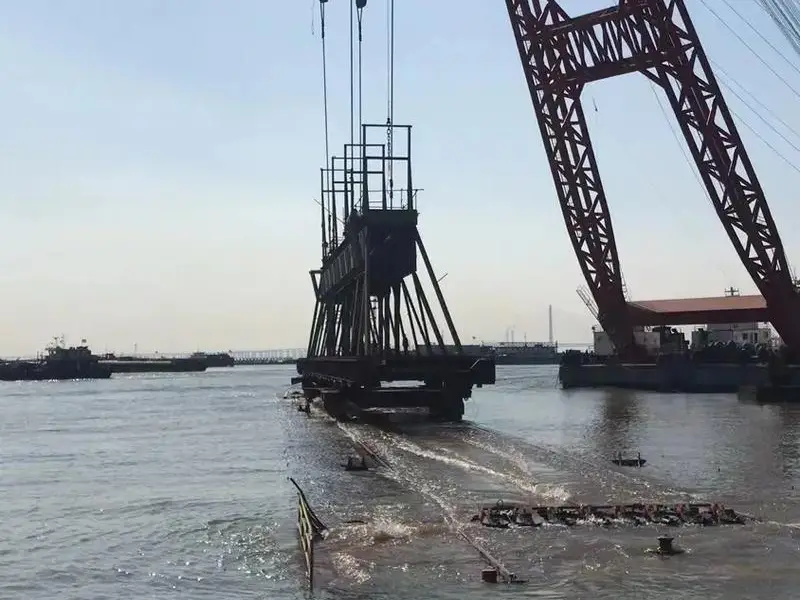
System configurations
Slipway rail systems can be arranged in different configurations depending on shipyard layout.
The most common arrangement is the longitudinal slipway, where vessels move along their length during launching and retrieval. This configuration is widely used in medium and large shipyards.
Some facilities use transverse layouts where vessels move sideways into the water. These are generally used where shoreline space is limited.
Drive methods also vary. Smaller installations may use gravity-assisted or winch-driven systems, while larger installations rely on hydraulic or motor-driven traction for better control.
Operational Advantages of a Slipway Rail System
The main advantage of this system is its balance between cost and performance.
Construction cost is lower compared to dry dock facilities, and installation time is shorter. This makes it suitable for shipyards that require frequent launching operations.
The system is also flexible in terms of vessel types. It can handle a wide range of sizes within its design limits.
Maintenance is relatively straightforward since most components are mechanical and accessible.
Limitations and operational considerations
One key limitation is site requirement. The system needs a long sloped area extending into the water, which is not always available.
Corrosion is another factor due to continuous exposure to marine environments. Regular inspection and protective treatment are necessary for rails and structural components.
Weather conditions can also affect operation, particularly wind and wave conditions during launching or retrieval.
Comparison with dry dock systems
Compared with dry docks, slipway systems require lower investment and shorter construction time.
Dry docks are more suitable for very large vessels and provide better environmental control during maintenance work.
In practice, many shipyards use both systems depending on vessel size and operational requirements.
Current development trends
Modern slipway systems are moving toward higher levels of automation.
Hydraulic synchronization, real-time monitoring, and improved control systems are becoming more common. These improvements help improve operational accuracy and safety.
Material upgrades such as improved coatings and corrosion-resistant steel are also extending service life in marine environments.
Conclusion
A slipway rail system remains a practical solution for vessel launching and retrieval in shipyards. Its structure is relatively simple, but it provides reliable control over heavy-load movement between land and water.
Despite the development of more advanced docking technologies, it continues to be widely used due to its cost efficiency, operational flexibility, and proven performance in real shipyard conditions.
If you are planning a shipyard slipway project or evaluating different vessel launching solutions, understanding the rail system design in detail is essential for making the right engineering decision.
For technical specifications or system recommendations, you can contact our engineering team for support.