
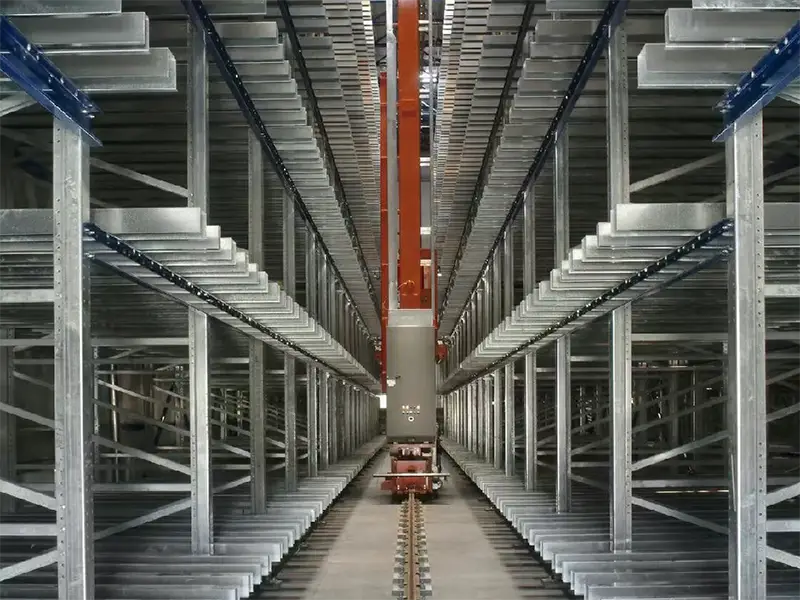
Automated warehouses rely heavily on stacker crane rails to ensure smooth and efficient material handling. These rails are a critical component of automated storage and retrieval systems, supporting stacker cranes as they lift, move, and store goods. High-quality rails not only carry heavy loads reliably but also improve operational safety and warehouse efficiency. In this article, we explore the types, features, and advantages of stacker crane rails, helping warehouse operators and industrial engineers make informed choices.
Types of Stacker Crane Rails
Stacker crane rails are designed to meet different warehouse layouts, lifting heights, and operational needs. The main types include:
- High-Rise Rails – These rails are suitable for warehouses over 15 meters, often used with high-lift stacker cranes. They are engineered for precise movement and high load capacity.
- Medium & Low-Rise Rails – Ideal for warehouses under 15 meters or simpler three-dimensional storage systems. They provide reliable support while saving space.
- Rail-Guided vs Rail-Free Rails – Rail-guided rails ensure stacker cranes follow fixed paths with high precision, while rail-free options, also known as high-rise forklifts, offer more flexibility but may require advanced navigation systems.
- Rail Accessories & Components – Rails are often paired with clips, connectors, mounting brackets, and other accessories for secure installation and maintenance convenience.
Glory Track provides rails in both standard and customized profiles, ensuring compatibility with various warehouse automation systems.
Key Features and Benefits
- Smooth & Precise Operation – Engineered with tight tolerances to reduce vibration, ensuring the safe transport of goods.
- Support for Heavy Loads – Designed to handle stacker cranes carrying large weights without bending or deformation.
- Durable and Long-Lasting – Made from premium steel with strict quality control, reducing maintenance frequency.
- Safe and Stable – Compatible with advanced automation systems, minimizing risks in busy warehouse environments.
These features contribute to faster storage and retrieval cycles, reduced labor costs, and improved overall warehouse efficiency.
Maintenance Tips for Stacker Crane Rails
- Proper maintenance is essential to prolong the life of stacker crane rails:
- Inspect rails regularly for alignment, wear, and damage.
- Keep rails clean and properly lubricated to prevent rust and friction.
- Check rail clips, fasteners, and mounting brackets to ensure stability.
- Implement preventive maintenance schedules and use monitoring systems to detect early signs of wear.
Choosing the Right Stacker Crane Rail
Selecting the correct stacker crane rail depends on warehouse height, crane load capacity, operational speed, and aisle layout. For high-rise warehouses, heavier and more precise rails are recommended, while smaller warehouses can use medium or low-rise rails. Custom rails and accessories allow for tailored solutions that match the specific needs of any automated storage facility.
Partnering with an experienced supplier like Glory Track ensures that your stacker crane rails meet safety, durability, and performance standards.
High-quality stacker crane rails are essential for maximizing warehouse efficiency, safety, and operational reliability. By choosing the right type and maintaining them properly, warehouse operators can enhance throughput, reduce downtime, and achieve long-term cost savings.
Contact Glory Track today for expert guidance and custom stacker crane rail solutions for your automated warehouse.