
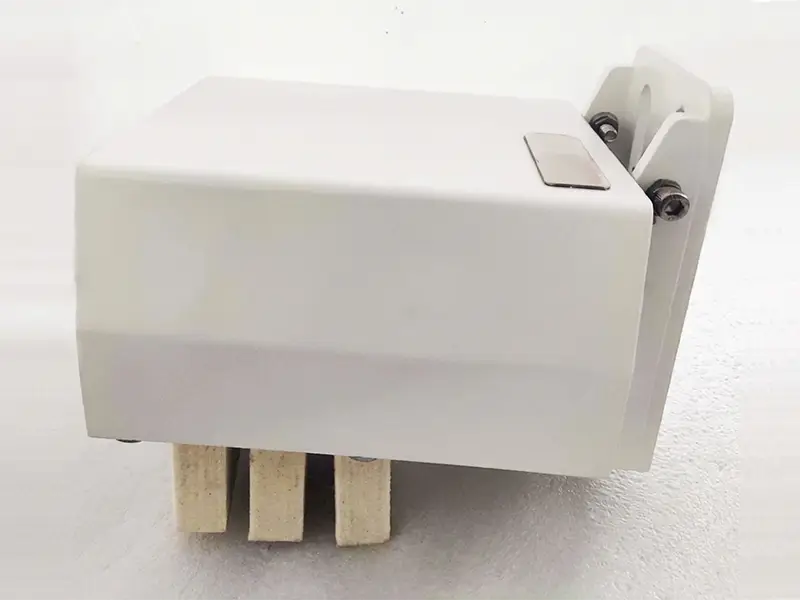
In workshops, steel mills, ports, and outdoor gantry crane operating areas, oil, moisture, metal particles, and compacted dirt can accumulate on the surface of crane rails. When wheels roll over this loose debris, particles may be forced into the contact surface between the wheel and the rail. Oil films can reduce traction, while sticky deposits can attract even more dirt.
Effective crane rail cleaning helps ensure that the running surface of the rails remains clean before the crane wheels reach contaminated areas. Selecting the appropriate cleaning method depends on the type of substances accumulated on the rails and how firmly they adhere to the rail surface.
Oil, Water and Stuck-On Dirt on Crane Rails
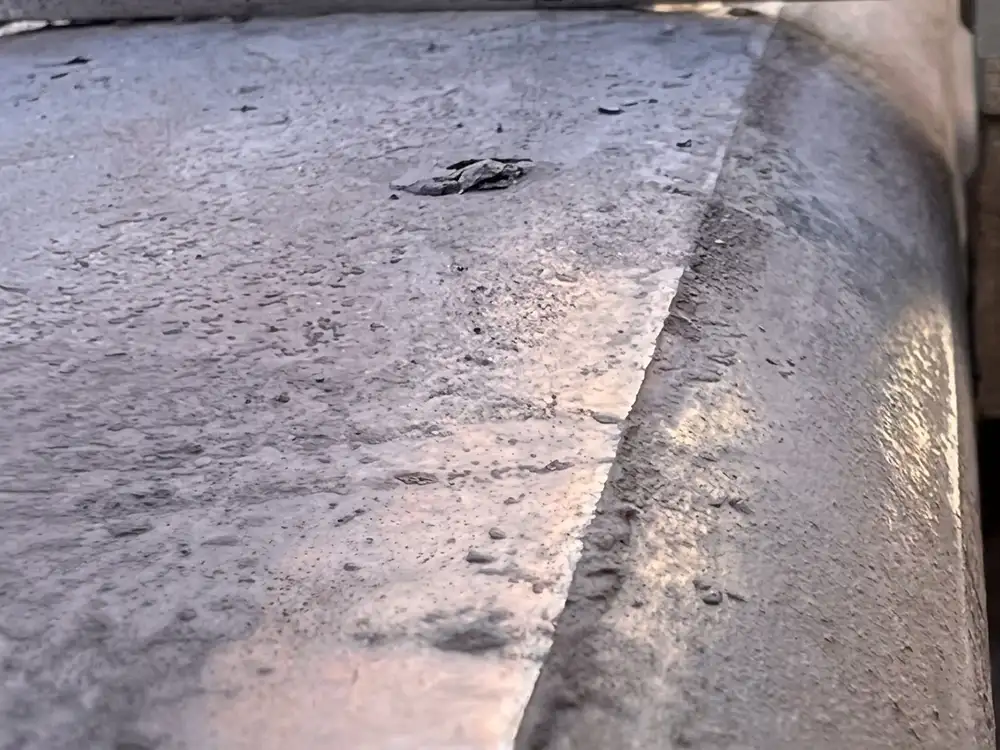
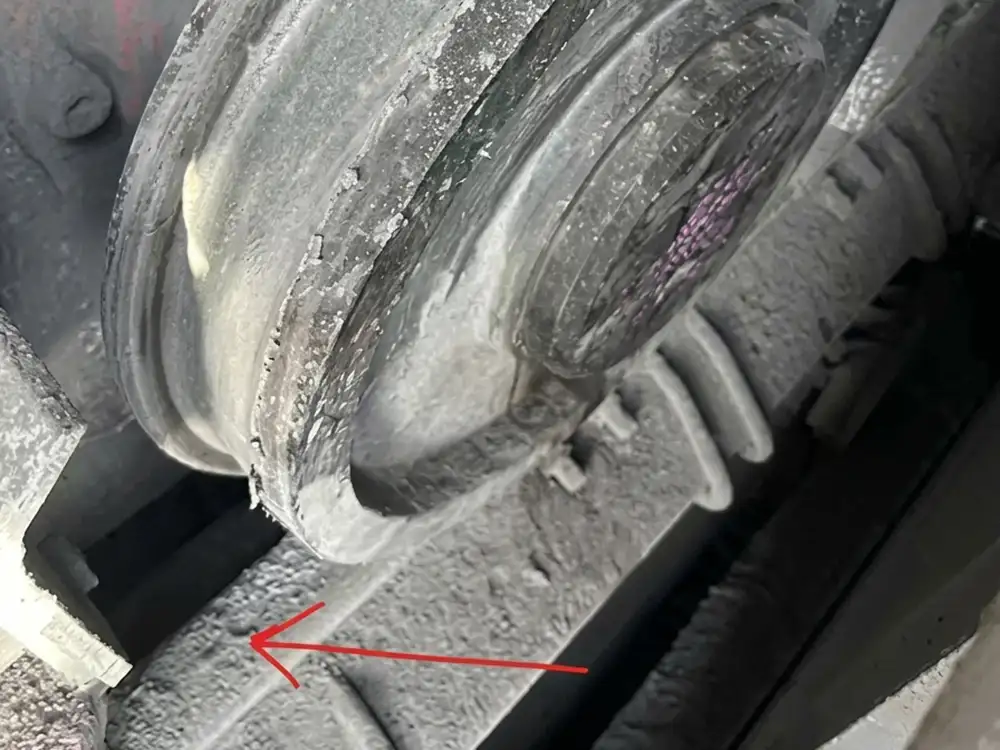
Start by examining the rail head. This is the top surface that supports the crane wheel. Look at both the overall condition and individual deposits.
| Rail condition | Main cleaning task |
|---|---|
| Oil films or water | Wipe and absorb liquid from the running surface |
| Loose dirt and particles | Remove surface material before wheel contact |
| Firmly attached deposits | Assess adhesion and whether wiping alone is sufficient |
Different contaminants can appear together. Oil may hold loose particles against the rail. Fresh dirt may also collect over an older deposit.
Some deposits look almost “baked onto” the surface. This describes their appearance and adhesion. It does not prove that heat caused the buildup.
Effective crane rail cleaning starts with this distinction. A pad intended for liquid removal may not clear a hardened layer.
How Does Crane Rail Cleaning Work Before the Wheels Pass?
The DLQS-1800 keeps a cleaning pad in contact with the rail’s top running surface. As the crane moves, the pad travels along the rail. The standard cleaning element combines felt and scouring-pad layers. Together, they wipe the rail surface, absorb liquid, and help remove dirt.
The cleaning sequence has four steps:
- The crane moves along the track.
- The pad contacts the rail’s top running surface.
- As the pad moves along the rail, it absorbs liquid and wipes away surface contamination.
- The wheel then passes over the section the pad has just cleaned.
The device cleans through contact as the crane moves. It is not a powered rotary brush, pressure washer, or vacuum system. This allows the rail to be cleaned during crane movement. However, cleaning performance depends on consistent contact with the rail, the condition of the pad, and the type of contamination.
Uneven pad wear can leave parts of the rail untouched. If the pad becomes heavily contaminated, it may also need cleaning or replacement.
Can the DLQS-1800 Remove Firmly Attached Dirt?
Liquid films and firmly attached dirt require different cleaning actions. The standard pad should not be expected to remove every deposit.
For tougher conditions, Glory Track can consider a customized felt, brush and wire-brush combination. The arrangement should match the actual contamination.
Separate the application into two tasks:
- Initial cleaning: removing deposits already attached to the rail.
- Ongoing cleaning: controlling oil, water and dirt that return during operation.
A thick or strongly bonded layer may need separate initial treatment. A travel-mounted device can then help manage recurring contamination.
This distinction prevents unrealistic expectations for crane rail cleaning. Continuous wiping and established-deposit removal are related tasks, but they are not identical.
The key question is simple: does the rail need liquid removal, loose-dirt cleaning or treatment of an existing layer? Detailed material selection can follow that assessment.
Where Should the Cleaner Be Mounted for Travel in Both Directions?
The cleaner should act before the approaching wheel reaches the contamination. Its position must therefore be checked against crane travel direction.
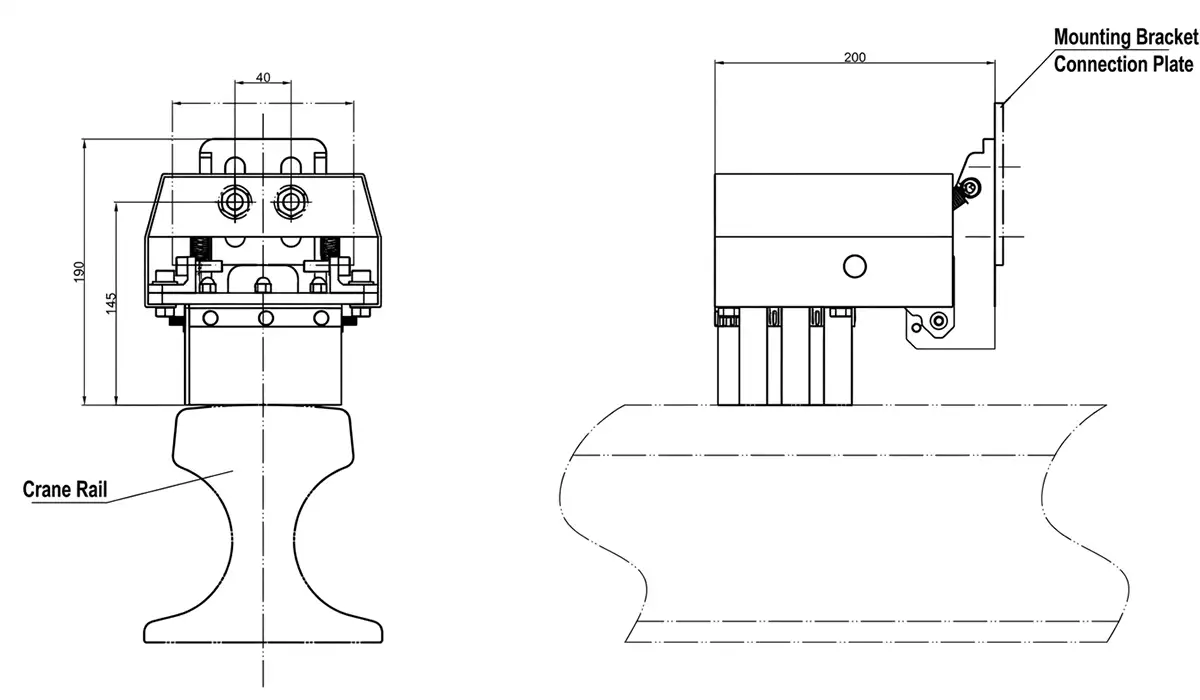
The DLQS-1800 mounts beneath the crane end carriage. A mounting connection supports the seat plate through a detachable connection. The cleaning pad extends down to the rail’s running surface. Crane movement can reverse. A cleaner ahead of a wheel during forward travel may sit behind it during reverse travel.
For reliable crane rail cleaning, review the complete arrangement in both directions. A single side-view photograph cannot confirm the whole layout.
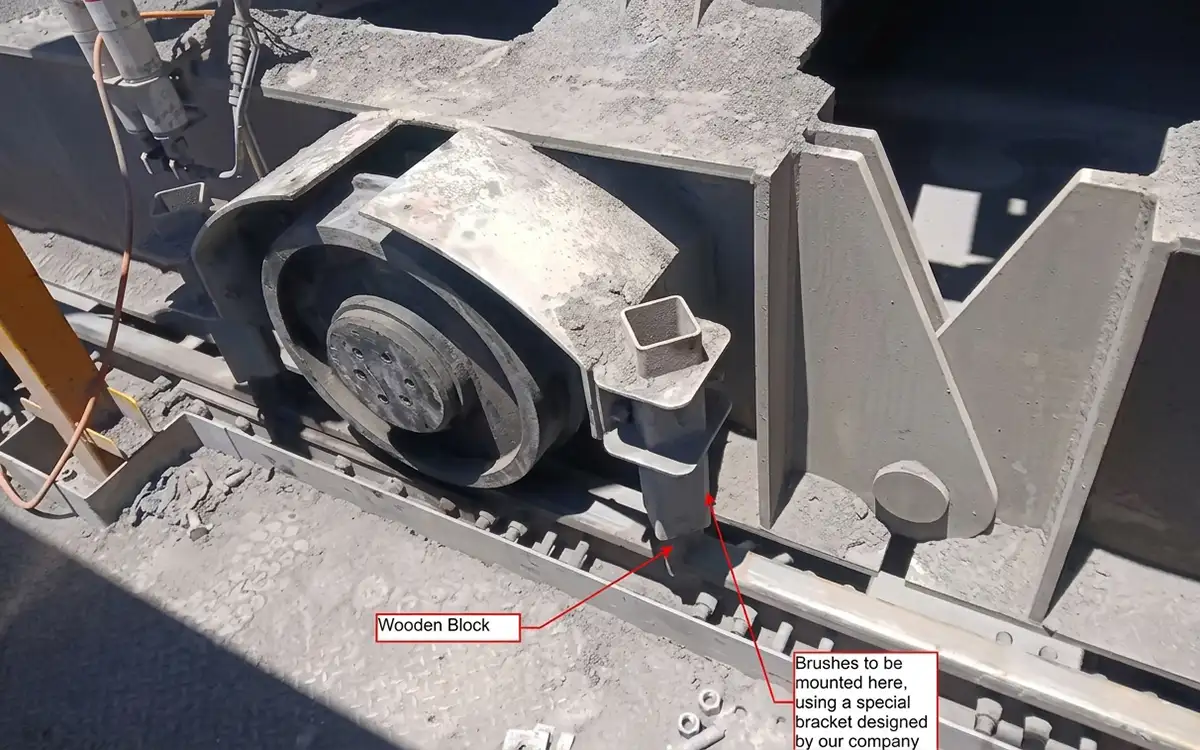
Before installation, check the following points:
| Check | Question to answer |
|---|---|
| Rail contact | Does the pad contact the intended running surface? |
| Travel direction | Does the arrangement clean ahead of approaching wheels in both directions? |
| Clearance | Does the assembly clear wheels, fastenings and nearby structures? |
| Arm movement | Can the arm move without interference? |
| Maintenance access | Can the pad be inspected and replaced? |
See the installation photograph to understand the location on the crane.
Cleaning Pad Wear, Inspection and Replacement
The DLQS-1800 uses a pivoting arm to support the cleaning pad. A hinge shaft connects this arm to the seat plate.
A buffer spring sits between the seat plate and arm. It cushions movement during operation.
As the pad wears, the arm can rotate downward. A limit post and matching slot restrict this movement.
This arrangement helps prevent the metal holder from contacting the rail. It does not remove the need for inspection or pad replacement.
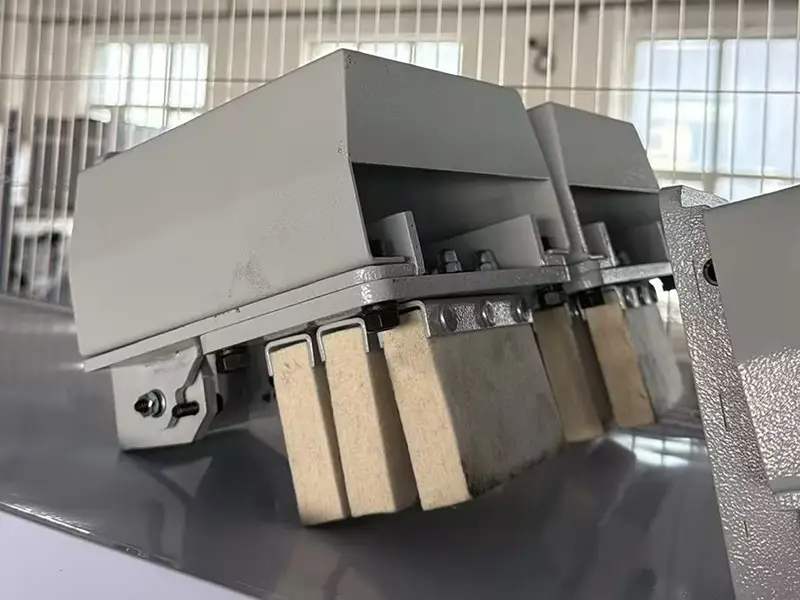
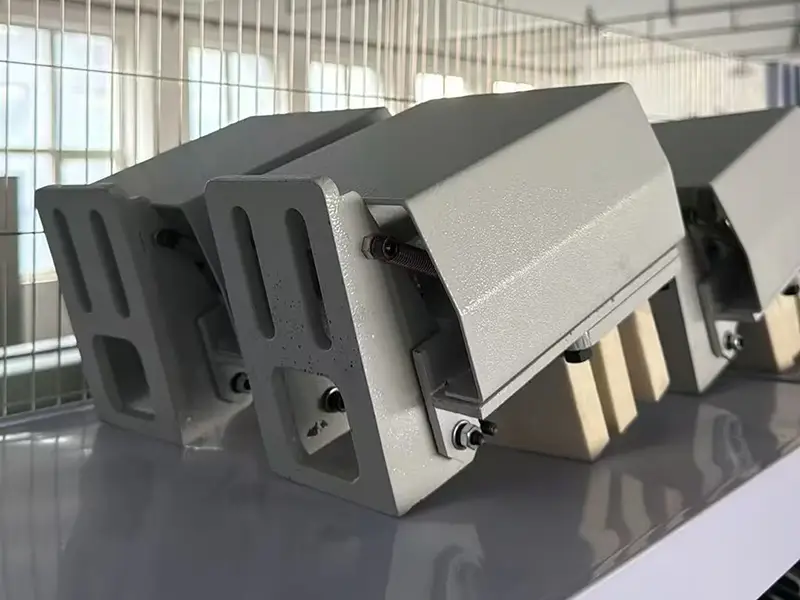
Routine inspection supports consistent crane rail cleaning. During a safe shutdown, check for:
- Uneven pad wear or incomplete rail contact.
- Damaged or separated cleaning layers.
- Heavy dirt loading or liquid saturation.
- Obstructions around the hinge and arm.
- Loose mounting connections.
- Spring or limit-component damage.
- Reduced clearance between metal parts and the rail.
Follow the applicable product instructions when deciding on replacement. The assembly description alone does not establish a fixed replacement interval.
Use the crane’s approved isolation procedures before accessing the device. Never inspect or adjust it beside moving wheels.
Troubleshooting Incomplete Crane Rail Cleaning
Check the rail after the device passes. Do not judge performance only by whether the cleaner remains attached.
Compare the remaining contamination with the task the device should perform.
| What you observe | What to check first |
|---|---|
| Oil or water remains | Pad contact, saturation and contamination loading |
| Only a narrow strip is clean | Uneven contact or irregular pad wear |
| Firm deposits remain unchanged | Whether wiping suits the existing buildup |
| Fresh oil quickly returns | Continuing leakage or another contamination source |
| Results differ by travel direction | Cleaner positions in both directions |
These checks provide a starting point. They are not a diagnosis based on appearance alone.
Also distinguish cleaning effectiveness from contamination supply. A cleaner cannot repair an oil leak or stop nearby processes from generating dirt.
For recurring contamination, assess pad contact, mounting, wear and inspection together. Treat firmly attached buildup as a separate initial-cleaning question.
To review your application, send:
- An overall photograph of the affected rail.
- A close-up of the contamination.
- A photograph of the mounting area.
- The rail profile or rail-head dimensions.
- Crane travel directions and operating speed, where available.
These details help determine a suitable crane rail cleaning arrangement. They also help identify whether the existing deposits need separate attention.
Looking for a rail cleaning solution for your crane runway? Contact Glory Track for a recommendation and quotation. Share your application requirements, and the team can assess the DLQS-1800 or discuss a customized cleaning configuration for your project.