
Introduction
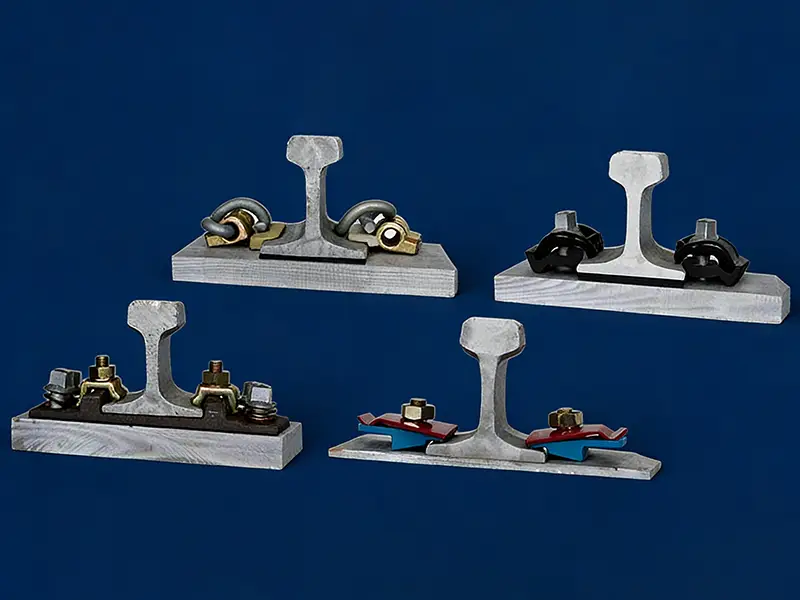
A rail fastening system is the critical interface between steel rails and sleepers, responsible for maintaining gauge, providing elasticity, and ensuring track stability. Selecting the appropriate track fastening system requires understanding technical parameters beyond basic product descriptions. This guide helps engineers and procurement professionals make informed decisions about railway fastening components.
Fastening Systems by Application
Different railway applications demand specific fastening characteristics:
High-speed rail fastenings require sufficient clamping force for longitudinal restraint while providing appropriate flexibility through resilient components. These elastic fastening systems must also ensure electrical insulation for signal circuits and minimize vibration transmission.
Heavy haul applications face extreme annual tonnage and high traction forces. Rail clip systems for these environments must resist longitudinal stresses while maintaining gauge retention under heavy loads. Extended service life is essential since maintenance access may be limited.
Urban transit and light rail often prioritize vibration damping and noise reduction, requiring carefully selected rail pad stiffness and insulated components.
Essential Performance Parameters
Understanding key technical parameters ensures proper fastening system selection:
Clamping force determines longitudinal restraint capability. Typical values range from 180-220 kN, critical for continuous welded rail applications where thermal expansion forces must be controlled.
Static and dynamic stiffness affects load distribution and vibration characteristics. Rail pad selection involves balancing load attenuation against track stability—softer materials provide better isolation but may compromise gauge retention under lateral forces.
Electrical resistance is essential where track circuits use running rails for signal transmission. Complete fastening systems must include insulated components achieving minimum resistance requirements.
Gauge retention depends on clip geometry, shoulder design, and lateral system stiffness—particularly important in curved track where side forces concentrate.
International Standards Compliance
Professional procurement requires understanding applicable standards:
EN 13481 series provides comprehensive performance requirements organized by application and axle load categories (A through E, from 130 kN to 350 kN maximum design axle load).
AREMA specifications govern North American projects, covering tie plates, elastic fastenings, and rail anchors.
UIC leaflets offer additional guidance for European and international applications.
Component Functions
A complete rail fastening system comprises several interacting components:
Rail clips provide the clamping force—SKL, E-clips, and Nabla designs each offer different characteristics for various applications.
Rail pads deliver vertical elasticity, pressure distribution, and electrical insulation where required.
Tie plates distribute loads across sleeper surfaces, reducing wear and providing stable rail foundations.
Insulators prevent electrical contact between clips and rails while providing lateral guidance.
Selection Checklist
Evaluate these factors when specifying track fastening components:
- Maximum axle load and operating speed
- Annual tonnage and minimum curve radius
- Sleeper type and rail section compatibility
- Electrical insulation requirements
- Environmental conditions and temperature range
- Applicable standards and project specifications
Conclusion
Rail fastening systems directly influence track performance, maintenance costs, and operational safety. Partnering with the right supplier is just as crucial as selecting the right component. Glory Track is dedicated to delivering more than just railway fastening components; we provide an integrated solution tailored to your project’s unique demands. By combining application-specific requirements with rigorous standards compliance and our expert engineering support, we help you minimize maintenance costs and maximize operational safety.