
Railways today often carry heavier loads and operate more frequently than in the past. To maintain safety and durability, track systems require rail materials with higher strength and improved wear resistance, which is why heat treated rails are increasingly used in modern railway infrastructure.
Two common solutions are heat treated rails and hot rolled rails. Although both start with the same rolling process, their mechanical properties and performance in service can differ significantly.
This article explains how heat treated rail and hot rolled rail differ in manufacturing, strength, and typical railway applications.
What Are Heat Treated Rails
Heat treated rails are produced by subjecting hot-rolled rails to a controlled heating and cooling process after initial rolling. This secondary processing refines the steel’s microstructure into a uniform fine pearlite structure, boosting mechanical performance, increasing surface hardness, enhancing wear resistance, and improving fatigue strength while reducing internal residual stresses.
How Heat Treated Rails Are Manufactured
How Heat Treated Rails Are Manufactured
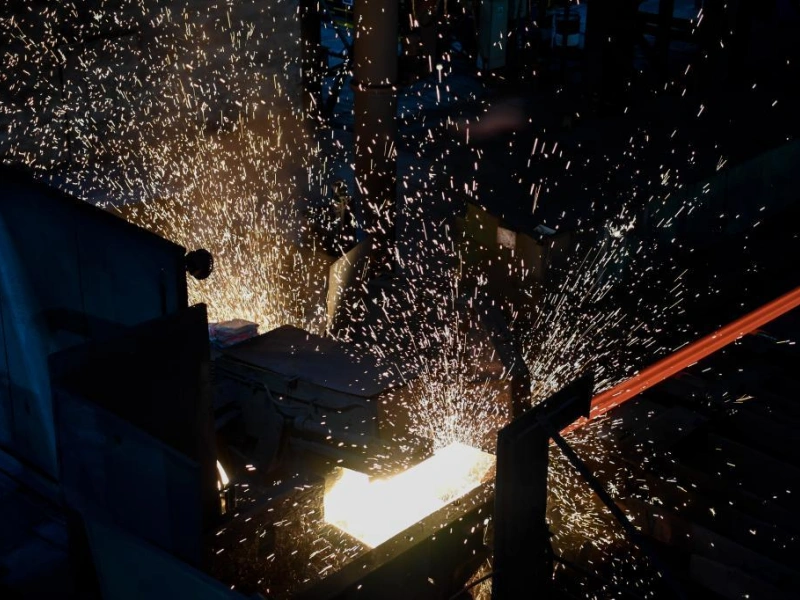
The production process starts with conventional hot rolling, where steel billets are heated and formed into rail profiles. After rolling, heat treatment is applied in two main forms:
- Offline Heat Treatment: A traditional method conducted separately after hot rolling and straightening.
- Online Heat Treatment: The modern mainstream approach, performed immediately after hot rolling for better energy efficiency and microstructure consistency.
Key steps include reheating to a precise austenization temperature, regulated cooling (using water jets followed by air cooling to form fine pearlite), and stress relief that eliminates the need for post-treatment straightening.
Hot Rolled Rails vs Heat Treated Rails
Both rail types start with the same hot rolling process, but their final mechanical properties differ.
| Feature | Hot Rolled Rails | Heat Treated Rails |
| Manufacturing Process | Standard hot rolling + air cooling | Hot rolling + controlled heat treatment |
| Hardness | Moderate | Higher (fine pearlite structure) |
| Wear Resistance | Standard for light to moderate use | Enhanced abrasive wear resistance |
| Fatigue Strength | Lower, prone to rolling contact fatigue | Higher, slower crack propagation |
| Residual Stresses | Higher, requires post-rolling straightening | Lower, stresses relieved during treatment |
| Typical Use | Light to medium traffic lines | Heavy haul, high-speed, curved, and industrial rails |
Heat treated rails outperform hot rolled rails under heavy loads and frequent operations, while hot rolled rails remain a cost-effective choice for low-stress rail systems.
Applications in Railway Systems
Rails with enhanced hardness and fatigue resistance are widely used in demanding railway environments.
Common applications include:
Heavy Haul Railways
Freight lines carrying large axle loads require rails with improved durability.
High-Speed Railways
Stronger rail steel helps resist rolling contact fatigue at high operating speeds.
Curved Track Sections
Rail wear increases significantly on curves, so harder rail heads improve service life.
Industrial Rail Networks
Ports, steel plants, and mining operations often use stronger rails to handle intensive operations.
Why Rail Heat Treatment Matters
Modern railway systems demand longer service life and lower maintenance costs. Rail heat treatment helps manufacturers achieve these goals by improving hardness and fatigue resistance.
With better resistance to wear and deformation, these rails can extend maintenance intervals and improve track reliability.
Conclusion
Both hot rolled rails and heat-treated railway rails serve important roles in rail infrastructure.
Hot rolled rails provide a cost-effective solution for moderate traffic conditions. Rails produced through heat treatment offer greater hardness, improved wear resistance, and longer service life.
For heavy haul railways, high-speed lines, and high-stress track environments, this manufacturing approach provides a more durable solution.