
The Engineering Reality Behind Railway Rail Recycling
Railway rail recycling is widely misunderstood. Many assume that old railway rails are simply melted down and recast into new rails.
In reality, used railway rails are rarely recycled into new railway rails, even though recovery rates are extremely high.
The short answer is simple: old rails are recycled—but almost never remelted into new railway rails.
The reasons lie in safety limits, alloy control, cost structure, and strict railway regulations. This article explains the real engineering logic behind railway rail recycling—and why controlled new rail production remains essential.
Old Railway Rails Are Recovered — But Not Recast as New Rails
First, an important clarification.
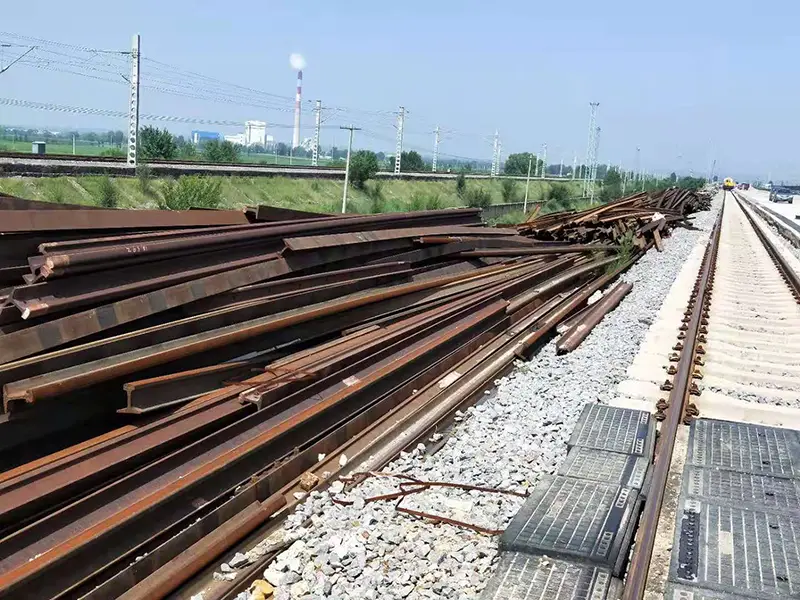
Old railway rails are not discarded as waste. In large-scale track renewal projects, especially in national railway systems, rail recovery rates often exceed 95%.
However, instead of being directly recycled into new railway rails, scrapped railway rails are downgraded for secondary use, including:
- Steelmaking feedstock for construction steel
- Short rails for sidings and industrial tracks
- Cast steel components
- Steel shot and heavy construction materials
This is not a failure of recycling—but a necessary safety decision.
1. Safety Risks: The Primary Barrier to Recycling Railway Rails
Railway rails operate under extreme conditions for decades. Even when surface wear looks acceptable, internal damage accumulates over time.
Hidden Fatigue in Used Railway Rails
Typical issues in old railway rails include:
- Micro fatigue cracks inside the rail head
- Grain structure changes after long-term cyclic loading
- Residual internal stress from repeated wheel impact
These defects cannot be fully eliminated through remelting, nor can standard inspection methods guarantee complete removal after recycling.
For modern mainline and heavy-haul railways—where rail steel strength often exceeds 1300 MPa—even minor inconsistencies pose unacceptable risks.
Railway safety standards prioritize predictability, not material reuse.
2.Alloy Control Challenges in Railway Rail Recycling
Most railway rails are manufactured from high-carbon alloy steels, such as U71Mn or U75V, containing manganese and micro-alloying elements.
During railway rail recycling:
- Alloy elements redistribute unevenly during melting
- Precise chemical composition becomes difficult to control
- Hardness, toughness, and fatigue resistance fluctuate between batches
For rail manufacturers, this instability makes it nearly impossible to meet new railway rail standards, especially for:
- Fatigue life
- Weld performance
- Long-term dimensional stability
As a result, most professional rail mills avoid recycled rail steel for new railway rail production.
3.Cost Inversion: Recycling Railway Rails Is Often More Expensive
Contrary to intuition, recycling old railway rails frequently costs more than producing new rails from controlled raw materials.
Where the Costs Add Up
| Stage | Cost Impact |
|---|---|
| Dismantling & Transport | Rails are long, heavy, and often located in remote areas |
| Pre-treatment | Rust removal, oil cleaning, mineral residue treatment |
| Specialized Smelting | Rail-grade electric furnace costs are far higher than normal scrap steel |
In many cases, re-melting old railway rails costs over 20% more than producing new rails with virgin materials. From both safety and economic perspectives, the equation simply doesn’t work.
4. Environmental and Regulatory Constraints
Some used railway rails—especially from mining or coal transport lines—may carry:
- Mineral dust containing trace radioactive elements
- Industrial contaminants requiring special treatment
If cleaning and waste-water treatment fail to meet regulations, steel plants may legally refuse acceptance of such rails. Additionally, railway rails are often classified as state-owned assets, requiring strict approval and traceability during disposal—further limiting open-market recycling.
5. How Recycled Railway Rails Are Actually Reused
Instead of being remade into new rails, old railway rails follow several proven reuse paths:
Common Recycling Routes
- Steelmaking feedstock for construction steel or cast iron
- Short rail reuse for sidings, rescue tracks, or industrial lines
- Deep processing into steel grit, forged components, or machinery bases
- Controlled storage for future reuse or regulated disposal
This approach maximizes material value without compromising railway safety.
Final Takeaway: Recycling Yes, Recasting No
Old railway rails are not wasted—but they are rarely recycled into new railway rails.
The reasons are clear:
- Safety risks outweigh material savings
- Cost structures favor new controlled production
- Alloy precision is critical for rail performance
In railway engineering, reliability always comes before recycling efficiency. Downgraded reuse and regulated recycling remain the most responsible solutions.
Glory Track Industry Insight
At Glory Track, we focus on supplying new railway rails manufactured from controlled raw materials, ensuring full traceability, stable alloy composition, and verified fatigue performance.
For mainline railways, heavy-haul lines, and critical industrial tracks, new railway rails remain the only responsible choice.
If your project requires reliable railway rail solutions, our engineering team is ready to support you.