

Railway track ballast, usually made of crushed stone, plays a vital role in supporting and stabilizing rail systems. Railway tracks are often built on sandy or soil surfaces, which are loose and unstable. The heavy loads from passing trains can deform the tracks and the ground, posing safety risks. To solve this, engineers distribute the weight over a wider area using sleepers and crushed stone ballast. This structure forms ballasted tracks, helping reduce pressure and improve stability.
In actual use, sleepers and crushed stones are laid under the tracks to increase the load-bearing surface, which helps stabilize the tracks and minimize ground pressure. The crushed stones placed under railway tracks are called ballast. Tracks with ballast are known as ballasted tracks. The main functions of ballast include:
1. Distribute Pressure
The weight and load of the train itself are huge. If the rails are laid directly on the ground, the ground pressure will be concentrated, which can easily cause deformation and collapse. It is usually composed of hard gravel, such as granite and basalt. The ballast stones are placed between the rails and the roadbed, effectively expanding the load-bearing area. Train pressure passes through the sleepers to the ballast. The ballast then distributes it evenly to the roadbed, reducing pressure. This prevents the roadbed from sinking under pressure. It also ensures track stability and safe train operation.
2. Stabilize Tracks
Trains generate strong vibrations and impacts when traveling. Ballast can effectively prevent sleepers and rails from shifting under the vibration and impact generated by the train. The fixed role of ballast is mainly reflected in two aspects. Ballast particles create friction and compression. This allows them to tightly surround and hold the sleeper in place. Its irregular shape helps ballast stones interlock and support one another. This keeps the track stable under pressure and helps maintain alignment. The ballast forms a strong, stable foundation. It prevents the track from shifting or sinking under train weight and frequent use.

3. Reduce Vibration & Noise
When the wheels of a train come into contact with the rails, high-frequency vibrations and impacts are generated. There are many tiny gaps between the gravel particles in the ballast, which can effectively absorb and disperse these vibration energies. The irregular surface of ballast also absorbs noise. This lowers the noise generated by running trains. Studies show that ballasted tracks have lower vibration and noise than tracks laid directly on soil. This not only improves the riding experience of passengers but also reduces the impact on the surrounding environment.
4. Improve Drainage & Reduce Corrosion
The presence of ballast also brings good drainage performance to the track system. The gaps between ballast particles are conducive to ventilation and drainage, and water can be quickly discharged through the gaps on rainy days. In humid environments, track parts can rust. Ballast drainage helps prevent long-term water buildup, and keeps the area under the track dry. This slows down rail corrosion, extends track life, and lowers maintenance costs.

5. Suppress Weed Growth
Along the railway, weeds can easily grow around the track if effective measures are not taken. The growth of weeds will not only affect the aesthetic appearance of the track but also may pose a threat to the safe operation of the track. Ballast laying effectively suppresses the growth of weeds. The tightly packed ballast stones create a hostile environment for weed growth, preventing root penetration. This prevents damage to the track from plant roots and reduces maintenance costs.
6. Absorb Heat
When the train is traveling at high speed, a large amount of frictional heat will be generated between the wheels and the rails. If this heat cannot be emitted in time, it will lead to an increase in the temperature of the rails, thus affecting the performance and service life of the rails. The main component of ballast is natural gravel, the heat generated when the train passes through can be absorbed by the gravel, and through its heat conduction will disperse the heat. The gaps between ballast stones enhance thermal insulation, minimizing heat transfer to the roadbed. By absorbing and dispersing heat, the ballast effectively protects the rails and the roadbed and ensures the normal operation of the track in a hot environment.
7. Make Maintenance Easier
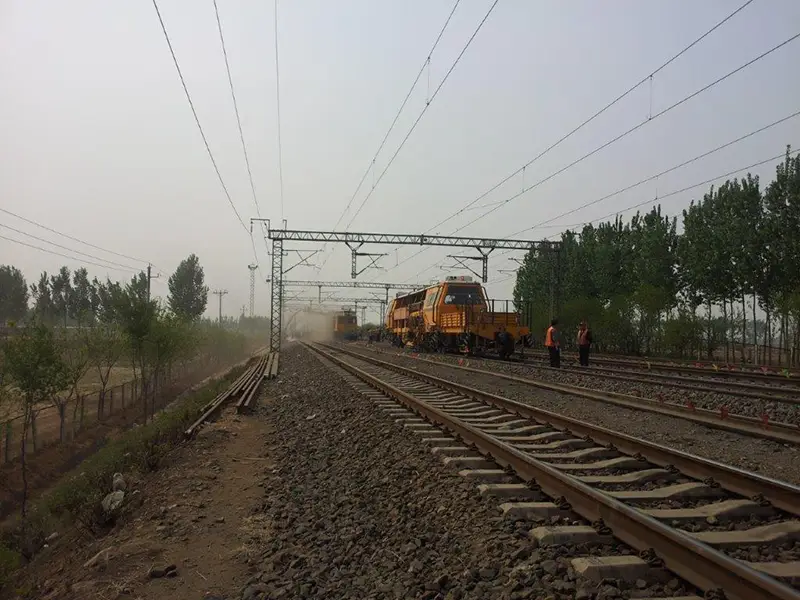
Ballast can be realigned or partially removed when track adjustments or replacement of sleepers are required, facilitating track repair and maintenance.
8. Adapt to Complex Environments
Ballast’s elasticity and shock-absorbing properties help mitigate the impact of harsh terrain conditions on railway tracks. For example, when a minor mudslide occurs, the ballast can absorb part of the impact force, reduce track deformation and damage, and ensure that trains can still pass relatively safely in complex environments.
9. Cost-Effective Solution
Cost is an important consideration in railway construction. Compared with other materials, ballast is more affordable, widely available, and easy to mine and process without requiring complex equipment. Ballast meets track needs while keeping costs low. That’s why it’s widely used in rail construction.
The fact that train tracks are not laid directly on the ground but instead rely on railway track ballast is rooted in sound engineering principles. Although ballast may appear to be just crushed stone, it plays a critical role in railway infrastructure. By distributing pressure, stabilizing the track, reducing noise and vibration, improving drainage, preventing weed growth, and minimizing maintenance, railway track ballast helps ensure the safety, durability, and efficiency of modern rail systems.