
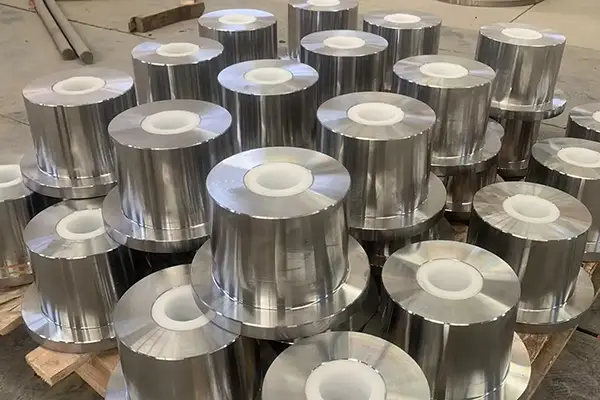
What Are Crane Wheels? – Importance and Applications
Apart from the lifting hook, the crane wheels are also one of the crucial components that ensure the smooth operation of the equipment. They serve as the contact points between the massive crane and the tracks, bearing the weight of the equipment and the goods being lifted. Given that different devices have specific requirements for crane wheels, it’s essential to understand the various types of crane wheels. This article will delve deep into the world of crane wheels, exploring their significance, different types, key factors to consider when making a choice, and more. This help you make an informed decision based on your specific needs.
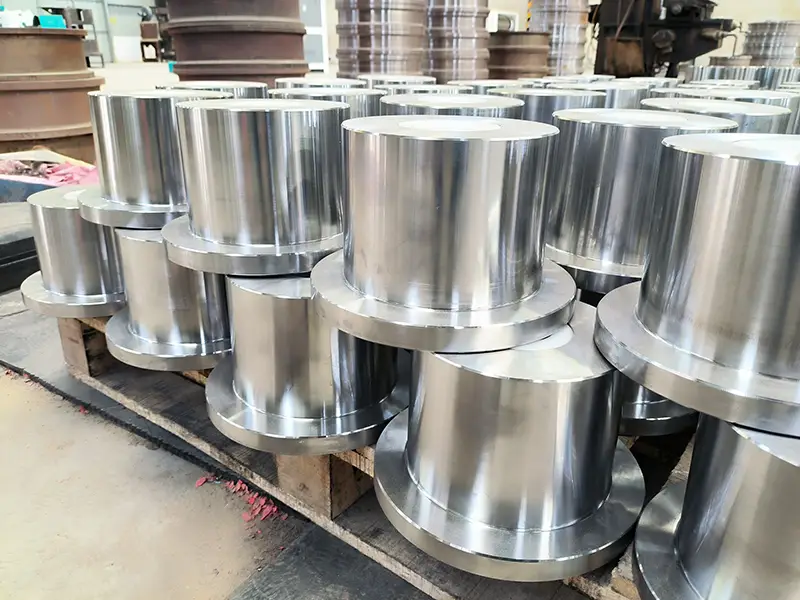
Key Components of a Crane Wheel Assembly
Crane wheels are sometimes called rail wheels and are widely used in bridge cranes, gantry cranes and mining machinery and equipment.
Crane wheel sets are mainly composed of wheel bodies, wheel axles, bearings, and bearing boxes. These components work together to ensure the smooth movement of the crane, guide, buffer shock absorption and maintain balance, while the wheel is an important walking crane parts not only need to carry the weight but also need to long-term friction with the track, so it must have good wear resistance.
Types of Crane Wheels: Understanding Their Differences
By Flange Design: Double-Flange, Single-Flange, and Flangeless Wheels.
Double-Flange wheels: commonly used for large crane wheels, with a rim height of 25-30mm, providing good guidance and anti derailment.
Single-Flange wheels: Usually used for small wheels, with a rim height of 20 to 25mm, suitable for specific guidance needs.
Flangeless wheels: can only be used in equipment with horizontal guide wheels on both sides of the wheel. Replacing rim guiding with horizontal wheel guiding reduces running resistance and extends wheel life.
By Tread Shape: Cylindrical, Conical, and Conical-Crowned Wheels
Cylindrical wheels: mostly used for follower wheels, can also be used for driving wheels.
Conical wheels: commonly used in large driving wheels, taper is generally 1:10, the installation of the larger diameter end placed on the inside of the span to ensure stable operation.
Conical drum wheels: the tread shape is rounded, mainly used for electric hoist suspension trolley and round rail cranes to reduce additional resistance and wear.
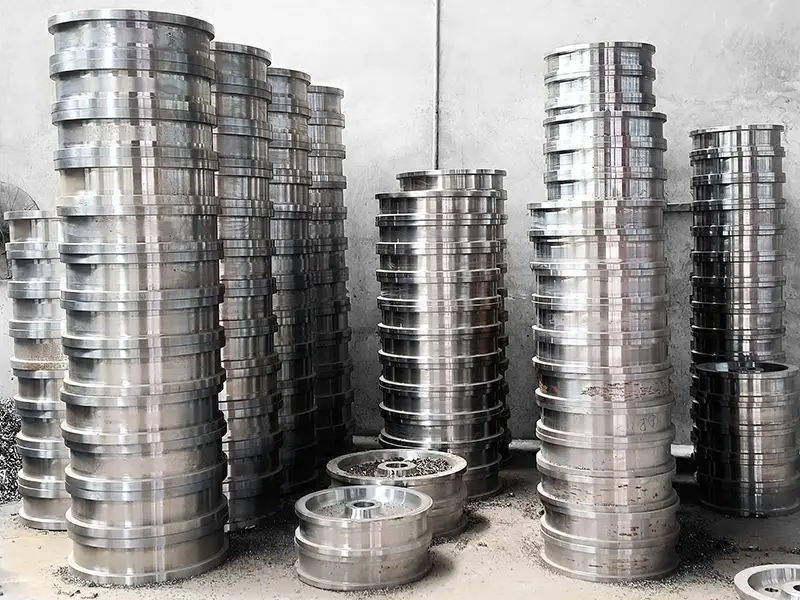
Crane Wheel Materials and Manufacturing Processes
Compared with other materials, steel wheels can withstand huge loads and dominate heavy-duty applications. Its sturdy structure and inherent durability make it a common material for crane wheels. There are many types of steel materials, and the main common wheel steel materials and manufacturing processes are:
Common Materials for Cast and Forged Wheels
1. Common materials for cast wheels: ZG45#, ZG55#, ZG50SiMn, ZG50MnMo, ZG42CrMo, etc.
2. Forged wheel materials: 45#, 60#, 40Cr, 65Mn, 42CrMo, etc.
Heat Treatment and Processing Techniques
1. Heat treatment method: Heat treatment is divided into surface quenching treatment and overall quenching and tempering treatment according to different product styles and usage methods.
2. Advantages of forging process: dense organization, forging can make metal fibers continuous, better mechanical properties, higher strength and toughness. It is relatively easy to produce large wheel sets.
3. Advantages of casting process: relatively low cost, especially for the manufacture of some complex shapes.
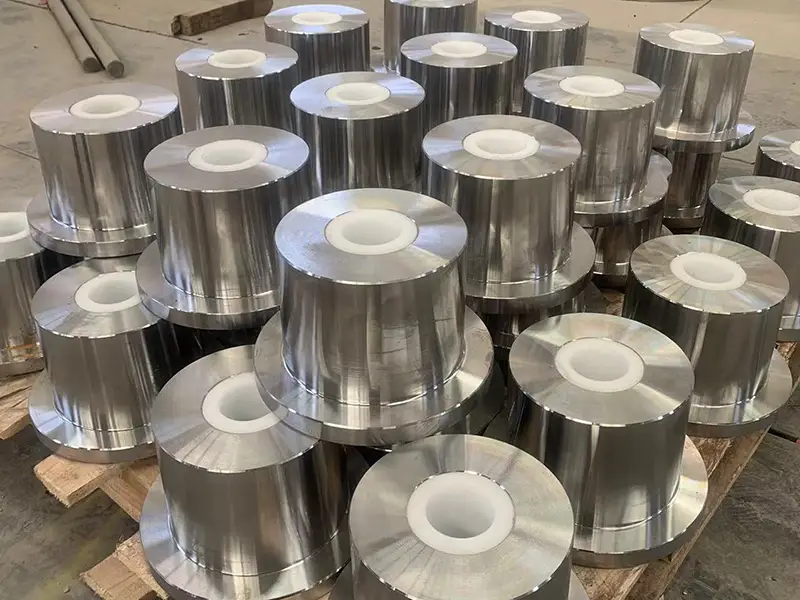
Maintenance and Scrap Standards of Crane Wheels
To ensure the safe operation of cranes, it is crucial to regularly inspect and maintain the wheels.
Tread Wear
When the tread wear exceeds 15% of the original thickness, new parts should be replaced. If it is less than this value, it can be repaired through turning and heat treatment.
Deviation in Wheel Diameter
The diameter of crane wheels should be within the tolerance range. The surface quenching hardness should be HB300 – 500. For crane wheels with a diameter greater than Φ400mm, the thickness of the quenched layer should be greater than 20mm; when it is less than Φ400mm, the thickness of the quenched layer should not be less than 15mm. The diameter deviation of the driving wheels should not exceed 0.1% of the nominal diameter, and that of the driven wheels should not exceed 0.2%. The diameter deviation of the electric hoist wheels should not exceed 1% of the nominal diameter.
Wear, Fracture and Deformation of the Wheel Rim
When the wear of the wheel rim reaches 50% of the original thickness or the fracture area exceeds 30mm, it should be scrapped. If the bending deformation of the wheel rim thickness reaches 20% of the original thickness, it should also be scrapped.
Cracks in Crane Wheels
Once cracks are found in the wheels, they should be scrapped immediately.
Tread Ovality
When the tread ovality of the crane wheel reaches 1mm, it should be scrapped.
Fastener Inspection
Regularly check to ensure that all bolts, nuts and other fasteners are secure.
Proper Lubrication
Maintain proper lubrication of the wheel bearings and other moving parts to reduce friction and wear. According to the usage and operating environment of the crane, formulate a consistent inspection plan. For cranes operating under harsh conditions or lifting heavy loads, frequent inspections are essential.
Track Cleaning
Debris and obstacles on the crane tracks can cause excessive wear of the wheels, not to mention increasing the risk of derailment. Regularly clean any debris on the tracks and ensure that the tracks are properly aligned.
Through regular maintenance and following the above tips, the service life of crane wheels can be effectively extended, ensuring the safe operation of the equipment.
Selecting the right crane wheels is crucial, but choosing a trusted supplier is just as important. At GloryTrack, we specialize in high-quality crane wheels, including bridge crane wheels and gantry crane wheels, offering tailored solutions to meet your specific needs.