
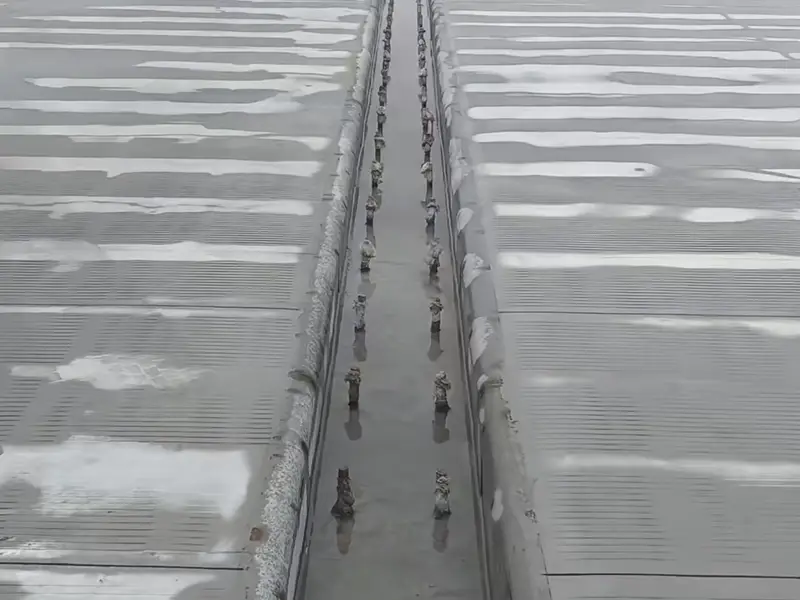
In heavy-duty crane rail systems, anchor bolts do more than secure steel soleplates to concrete foundations. They are an essential part of the fastening arrangement, helping maintain the stability of the rail support system under operating loads.
But how deep should crane rail anchor bolts be embedded in concrete? But how deep should crane rail anchor bolts be embedded in concrete? Does a heavier rail automatically require a deeper embedment, and is there a single depth that applies to all projects? And does a heavy rail such as DIN 536 A120 require a specific embedment depth?
The required crane rail anchor bolt depth cannot be determined by rail type or unit weight alone. It depends on several factors, including crane wheel loads, horizontal forces, concrete foundation conditions, anchor spacing, and the overall fastening system design.
This guide explains the main factors that determine anchor bolt embedment depth, presents Glory Track’s recommended reference depths for different crane rail types, and highlights key considerations for new and existing concrete foundations.
1. The Role of Anchor Bolts in Crane Rail Systems
Before determining the appropriate anchor bolt embedment depth, it is important to understand how anchor bolts function within a crane rail system.
A typical crane rail support arrangement may include the following components:
- Crane Rail: Carries the wheel loads generated by the operating crane.
- Rail Clips: Secure the rail and provide lateral restraint.
- Rubber Rail Pads: Provide elastic support, absorb vibration, and help reduce impact between the rail and its support.
- Steel Soleplates: Provide a steel mounting surface for the rail and fastening components.
- Grout: Fills the space between the steel soleplates and concrete foundation, providing a stable bearing surface.
- Anchor Bolts: Secure the soleplates or associated support structures to the concrete foundation.
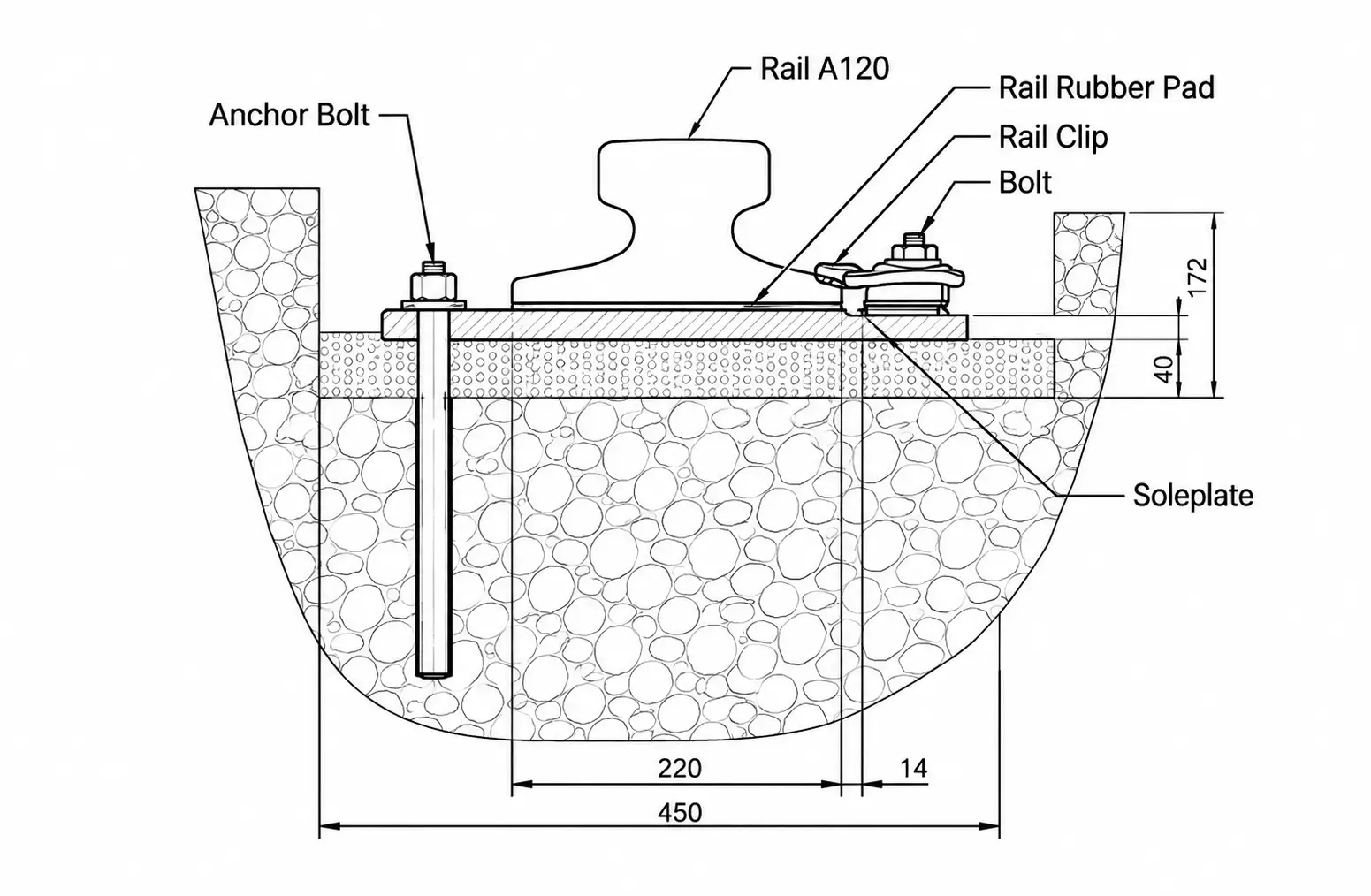
Anchor bolts secure the steel soleplates to the concrete foundation. Together with the grout, they help transfer lateral loads from the rail support system to the foundation. Depending on the system design, the anchors may also be subjected to tensile and shear forces.
Vertical wheel loads are generally transferred through the rail and soleplate bearing surfaces, with the grout providing uniform support between the soleplate and concrete foundation. The actual load distribution depends on the support arrangement and structural design.
It is also important to distinguish between two types of fasteners:
Rail Clip Fixing Bolts connect the components of a rail clip assembly, while Anchor Bolts secure the soleplates or supporting structures to the concrete foundation. They perform different functions and should not be selected using the same criteria.
2. What Determines Crane Rail Anchor Bolt Depth?
The required crane rail anchor bolt embedment is not determined by bolt diameter alone. Even when two projects use anchor bolts of the same diameter and material grade, their required embedment depths may differ because of variations in loads, foundation conditions, and anchor configurations.
Three main factors should be considered.
2.1 Crane Wheel Loads and Operating Forces
The first consideration is the loading condition of the crane rail system.
Typical design loads may include:
- Maximum Wheel Load: The highest load applied by an individual crane wheel.
- Dynamic Wheel Load: The wheel load adjusted for dynamic effects during crane operation.
- Lateral Load: Horizontal forces generated during crane travel and operation.
- Longitudinal Load: Forces produced by crane acceleration and braking.
These forces are transferred through the rail, clips, soleplates, and grout to the supporting foundation. The resulting forces acting on the anchor bolts depend on the arrangement and stiffness of the entire support system.
One important point is that rail weight is not the same as crane wheel load.
For example, DIN 536 A120 rail has a theoretical unit weight of 100 kg/m. This figure represents the self-weight of the rail per meter, not the actual wheel load or total operating load imposed by the crane.
Anchor bolt design should be based on the actual crane wheel loads and project design forces, not rail unit weight alone.
2.2 Anchor Bolt Diameter, Quantity, and Arrangement
The layout of the anchor bolts also affects their load distribution and the required embedment.
Key parameters include:
- Anchor Bolt Diameter: The nominal diameter of each anchor bolt.
- Anchor Bolt Quantity: The number of anchors used in each support arrangement.
- Anchor Spacing: The distance between adjacent anchor bolts.
- Anchor Group Layout: The overall arrangement of anchors within the soleplate or support structure.
Changes in anchor spacing, quantity, or edge distance can affect how forces are distributed within the anchorage zone.
For example, when anchor bolts are placed too close together, their concrete breakout zones may overlap. The combined resistance of the anchor group cannot always be calculated by simply adding the individual capacities of each anchor.
Both individual anchor performance and the behavior of the complete anchor group should therefore be checked during design.
2.3 Concrete Foundation Strength and Dimensions
The load-bearing capacity of an anchor bolt depends not only on the strength of its steel material but also on the ability of the surrounding concrete to resist the applied forces.
Important foundation parameters include:
- Concrete Compressive Strength: The specified strength of the concrete.
- Foundation Thickness: The available concrete thickness for anchor embedment.
- Concrete Edge Distance: The distance between anchors and the foundation edges.
- Reinforcement Layout: The position and arrangement of reinforcing bars.
- Anchor Spacing: The distance between individual anchors or anchor groups.
When subjected to tension and shear, concrete may experience different anchorage failure modes.
Common examples include:
Concrete Breakout Failure: A cone-shaped section of concrete breaks away around the anchor.
Pullout Failure: The anchor is pulled out of the concrete due to insufficient anchorage resistance.
Concrete Pryout Failure: Concrete breaks away behind an anchor subjected to shear forces.
Concrete Side-Face Blowout: Concrete near the side face of the foundation fails around an anchor with limited edge distance.
Image 2: Anchor bolt installation and reinforcement arrangement in a concrete crane rail foundation.
This explains why a greater anchor bolt embedment depth does not automatically guarantee a safer connection.
When foundation thickness, anchor spacing, or edge distance is limited, increasing embedment alone may not adequately improve the anchorage capacity. The concrete failure conditions must also be evaluated.
3. Glory Track’s Recommended Anchor Bolt Embedment Depths
The recommended crane rail anchor bolt depth varies according to the rail type and the intended application.
Based on Glory Track’s engineering recommendations, the following reference embedment depths are used for different DIN 536 A-series crane rail types.
| Rail Type | Theoretical Rail Weight | Typical Application | Recommended Reference Embedment Depth |
|---|---|---|---|
| A120 | 100.0 kg/m | Heavy-duty applications, such as shipyard gantry cranes | 260 mm |
| A100 | 74.3 kg/m | Heavy-duty applications, such as quay cranes and yard cranes | Approx. 200–230 mm |
| A75 | 56.2 kg/m | Medium-duty industrial crane applications | Approx. 170–190 mm |
| A65 | 43.1 kg/m | Light-to-medium-duty applications, such as smaller maintenance cranes | Approx. 140–160 mm |
These figures represent Glory Track’s recommended reference embedment depths for the corresponding rail types. They are intended as preliminary engineering and configuration references, not universal requirements specified by DIN 536 or fixed values applicable to every project.
The final anchor bolt depth for crane rails should be confirmed according to the actual wheel loads, horizontal forces, concrete strength, foundation dimensions, anchor arrangement, and installation method.
Does Embedment Depth Equal the Total Anchor Bolt Length?
No. Anchor bolt embedment depth and total anchor bolt length are two different dimensions.
The embedment depth refers to the portion of the anchor embedded in the concrete foundation, while the total bolt length may also need to account for:
- The exposed length above the concrete.
- The height of the soleplate and grout arrangement.
- The space required for washers and nuts.
- The anchorage detail at the embedded end.
Therefore, a recommended embedment depth of 260 mm does not mean that a 260 mm-long anchor bolt is sufficient.
Before manufacturing, the anchor bolt drawing should clearly define the embedment reference point, exposed thread length, embedded-end configuration, and overall bolt length.
The specified bolt and nut grades should also be checked for mechanical compatibility. For example, an M24 Grade 8.8 anchor bolt requires a suitable nut grade and thread fit; nominal diameter alone does not confirm that the combination is appropriate.
4. Anchor Bolt Installation in New and Existing Concrete Foundations
The installation method is another important factor when determining anchor bolt embedment depth.
The requirements differ depending on whether the concrete foundation is newly constructed or already in service.
New Concrete Foundations
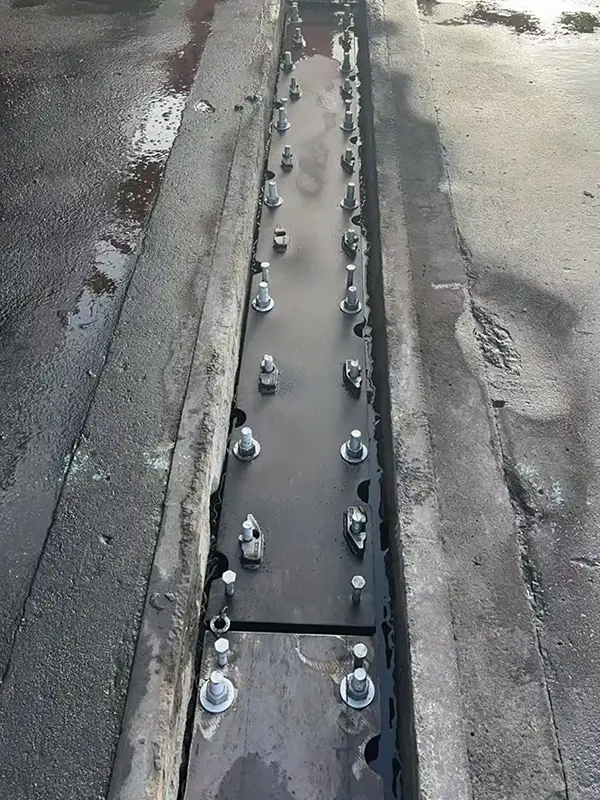
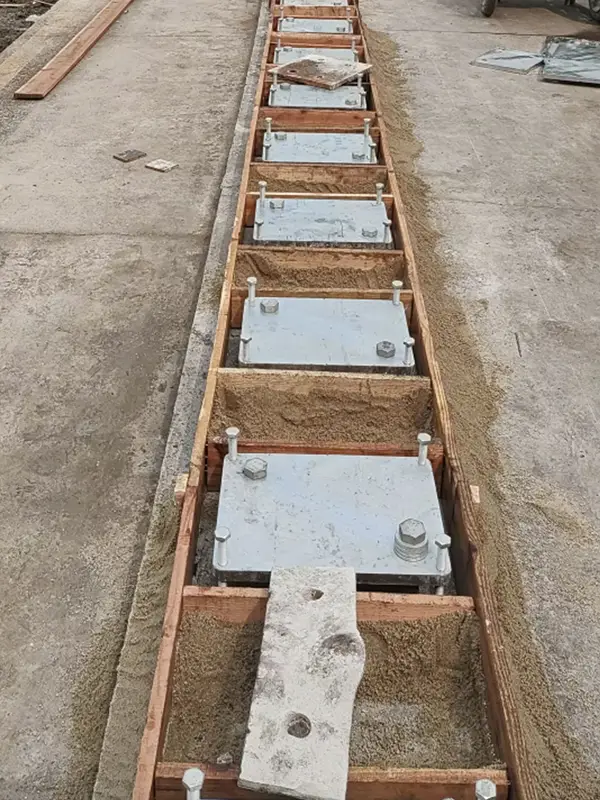
For new crane rail foundations, anchor bolts can be positioned before concrete placement.
Common installation arrangements include:
- Cast-in Anchor Bolts: Installed and secured in position before concrete is poured.
- Anchor Bolt Pockets: Recesses or openings are formed in the concrete for subsequent anchor installation.
- Positioning Templates: Used to maintain the correct anchor bolt spacing, alignment, and elevation.
Before concrete placement, the following details should be checked:
- Anchor positions must match the soleplate hole pattern.
- Anchor spacing must comply with the approved drawings.
- Embedment depth and exposed length must be correct.
- Anchor bolts must not conflict with the foundation reinforcement.
- Anchor bolts must remain properly aligned during concrete placement.
Where anchor bolt pockets are used, the subsequent installation and grouting procedure should follow the approved project requirements.
Existing Concrete Foundations
When installing crane rails on an existing concrete foundation, post-installed anchors may be considered, depending on the foundation condition and engineering requirements.
Before drilling, the position of existing reinforcement should be identified to avoid damaging the structural reinforcement.
Other important checks include:
- Existing concrete condition.
- Drilling position.
- Hole diameter and depth.
- Anchor spacing.
- Concrete edge distance.
Post-installed anchors must also be checked for the relevant tensile and shear capacities, including potential concrete failure modes.
Cast-in anchors and post-installed anchors are not automatically interchangeable. The appropriate anchoring method should be selected based on the foundation condition, approved anchor system, design loads, and project specifications.
Conclusion
The correct crane rail anchor bolt depth is an important part of a reliable crane rail support system, but it cannot be determined by rail type or unit weight alone.
Glory Track’s recommended reference embedment depths for A65, A75, A100, and A120 rails provide a practical starting point for preliminary system configuration. Final anchor dimensions and embedment must still be verified against actual crane loads, concrete foundation conditions, anchor arrangements, and installation requirements.
Whether the project involves A120, A100, A75, or another crane rail type, the rail, clips, soleplates, grout, and anchor bolts should be considered as one integrated support system.
Glory Track supplies crane rails and compatible fastening components for heavy-duty crane rail projects. Share your rail specifications, foundation drawings, and load requirements with Glory Track to discuss a suitable rail support and anchoring configuration.